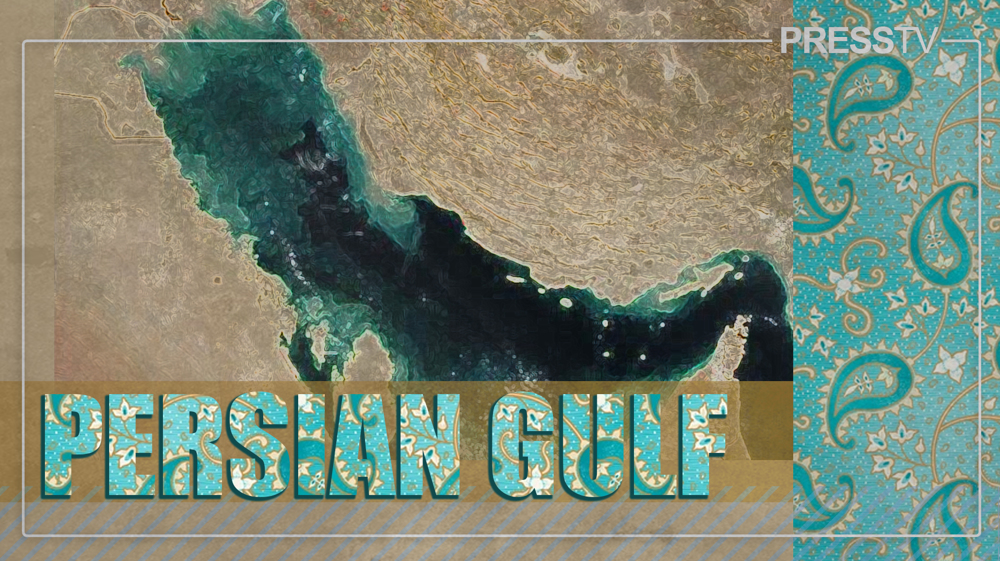














Alwaght- This year's geopolitical developments in the Persian Gulf have pushed the region's maritime trade and transit equations to new heights. Escalation of clashes, rising risks to the shipping in the Persian Gulf, and growing transportation costs have once again shown how much the security of the trade routes can influence the economic position of countries.
While war conditions have motivated Iran to move to re-regulating the legal regime of Strait of Hormuz, the outcomes of this move can transform the Iranian ports from a geographical privilege to an economic and strategic leverage, hence becoming one of the main international transit routes in a tigh competition of ports and corridors.
It should be taken into account that this issue comes into sharper focus once we recognize that port competition is no longer merely a matter of how many berths a facility has or how much cargo it can load and unload. Shipping lines and cargo owners gravitate toward routes where they can calculate cost, time, security and the likelihood of delay with greater confidence. That is why recent developments have created an opening to rethink the standing of Iran's ports, an opportunity that will only bear fruit with adequate infrastructure and reliable service.
Strait of Hormuz, test of regional maritime trade
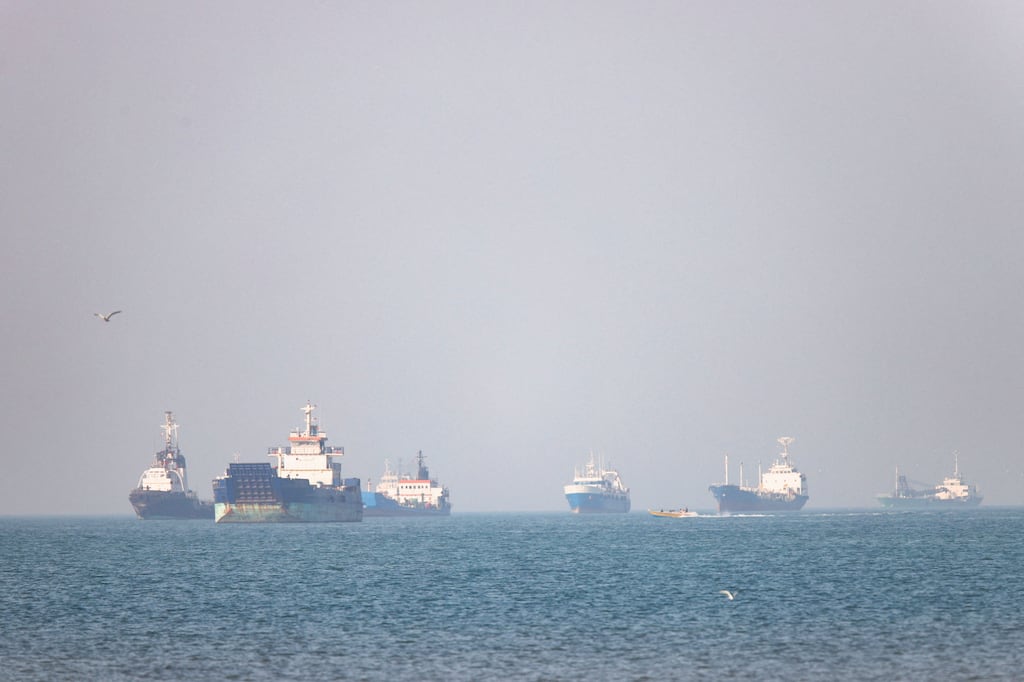
Strait of Hormuz is one of the most important maritime trade chokepoints in the world and a considerable amount of oil transits through it. Reports by Reuters in October talked about rise in attacks on tankers and drop in the ship navigation in this waterway.
The International Maritime Organization also said in an August 28 report that it has confirmed at least 70 attacks on international shipping since the crisis began on February 28. Beyond endangering seafarers' lives, these conditions have driven up insurance costs and freight rates and disrupted commercial planning.
These developments, it should be noted, show how reliance on a single maritime chokepoint can become a vulnerability in the supply chain. Nor is this an Iran-specific problem: ports in the southern Persian Gulf states are likewise feeling the fallout from insecurity in these waters. Still, a distinction must be drawn between Iran's position near the Strait of Hormuz and the operational security of its trade routes.
Sitting next to a strategic chokepoint does not by itself make a port secure or guarantee uninterrupted shipping. Lasting advantage takes shape only when sea and land routes, port services and crisis-management mechanisms can keep goods flowing under difficult conditions, a factor that, in the current circumstances, has become the strategic edge for Iranian ports over their neighbors'.
Dubai and Jebel Ali; trade privileges beside geographical vulnerability
Over the past decades relying on massive investment, warehousing, financial services, and international shipping network, the Jebel Ali port of the UAE has become one of the key centers of goods distribution in the world. Success of this port indicates that geographical location becomes an economic value when it is run by advanced services and trade confidence.
Yet, Jebel Ali's sea access to the Indian Ocean runs through the Strait of Hormuz. Mounting risks along that route can push up insurance and shipping costs and disrupt vessel schedules. In recent crises, regional governments and trading companies have sought alternative routes to keep goods moving, a dynamic that exposes one of the structural limits of the transit model for ports located inside the Persian Gulf.
It is noteworthy that the UAE is tapping the capacity of its eastern ports, including Fujairah and Khor Fakkan, to reduce this dependence. Those ports lie outside the Strait of Hormuz and can receive part of the cargo, but moving goods from them to Dubai's commercial hubs and other parts of the UAE still requires overland transport and logistics coordination. A sudden surge in demand can also add pressure on road, terminal and customs capacity. And in certain situations, insecurity in the Strait of Hormuz has spilled beyond the strait itself, as when Iran, during the 40-day war, extended its maritime traffic restrictions in the strait to the port of Fujairah as well.
Saudi Arabia and Oman, rivals preparing to attract cargos
With its ports of Salalah, Sahar, and Doqm, Oman is in a good linking condition to the Indian Ocean. Salalah is inside the Strait of Hormuz and can be crucial to the network of container transit between international routes.
Saudi Arabia, too, is developing Red Sea ports and building land corridors in an effort to provide alternative routes for moving goods to countries in the region. Reports of logistics corridors being activated show that the UAE, Oman and Saudi Arabia have turned to rerouting shipments and drawing on port capacity outside the high-risk zone to keep goods flowing in times of crisis.
These developments carry a clear message for Iran: the country's transit opportunity does not stem solely from its regional rivals' troubles. Neighboring states are expanding capacity, redrawing routes and courting cargo owners. If Iran cannot offer fast, reliable and competitive services, part of the region's cargo may move through rivals' alternative routes, and stay in those networks even after tensions ease.
Iran, the strategic bond between Indian Ocean and Central Asia
Iran's biggest advantage is a combination of sea accessibility, geographical depth, and land connection with regional states. Many Central Asian countries are landlocked and rely on corridors crossing their neighbors for their imports and exports from sea. Connection of southern ports of Iran to the rail and route network addresses a major part of this Central Asian need.
Shahid Rajaee Port, in the Bandar Abbas, is one of Iran's main maritime trade hubs and can connect to the country's overland transport network. Links to northeastern and northwestern routes, including corridors leading to Sarakhs and Jolfa, strengthen its ability to move goods to Central Asian and Caucasus markets. Realizing that potential depends on clearing rail bottlenecks, improving border coordination and cutting cargo dwell times.
It also needs to be added that beside Bandar Abbas, Chabahar Port is of substantial significance. Located on the Sea of Oman coast and ouside the Strait of Hormuz, this port can play a key role in diversifying maritime access of the country. Chabahar has the capacity to expand ties with India and transit of goods towards Afghanistan and Central Asia. Completion of rail connection to the general network and expanding logistics services can enhance its position in regional corridors.
The key point, it must be acknowledged, is that Bandar Abbas and Chabahar should not be seen simply as rivals. The two ports can operate within a complementary network, combining Bandar Abbas's existing capacity with Chabahar's ocean access and the country's overland links. Under this model, disruption to one route does not necessarily halt the entire network, and the ability to spread part of the cargo across different routes increases.
Iran route security: From geographical advantage to trade confidence
To become Iran's transit hub, Tehran must define security not merely as the ability to guard its ports but as the capacity to keep commercial services running. Real route security takes on meaning only when a vessel can enter port under clear regulations and operating conditions, cargo is discharged within a predictable timeframe, and the shipment reaches its destination through the overland network with minimal delay.
It is also worth recalling that, with sanctions, regional risks and financial constraints weighing on international companies' decisions, building trust among cargo owners matters even more. Transparent tariffs, streamlined customs procedures, shipment tracking, access to insurance and financial services, and contingency plans for crises are all prerequisites for Iran's competitiveness.
Maritime security and land-corridor security must also be coordinated. Iran's advantage lies in its ability to shift part of the transport burden from sea to rail and road, but that advantage becomes operational only when infrastructure, border capacity and customs systems are ready to move goods quickly. Every hour of delay at a border or any unpredictable rise in costs can push cargo owners to choose another route.
Conclusion; the necessity of rise of multi-route transit network
Recent developments in Persian Gulf shows that security of the trade routes has become one of the leading factors of economic competition. Dependence on part of the regional ports on Strait of Hormuz, limited capacity of the alternative routes, and risks of other regional waterways have increased the need for creating diversified and resilient transportation networks.
Iran enjoys a unique combination of southern and northern coasts, access to Sea of Oman, connection to the Central Asia and Caucasus, and potentials for expansion of rail and road networks. This capacity can transform Iran into one of the regional transit hubs, but realization of this goal takes targeted investment, eliminating trade obstacles, completing the infrastructures, and providing reliable services.
Finally, Iran's key role in the future of regional transit should rest on its capability to link sea to land and ensure continuous flow of goods. If Iranian ports can, beside operational security, offer competitive costs and predictable transfer time, Iran not only secures a bigger share of regional trade, but also can transform into a fundamental ring linking Asian to European markets.