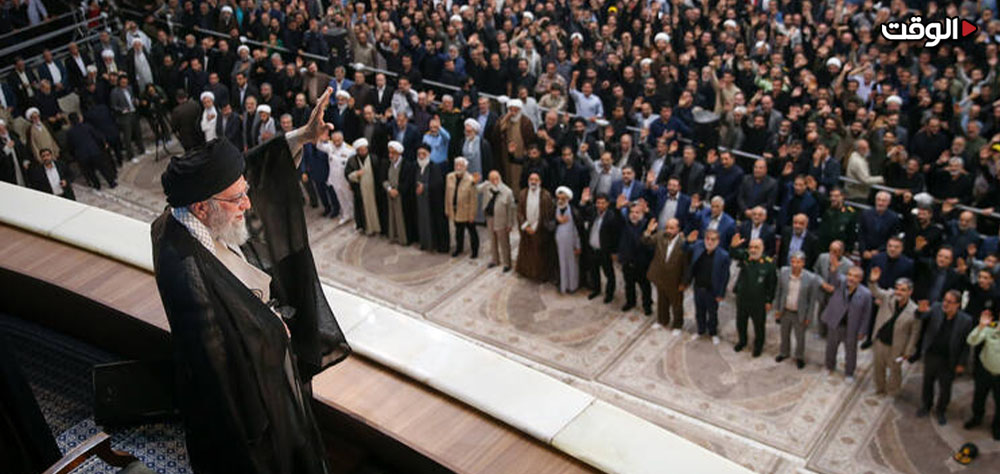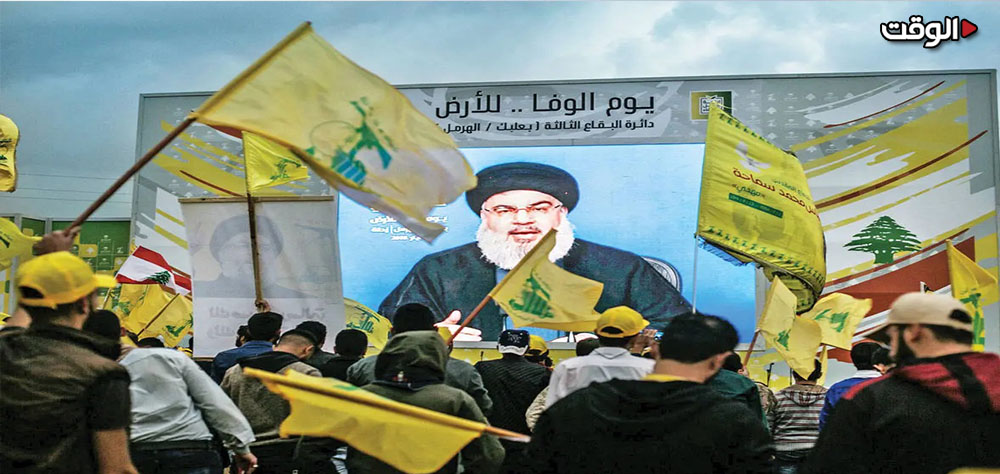



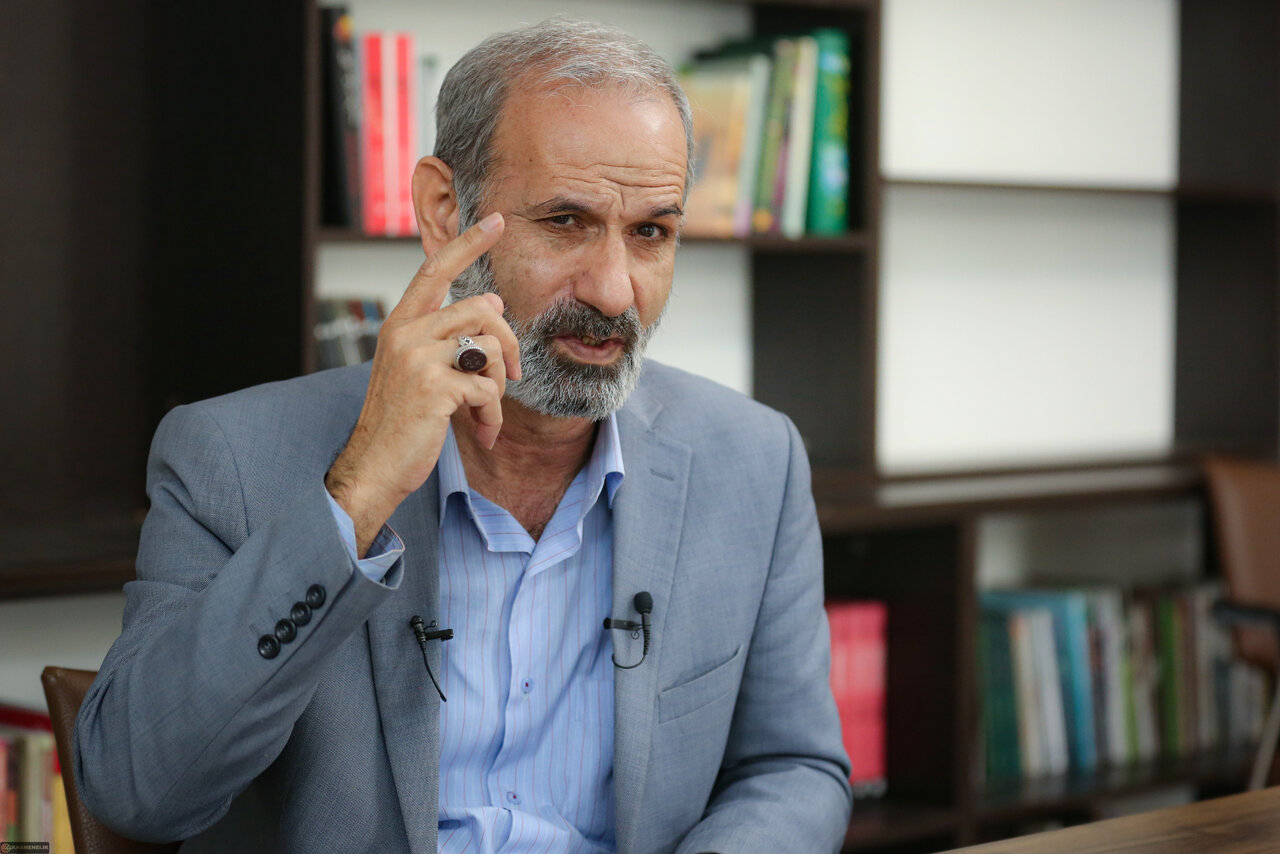


Alwaght- As Lebanon and the region mark the second anniversary of martyrdom of Hezbollah chief Sayyed Hassan Nasrallah, regional affairs expert Saadullah Zaree in an exclusive piece to Alwaght has shed light on the most prominent personal and managerial traits of the martyred secretary-general and his role in the resistance movement's power uplift and his vision of future of Hezbollah position in Lebanon.
Mr Zaree said that the Lebanese rarely reach a consensus on a figure because due to religious, sectarian, national, social, and cultural diversity, the Lebanese society is one of plurality. Actually, he continued, various factions are less capable of agreeing on the credibility and position of a political and social figure.
When we look back at Lebanon's century-old history, he said, we can see that their consensus was only over Sayyed Hassan Nasrallah. At a lower level, we can see a similar consensus on Imam Mousa Sadr, though incomparable in terms of vastness.
For the first time in the contemporary history of this country, we can see a high-rate agreement around a figure, a figure that was not on the sidelines and was not disconnected from daily social and political activities, but stepped in any major development and had a long record of activity and involvement.
Typically, figures, even those with utmost credibility, stature, and wisdom, hit rough patches or lose momentum at some point, and may drift from the center of events for a while. But Sayyed Hassan Nasrallah, despite roughly 32 years at the helm of Hezbollah, was never absent from the scene, neither inside Lebanon nor regionally. He was constantly active, and it was this sustained presence, coupled with how he operated, that turned the overall impact of his engagement across various arenas into a rare and almost consensus-building social and political credibility.
But the question is: how did this credibility come about?
Honesty: First conspicuous feature of Sayyed Hassan Nasrallah
Mr Zaree believes that the first trait raised in Lebanon about Sayyed Hassan Nasrallah is his honesty. The Lebanese hold that in his speeches, in his claims, and in his ideals, Sayyed Hassan Nasrallah was candid. He never said anything without holding himself bound to act on it, and to be the first to do so.
When he talked of difficulties and tough days, he was first to feel them. Additionally, his honesty meant that he never deceived others. He was not a power-hungry figure bent on seizing power at any cost, the kind who pushes others aside or resorts to deceptive tactics to gain or hold onto power.
Sayyed Nasrallah was truthful in the sense that he pursued the public interest. If he differed with an individual or a movement, his opposition was never personal; he pursued it within a framework of reform and defending the public good.
Insistence on principles: the same person after thee decades
The second point wasting his steadfastness to his principles. Despite more than three decades running Hezbollah, he never changed his principles or his intellectual and ideological framework. As time passed, he remained the same Sayyed Hassan Nasrallah, with the same ideological framework and the same principles he had entered the fray with.
This consistency matters greatly. Many figures shift their positions over time under the sway of political and social circumstances, or drift from their original principles, but Nasrallah stayed firmly anchored to his principles throughout his long years in charge.
Bluntness in words and bravery in postures
Another trait that shaped his character and standing was his bluntness of speech and tone. He never choked on his words. He said what he meant, fully, precisely, without hedging and without sugarcoating, and never tried to dress up his positions in vague or ambiguous language.
He declared his stance plainly and decisively, unafraid that his frankness would invite accusations or criticism.
For example, on following the leadership and the doctrine of religious authority, Nasrallah would declare openly, loudly, and in unmistakable terms at all sorts of gatherings that he followed Imam Khomeini and Imam Khamenei. He did not worry that saying so might cost him or that others would accuse him of being beholden to the Islamic Republic.
Even today, there are figures in Iraq and elsewhere who are wholly devoted to the Islamic Republic and believe in this thinking, yet refrain from openly declaring that position or stating plainly that they follow the leadership and religious authority of Iran's Supreme Leader. Nasrallah had no such reservations, and that frankness was part of what made him who he was.
Sincerity, the secret to conquering the hearts
Another factor that played a huge role in the character of the martyred Hezbollah chief was the affection he cultivated in people's hearts through his sincerity. Hearts are in God's hands. Nasrallah was sincere toward God Almighty, and God untangled the knots in his path and planted his love in the hearts of believers.
This divine love showed itself on the political and military battlefield as well. Nasrallah enjoyed the support not only of a large swath of Lebanon's Shia community, but of many other figures and groups too. That social and spiritual capital was one of the key factors that allowed Hezbollah to play a role under all kinds of circumstances.
Hezbollah: From an internal party to a regional player
During Nasrallah' s leadership, Hezbollah, along with regional developments, embarked on new conditions as he acted in line with these developments.
For example, at one point West Asia and North Africa were hit by the takfiri phenomenon and its sedition, movements operating under names like Boko Haram, Jabhat al-Nusra, and ISIS sprang up across various countries. That situation created an opening for Sayyed Hassan Nasrallah, as a religious force, to step in and defend the nations exposed to the damage wrought by these groups.
At another juncture, the region faced American aggression, with Afghanistan and Iraq falling under US military occupation. Here, too, a new arena opened up for Hezbollah to play a role, standing as a liberation force alongside nations under occupation.
And when the Zionist regime pursued plans to confront Palestinians and bury the Palestinian cause, yet another opportunity arose for Hezbollah and Nasrallah to enter the fray in support of the Palestinians and in defense of their rights.
Together, these developments gradually transformed Hezbollah from a largely domestic actor and force into a regional player, and to some extent elevated it to an international one. We have seen traces of Hezbollah's and Nasrallah's role beyond the region as well, including in Venezuela and in outreach to help the people of countries like Peru, Chile, Uruguay, and Brazil.
Therefore, Hezbollah's role had outgrown even the regional level, and that standing took shape under Nasrallah's leadership.
Genius in figuring out the developments and seizing the opportunities
Nasrallah's art was that he knew the region's developments well, grasped their depth, and found ways to manage them. He had a precise and sound understanding of the issues, could quickly discern the nature of developments, and on that basis organize a set of measures.
Together, these measures opened up opportunities for Hezbollah and made Nasrallah's leadership era a distinctive chapter in the movement's history.
That said, this does not mean his era ended with his martyrdom, or that we should expect Hezbollah to roll back to the pre-Nasrallah days. Hezbollah is carrying on its path, and the course Nasrallah charted is not one that can simply be reversed. Today, Sheikh Naim Qassem is vigorously pursuing that path.
Hezbollah has moved past period of pressure
If we compare the present time to that of three or four months ago, it seems that pressure on Hezbollah has dropped considerably. If we presume the scale of pressure three or four months was 90, today it is 50 or even 40.
A major part of this situation is that the accumulated pressures of the past two years, though pressed Hezbollah and put costs on it, failed to yield the favored results given Hezbollah’s resistance.
Latest comments of the president and the prime minister of Lebanon bear witness to this reality. So, I think Hezbollah has weathered a tough period and now is in better conditions, which allow it to, indeed, manage the challenges even easier.