












Alwaght- The Israeli Prime Minister Benjamin Netanyahu is now in one of the most complex political contradictions of his premiership. The extremist settler movement and hardline right-wing parties that have become one of Netanyahu’s most crucial political lifelines over the past several years are now, amid escalating violence in the West Bank, emerging as one of the most serious sources of domestic and international pressure on him.
In recent weeks, settler violence against Palestinians in the West Bank has surged, reaching a scale that has even drawn sharp rebukes from US and European officials who usually back criminal actions of this regime without question. Meanwhile, 45 Democratic US senators sent a letter to Netanyahu demanding action against settler violence and a probe into the killings of American citizens.
The mounting pressure comes as Israel’s parliamentary elections are set for October 2026, leaving Netanyahu dependent on the very same far-right bloc to hold onto power.
Allies turned into trouble
When Netanyahu returned to power in 2022, he hitched his coalition government to far-right and religious parties. Figures like Itamar Ben-Gvir and Bezalel Smotrich, who are closely tied to the settler movement both politically and ideologically, became the main pillars of his coalition.
That same government has since expanded West Bank settlement construction at an unprecedented pace. Human Rights Watch reports that settler violence has spiked sharply since the current cabinet took office in December 2022, with attacks reaching record levels in 2026.
In effect, Netanyahu spent the past several years cozying up to this political fringe to keep his right-wing coalition afloat. But now those same allies are exacting a heavy political toll, because his problem is not just the settlers' terrorist behavior; it is the international fallout from that terrorist behavior.
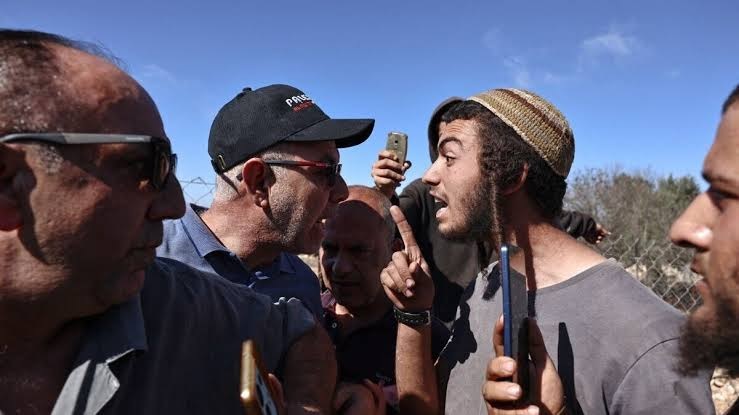
Images of settlers storming Palestinian villages, torching homes and farmland, and attacking Palestinians are now ricocheting across global media like never before. Human Rights Watch says that since January 2023, settler attacks have displaced 107 Palestinian communities, either fully or in part.
In one of the latest developments, the US has struck an unusually sharp tone toward settlers. Mike Huckabee, the US ambassador to Israeli regime, has labeled some extremist settlers "terrorists", a move that has only intensified political pressure on Netanyahu's cabinet.
At the same time, France, Britain, Germany, Italy, Norway, and the Netherlands have all issued warnings over settlement expansion and West Bank violence, rejecting the proposed development of the so-called "E-1" settlement corridor.
That leaves Netanyahu caught in a brutal equation. On one side, he can not simply break from the radical settlers. On the other, continuing to back their actions only deepens the international price Israel, and his government, will have to pay.
Why is Netanyahu not fully separating ways from Ben-Gvir and settlers?
For Netanyahu, building his next government means assembling a right-wing coalition, and any erosion of far-right support could make that coalition all but impossible to form. Recent polling bears that out: the religious-right bloc's performance is make-or-break for his political future.
Seen through that lens, Ben-Gvir and the settler movement are not just an ideological constituency for Netanyahu, they are gears in his electoral machine and pillars of his coalition architecture.
That is precisely why his response to settler violence has been, at least in most cases, far more tepid than Israel's domestic and foreign critics would like. He has condemned the violence in recent statements, but he is also taken care to draw a line between the "law-abiding settler majority" and a "small fringe of extremists."
That framing lets Netanyahu send a signal to global public opinion while stopping short of torching his political bridges to the far right.
Netanyahu teetering on the brink
This regime's prime minister now finds himself caught between two opposing perils. Lean too far into the extremist settlers, and international pressure on Israel intensifies, potentially even straining Tel Aviv's ties with Western allies. Pull back too hard, and he risks losing his coalition altogether.
That dilemma takes on added weight with Netanyahu's political rivals already seizing on settler violence to batter his government. Gadi Eizenkot, a leading opposition figure, recently lashed out on Smotrich and Ben-Gvir over the escalating violence.
Meanwhile, trouble is brewing within the right-wing camp itself. Reuters has reported that Smotrich is facing electoral headwinds to shore up his own political standing, and Netanyahu will need every single seat to preserve his right-wing parliamentary majority.
Actually, Netanyahu can not completely ditch the extremist settlers without losing a critical chunk of the religious-right base. But he also ca not defend their actions unconditionally, because settler violence has now become a primary driver of international pressure on Tel Aviv.
That leaves him walking a tightrope, offering measured condemnations to placate global opinion and keep Western allies on side, while sidestepping any real confrontation with Ben-Gvir and the settler movement to avoid a coalition collapse.
In fact, main Netanyahu problem is that the extremist settlers were once Netanyahu's instrument for holding power. Now they have become one of the gravest threats to it. As elections approach, he faces a choice between keeping his far-right allies and curbing the international costs of settlement policy, both options carrying steep political risks, either of which could ultimately spell his downfall on the Israeli political stage.