









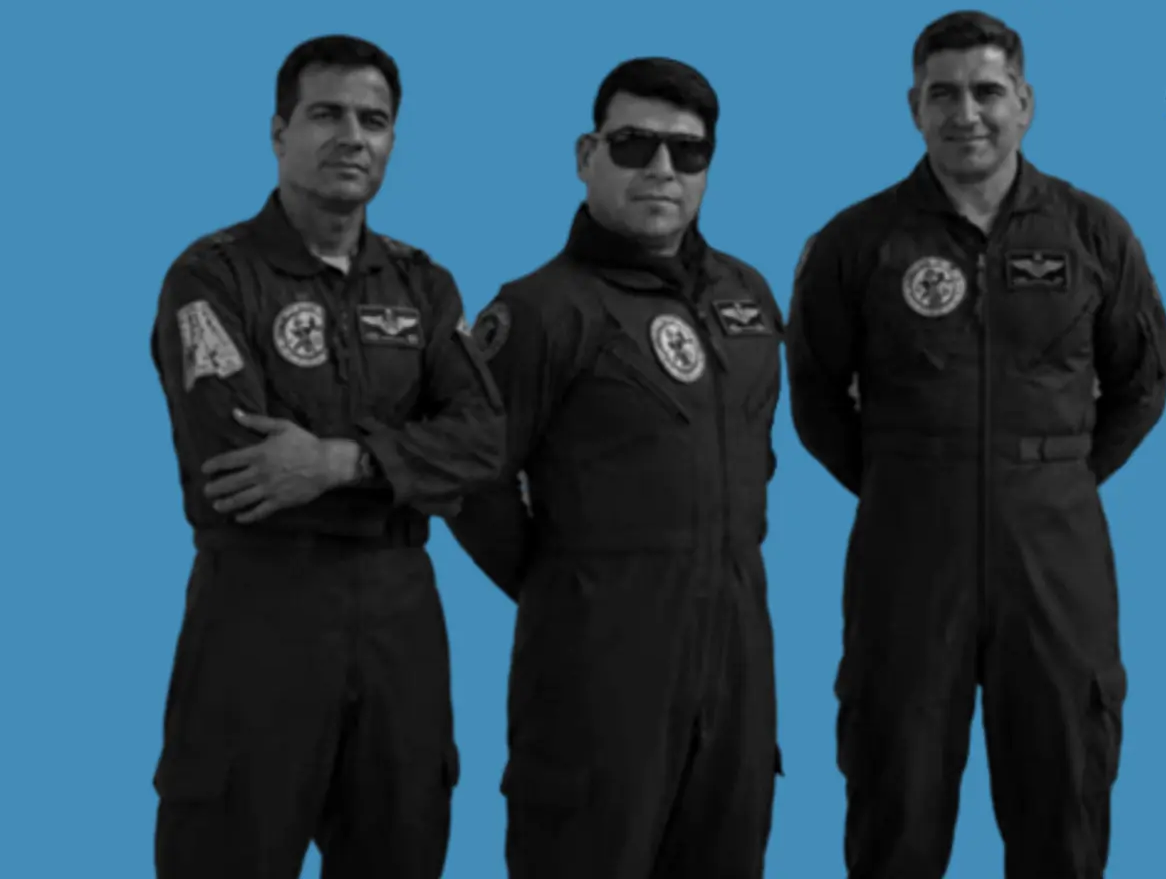


Alwaght- Several months after the Iranian air force’s successful strike at American targets in Qatar at the outset of the 40-day war, the fate of the pilots from two fighter jets hit on their return route has entered a new phase.
The Iranian armed forces had previously raised the possibility that all four pilots were missing or killed in action. But with the recovery of one body, new information has now emerged about the other three, and the military insists they are alive and being held captive by Qatari forces.
On Saturday, General Mohammad Bagherzadeh, head of the Armed Forces General Staff’s committee for search of missing personnel, sent a letter to the head of the International Committee of the Red Cross demanding an immediate interview with the three captive Iranian pilots in Qatar and notification of their health status.
According to Bagherzadeh, intelligence indicates that the three pilots, Javad Salehi, Abdol Majid Dashtian, and Omran Behrusheyan, were taken alive by Qatari forces. Yet despite all diplomatic efforts and follow-ups, the Qatari government has so far refused to allow visits, interviews, or any contact between the captives and their families or responsible officials, a matter that falls under provisions related to war crimes, he said.
The general added that the three pilots had departed on February 11 aboard two Su-24 fighter jets for a combat mission against an enemy military base in Qatar. Despite initial success in their objective, they were forced to eject on the return leg after being hit by enemy air defenses. One of the four pilots, Majid Kazemi, was martyred, but no information has been available on the other three until now.
Qatar denies Iranian report
The armed forces' announcement drew an immediate pushback from Doha, which issued a statement flatly denying any responsibility for the three pilots' fate and challenging Tehran's account of their captivity.
Qatari Foreign Ministry spokesman Majed al-Ansari categorically rejected the reports about detained Iranian pilots, saying: "We are surprised by these misleading statements about Iranian pilots at a time when diplomatic efforts are still ongoing. We reiterate that after the violation of our airspace last March, we made contact with the relevant pilots. When we received no response, we took the necessary measures to defend our territory. Qatari search-and-rescue teams scoured the area for the pilots' remains and recovered the body of one of them. We reached out to the Iranian side to coordinate the handover of that pilot's remains. The Iranian side did not respond to our invitation in April to send a team to observe the search operation."
Iran's response to Qatari claims
General Bagherzadeh responded to the Qatari foreign ministry spokesman, saying: "Instead of denying the issue and throwing up obstacles to the truth, the Qatari government should allow a team of experts and fact-finders from the Iranian air force to travel to Doha.
"A team of our air force's top specialists has been waiting for months to enter Qatar and conduct an on-the-ground investigation. But because of the Qatari authorities' repeated obstruction and stalling tactics, the return of our brave pilots has yet to be secured."
He again stressed the Red Cross's role in urgently following up on the matter and warned that Kuwait, in a similar vein, has so far evaded providing information on the fate of four Iranians it is holding captive.
Iran's Foreign Ministry spokesman Esmail Baghaei also weighed in, stating: "As long as the status of our pilots remains unclear, we assume they are in captivity. We will therefore use every means at our disposal to determine what happened to our three pilots."
Fact-checking Doha claims
Given Tehran's intelligence assessment that the Iranian pilots are still alive, Qatar is obligated under the Geneva Conventions on prisoners of war to register their status and details and communicate them through the proper channels to ensure their rights and well-being are protected.
Likewise, as Iran's armed forces have requested, Doha must allow an Iranian expert team to visit the site, examine the circumstances firsthand, and clarify all aspects of the case. The claims made by Qatar thus need to be thoroughly verified on the ground to establish the full truth.
In fact, with tensions between Iran and the US persisting, the fate of the three Iranian pilots could escalate into an issue far beyond a bilateral military case. There are concerns that Washington may pressure Qatar to hand over or transfer the pilots to American custody, particularly given that, in the final days of the 40-day war, the downing of a US F-15 fighter and the landing of its pilot on Iranian soil sharpened Donald Trump's sensitivity to the captivity of American aviators.
As such, fears are mounting that Washington might use the Iranian pilots as a future leverage point. Should clashes erupt again between Iran and the US, and should American service members end up in Iranian captivity, Washington could wield the Iranian pilots as bargaining chips, or even for a prisoner exchange. For that reason, Tehran is pressing Doha for full cooperation to resolve the pilots' fate as swiftly as possible.
On the other hand, Qatar's handling of the three pilots' case could serve as a critical test of Doha's future approach toward Tehran. Transparency on the pilots' fate and cooperation with Iran, especially after Qatar allowed the US to use its airspace and territory for strikes against Iran during the 40-day war, could be a step toward de-escalation and mending bilateral ties.
If the Qatari government responds positively to Iran's request, grants entry to an Iranian expert and fact-finding team, and allows the Red Cross access to the pilots or to relevant documents and evidence, that move could signal Doha's good faith in strengthening its relationship with Tehran.
But if Doha continues to refuse all cooperation, on-the-ground investigations, and access for independent bodies, it will only fuel suspicions that the Persian Gulf Arab emirate has no interest in shedding full light on the case and is instead aligning with Washington's policies against Tehran.
So, if the three pilots are alive, Qatar needs to state their status clearly and without further delay. If Doha's claim that they were killed is true, then it must produce the documentation and evidence to back it up. Otherwise, continued silence and ambiguity will only deepen the doubts surrounding their fate.