














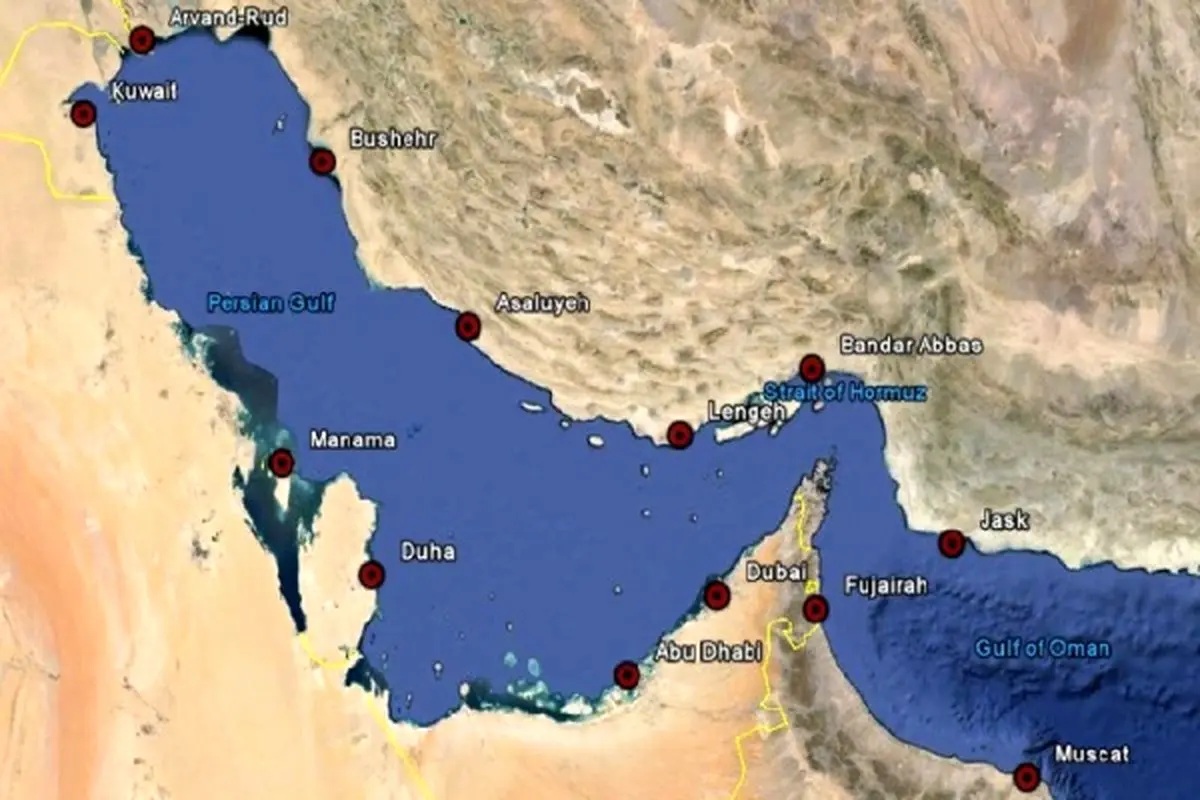


Alwaght- The closure of the Strait of Hormuz following the US-Israeli aggression on Iran has left the fate of one of the most important energy arteries through which 20 percent of the world energy flows in a state of ambiguity for an uncertain time.
When Iran announced it took control of the Strait of Hormuz, regardless of how this control is planned to be implemented, the state of the strait shifted from a totally free waterway to an Iran-managed region. In such conditions, the biggest concern is raised not by the US, but by the oil exporting countries in the Persian Gulf. This issue is certainly more vital to Saudi Arabia.
For years, Saudi Arabia has been trying to establish itself as a dominant regional power. But given that most of its oil exports pass through the strait, Iran, or any other country, for that matter, could slash the kingdom’s revenues and gain a major trump card if hostilities escalate.
Within the first few weeks of the war, global shipping routes reacted to the threat of a strait closure. In the first two weeks, maritime traffic around the Cape of Good Hope, Bab-el-Mandeb, and the Suez Canal multiplied several times over, bringing with it a host of new risks.
It was a natural response to avoid getting trapped in the strait. But it soon became clear that none of these alternative routes could truly replace it. Under these circumstances, Saudi Arabia decided to activate its backup plan, which was the East-West Pipeline.
The shift was rapid. By the fourth week of the war, Saudi Arabia was moving 2.4 million barrels of oil per day through the pipeline, a 320 percent increase from pre-war levels. But even as the rerouting sped up, it quickly became evident that this alternative came with its own dangers.
The East-West Pipeline is Saudi Arabia’s most important backup to the strait. It links refineries on the Persian Gulf coast in eastern Saudi Arabia to the western port of Yanbu on the Red Sea, where oil is loaded onto tankers. From there, ships face two choices: head through the Suez Canal into the Mediterranean and on to Europe, or pass through the Bab-el-Mandeb Strait into the Gulf of Aden and the Indian Ocean toward East Asia.
Saudi Arabia claims the pipeline can carry around 7 million barrels per day. But the International Energy Agency estimates the real figure is far lower—somewhere between 3.5 and 5.5 million barrels per day. That capacity falls far short of the 20 million barrels that used to pass through the strait.
Furthermore, the war revealed that even this alternative route is not necessarily safe. First, there is the pipeline itself. Reports indicate that both the pipelines and their pressure-boosting stations have been targeted by drone attacks during the war, disrupting flows for days at a time.
Another issue is related to the ending point of this energy route, namely Yanbu, a region that can be an easy target for rocket and drone strikes. Finally, ships passing through Bab-el-Mandeb could easily fall into the hands of Yemen's Ansarallah forces, just as they did during the Yemen war when the resistance group was acting in support of Gaza, creating a situation there much like the one in the Strait of Hormuz. These risks, combined with rising regional tensions after Gaza war, pushed Saudi Arabia and the UAE to start looking for ways to bypass Hormuz altogether.
In April 2026, Saudi Arabia’s railway authority announced five new trade routes linking various parts of the kingdom to the Red Sea. Riyadh and Abu Dhabi have also unveiled a joint effort to create an alternative corridor bypassing the Strait of Hormuz. These new sea-land routes will connect oil refineries in Saudi Arabia’s Dammam to the UAE’s Khor Fakkan port on the Gulf of Oman. The corridor will be jointly operated by Mawani (Saudi Ports Authority) and GulfTainer, a logistics company based in Sharjah. Mawani has also launched a maritime link to Bahrain, providing access to King Abdulaziz Port in Dammam.
Still, while these planned alternatives avoid the Strait of Hormuz, they do not solve the long-term need to diversify energy routes beyond the Persian Gulf. In the event of a major confrontation between regional players and other powers with influence over the Persian Gulf, these new routes could just as easily become targets themselves.
Persistent pressure on Persian Gulf energy infrastructure could force regional countries to step up partnership in pursuit of broader diversification. This is the point where the need for larger players to step in becomes clear, though regional tensions themselves sharply reduce the appetite for long-term investment.










