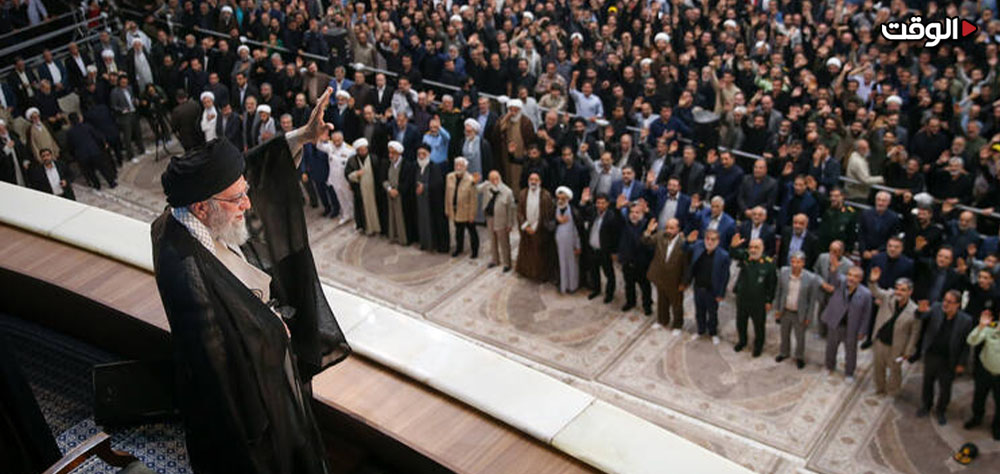












ALWAGHT- According to the Health Ministry's PR chief, the Islamic Revolution's Leader, Ayatollah Seyyed Mojtaba Khamenei, suffered only minor superficial wounds on the war's first day and was in satisfactory health.
Hossein Kermanpour, head of the Health Ministry's Public Relations and Information Center, spoke at a gathering titled "Narrators of Iran" about the difficult task of communicating the health sector's story. He recalled that on February 28, the Health Ministry received a call reporting that areas around Pasteur—including the office of government officials and the residence of the Leader of the Islamic Revolution—had been bombed, marking the official start of the war. Health Minister Zafarghandi immediately headed to Sina Hospital on a motorcycle amid chaotic, blocked streets.
Kermanpour stated that authorities were informed around noon that Ayatollah Seyyed Mojtaba Khamenei would be brought to Sina Hospital, which was reassuring news that he was alive. Fortunately, the Leader had suffered no serious injuries, only superficial wounds that required a few stitches, including on his leg. He noted that the wounds did not cause disfigurement, disabilities, or amputations. Kermanpour acknowledged the immense difficulty of shaping the public narrative around these events under exceptional circumstances.
Kermanpour recounted traveling to the Strait of Hormuz and the city of Minab, where he was shocked to see every billboard displaying images of martyred schoolchildren. He described Minab as "America's Hiroshima in Iran," comparing the tragedy to the US atomic bombings of Hiroshima and Nagasaki. He also witnessed torrential rainfall in Bandar Abbas that flooded the province, causing graves in the martyrs' cemetery to sink, with grieving mothers still feeling as though their children were sleeping beneath the water.
Kermanpour noted that beyond the martyred students, there are 92 injured students in Minab whose stories need to be told. He shared the account of a nurse whose own child was at the Minab school; despite her personal fear, she chose to remain at the hospital to serve the wounded and only learned later that her own child was safe. He urged others to visit Minab and share the stories of both the injured and the heroic individuals who served during the tragedy.