















Alwaght- As the living costs, especially the fuel, rise in the US, one of the constant criticisms of the opponents of the warmongering of the Trump administration is the damage of the war to the US economy. But while over the past months the focus has been on the heavy spending of the Pentagon and Trump's critics accuse him of lying and covering up the costs, one of the less addressed issues is the costs related to destruction of the American military infrastructure in the Persian Gulf region. These infrastructures are a result of decades of work of the US and its allies and partners to get a firm foothold in the region, and Iran in recent war destroyed a major part of them.
During the 40-day war, Iran’s armed forces, particularly the IRGC’s Aerospace Force, unleashed wave after wave of attacks on all US assets and bases across host countries neighboring Iran. Yet the Pentagon released very little information about the casualties and damage, fueling speculation from the very first days of the war that both the Defense Department and CENTCOM were imposing a news blackout.
Now, several weeks after the cessation of hostilities, American media are zooming in on the condition of American bases in the region and have released new details about the extensive damage inflicted on these facilities.
Massive damage to US baess in Qatar, Bahrain, Jordan, the UAE, and Saudi Arabia
The Washington Post recently revealed that Iranian airstrikes have destroyed or damaged at least 228 US military facilities or pieces of equipment across the Middle East since the war began on February 28.
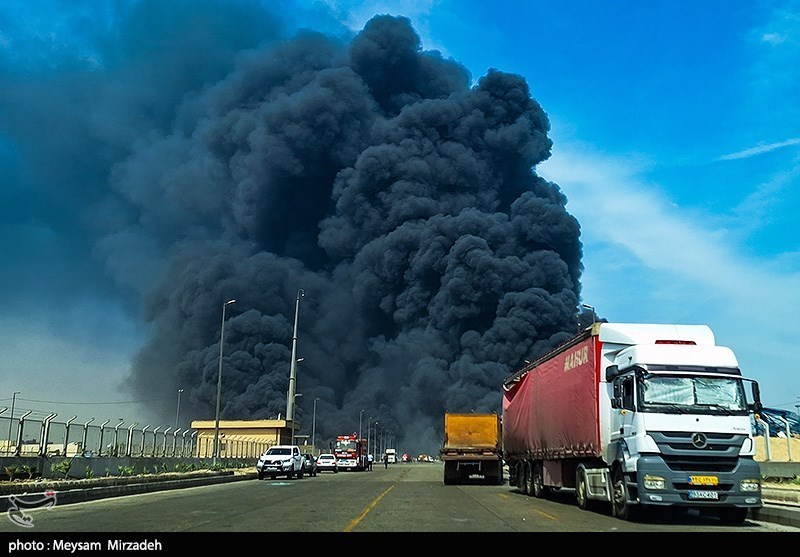
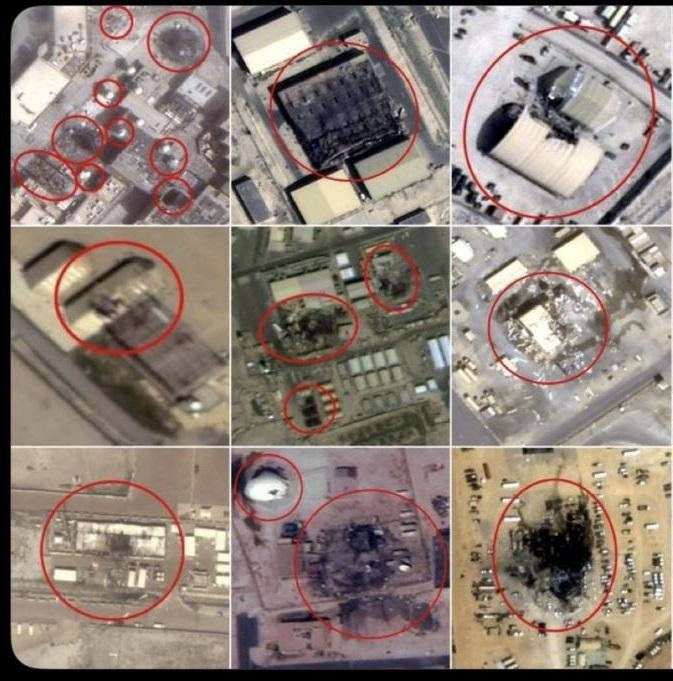
Based on satellite imagery analyzed by the American newspaper, the damage includes aircraft hangars, barracks, fuel depots, aircraft, radar and communications gear, and air defense systems, showing a scale of destruction far larger than what the American government had previously acknowledged.
The newspaper also found that the strikes hit a satellite communications site at Al-Udeid Air Base in Qatar, Patriot missile defense equipment at Al Riffa and Isa air bases in Bahrain and at Ali Al Salem Air Base in Kuwait, a satellite dish at the Naval Support Activity Bahrain, which is home to the US Fifth Fleet’s command, a power plant at Camp Buehring in Kuwait, and five fuel storage sites (bullders) across three different bases.
The imagery also documented damage or destruction earlier inflicted on dome-shaped radar covers (radomes) at Camp Arifjan and Ali Al Salem Air Base in Kuwait as well as the Fifth Fleet headquarters, radar and THAAD missile defense equipment at the Muwaffaq Salti Air Base in Jordan and two sites in the UAE, a second satellite communications facility at Al Udeid, and an E-3 Sentry command-and-control aircraft along with a tanker at Prince Sultan Air Base in Saudi Arabia.
Over half of the damage reviewed by the Washington Post occurred at the Fifth Fleet headquarters and three Kuwaiti bases of Ali Al Salem Air Base, Camp Arifjan, and Camp Buehring, because those locations had openly allowed US forces to launch attacks against Iran from their soil. Camp Arifjan serves as the US Army’s regional headquarters.
Washington's restrictions on satellite imagery of its damaged bases continue
According the Washington Post, the restrictions on release of satellite imagery from the sites of Iran's attacks continue to choke information from the American bases, making gaining satellite imagery from Middle East highly difficult.
Two commercial imaging giants, Vantor and Planet, have limited, delayed, or at times completely halted the release of regional satellite imagery at the request of the US government as their largest customer. These restrictions took effect less than two weeks after the war began and have made it extremely difficult to assess the impact of Iran’s retaliatory strikes.
Nevertheless, the Washington Post has acknowledged that high-resolution images released by Iranian media have documented the heavy damage inflicted on American bases and facilities.
Washington Post verified 109 Iranian images by cross-referencing them with imagery from Europe’s Copernicus system and Planet, while discarding 19 unclear images. It found no evidence of tampering or that the images had been generated using AI.
The American outlet added that it spotted 10 additional damaged facilities in Planet’s imagery that did not appear in the Iranian images, bringing the total to 217 facilities and 11 pieces of equipment across 15 military sites.
This level of information censorship now raises an even more critical question: Does the Pentagon’s count of American military casualties reflect reality, or is it still withholding accurate figures? The US military has reported seven troops killed in Iranian strikes on American facilities, six in Kuwait and one in Saudi Arabia, and more than 400 wounded as of late April, including 12 with serious injuries, figures that bear no correlation to the scale of damage inflicted on its regional bases. This comes even as military experts, including Mark Cancian of the Center for Strategic and International Studies, stress that Iran’s strikes have been precise and carried out to maximize casualties.
The cue to mystery behind US demanding ceasefire
Now with the release of the costs of war with Iran, especially the damages to the US bases in the region, we can talk about an important cue about sudden stop of war by Trump after his threat to destroy "a civilization" by hitting Iran's infrastructures.
Washington Post's report reveals that not only the US army was mistaken in assessing Iran's offensive power, but also even American commanders had to evacuate most of their military bases in Persian Gulf Arab countries or leave the facilities unprotected in the beginning of war.
Maximilian Bremer, a non-resident scholar at the Stimson Center and a retired US Air Force officer, says the strikes on American bases in the region have forced military planners to rethink key strategic balances: pull troops back to safer locations and accept reduced operational capability, or keep bases as they are and brace for future casualties.
The report also quotes a US official saying the damage to Naval Support Activity Bahrain is "extensive," and that its command headquarters has been relocated to MacDill Air Force Base in Tampa, Florida, home to CENTCOM. The official added that it is unlikely military personnel, contractors, or civilian staff will return to that base "anytime soon." Two other officials said the US forces may never return to regional bases in large numbers.
So, the sudden halt of war is driven by field realities and unpredicted costs that seriously challenge the US operational capabilities in the region than by shift of political calculations.
A collection of these developments shows that war has not only made no gains to Washington, but also has transformed the balance of power and security dynamics in West Asia in an unprecedented fashion.