













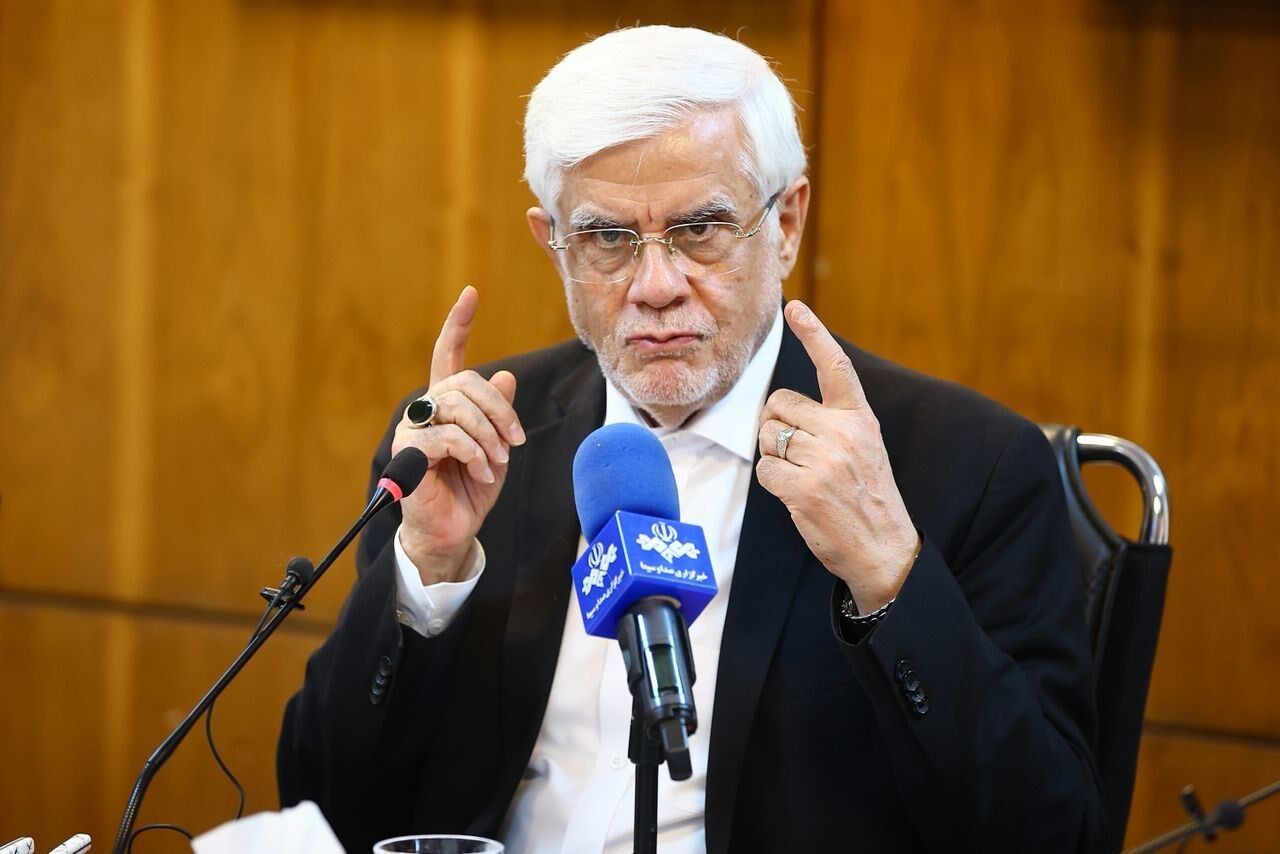


ALWAGHT- First Vice President Mohammad Reza Aref stated that during the Ramadan War, the enemy sought to cripple Iran's economy by targeting key industries in the recent US-Israeli attacks on the country's infrastructure. However, he noted that public resilience and government planning thwarted those plots.
First Vice President Mohammad Reza Aref, speaking Saturday to managers of Mobarakeh Steel and Persian Gulf Petrochemical Industries, emphasized the strategic role of Iran's steel and petrochemical sectors. He noted that despite damage from US-Israeli bombing, reconstruction is progressing rapidly with full government support. Aref praised Mobarakeh Steel for its production and social responsibilities, calling it a key economic driver, and stressed the need for a detailed crisis plan to maintain production during emergencies and for the post-war period. He also highlighted that the "War Economy Program" and "National Economy Resilience Program" enabled Iran to manage through two imposed wars over the past year, which, contrary to enemy expectations, elevated Iran's regional and global standing.
In a separate meeting with Persian Gulf Petrochemical Industries managers, Aref congratulated them for their determination during the war, stating that the American-Zionist enemy's strategy of attacking infrastructure to create chaos ultimately failed. The Vice President also referred to the Strait of Hormuz as a strategically vital passage that has become a decisive point for Iran, noting that proper management of this waterway can neutralize the effects of illegal sanctions imposed on the country.










