






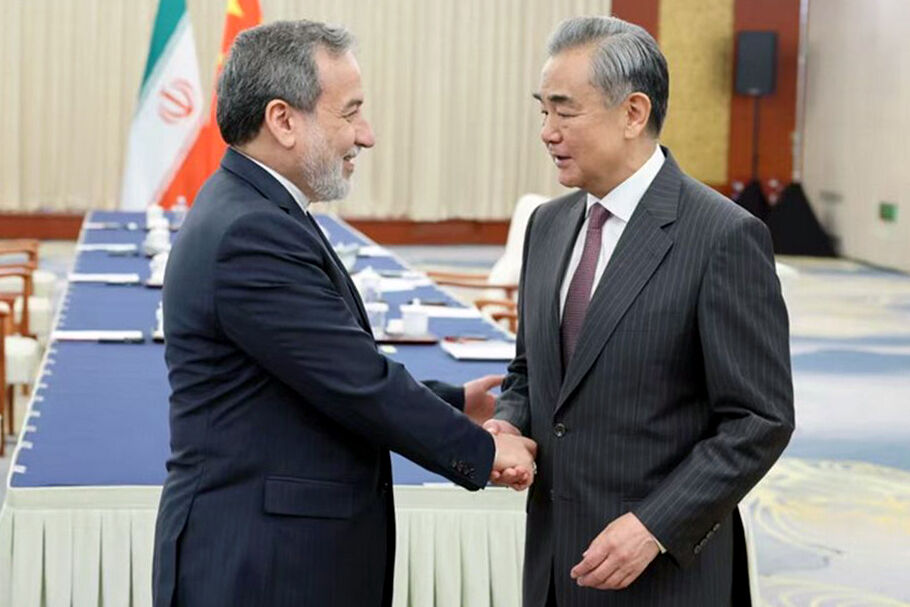


Alwaght- As a new wave of tensions has started between Iran and the US in the Strait of Hormuz in recent days, Iran's foreign policy has stepped into a more active stage in which Tehran seeks to boost coordination with its allies.
In this context, Iranian Foreign Minister Abbas Araghchi's visit to Beijing is a signal of Iran's push to beef up cooperation with China as its strategic allily to ward off the US pressures and work out ways to manage instability in West Asia region in general and Strait of Hormuz in particular.
Upon its arrival, the Iranian diplomatic delegation was given warm reception by Chinese officials. The two sides held talks on various issues, including bilateral relations.
In a key meeting, Araghchi engaged with China’s counterpart Wang Yi, addressing crucial matters in bilateral relations and regional developments. Wang Yi emphasized the necessity of de-escalating tensions, describing the current regional situation as a "critical turning point." He underscored the importance of establishing a sustainable ceasefire and direct dialogues among conflicting parties.
The top Chinese diplomat voiced China's steadfast support for the Islamic Republic, asserting that China's principled stance opposes the use of force and the continuation of this illegal war, which has devastating consequences not just for Iran but for all nations in the region and beyond. Highlighting President Xi Jinping's "four-point plan," Wang reaffirmed Beijing’s firm commitment to a diplomatic path. This plan focuses on an immediate ceasefire, dialogue, respect for sovereignty, and the establishment of lasting peace.
Xinhua News Agency also reported on the meeting, branding Tehran as a "reliable strategic partner," and emphasized the Chinese initiative to shape a "new security architecture" in the region. This initiative aims to foster a multilateral framework that replaces tension-laden rivalries with cooperative security, economic, and energy partnerships.
In return, Araghchi expressed gratitude for China’s positions, referring to Beijing as Tehran’s "close friend and strategic partner," and reaffirmed that cooperation between the two nations has strengthened in the current circumstances. He characterized the war imposed on Iran as a blatant violation of international law, asserting that Tehran will only agree to a fair and comprehensive agreement.
These stances indicate Iran's dual approach of maintaining its deterrence capabilities while seeking to bolster its international legitimacy and political support through diplomatic channels.
Notably, Araghchi’s visit to Beijing follows his last week to Russia, signaling a clear message to Washington and the international community that Iran is not diplomatically isolated amidst maximum pressure and escalating tensions. It actively leverages its connections with major powers.
It is noteworthy that China, as an influential power in West Asian dynamics, Iran's strategic partner, and permanent member of the UN Security Council that has direct interests in West Asia, has the capability to play a decisive role in advancing sustainable peace in West Asia and contain the US unilateralism on the world stage. The country has tried in recent months to defuse the tensions in the region.
China has been clear to criticize the US and Israeli aggression against Iran, calling for them to stop war on Tehran. Beijing has also backed the Islamic Republic in the international organizations and during the recent war, it frustrated the American campaign of pressure against Iran.
When Bahrain presented to the UNSC a resolution on March 11 condemning Iranian attacks on the US military bases in the Arab countries, China and Russia abstained from voting. However, the two vetoed a resolution drafted by the US and some Arab countries on April 7 calling on Iran to reopen the Strait of Hormuz it closed since war began.
China, a strategic partner to Iran
As the foreign ministers of the two countries made clear, a core goal of this visit is to further deepen and broaden the strategic ties between Tehran and Beijing across the board.
The China-Iran partnership is not confined to political coordination alone; rather, these relations are increasingly playing out in diverse areas on a strategic level. In recent years, overall trade between Iran and China has been on a clear upward trajectory, especially in the energy sector, which remains the backbone of their bilateral ties.
According to available data, China imported an average of roughly 1.38 million barrels of oil per day from Iran in 2025. That figure accounts for about 12 to 13 percent of China’s total crude imports, underscoring Iran’s significant place in Beijing’s energy mix.
On total trade, Iran’s Customs Administration put the volume of economic exchanges between Tehran and Beijing at around $32.3 billion in 2024. Meanwhile, Chinese customs data shows that non-oil trade between the two countries stood at about $13.4 billion in 2024, highlighting the substantial share of non-oil goods and services in their economic relationship.
However, more recent figures indicate that non-oil trade between the two nations dropped roughly 24 percent in the first 11 months of 2025 compared to the same period the year before, falling to about $9.09 billion. That includes $6.23 billion in Chinese exports to Iran and $2.86 billion in imports from Iran.
Precisely because of these deep and intertwined economic ties, China has resisted US pressure to cut cooperation with Iran, especially in the energy sector. In line with that stance, China’s Ministry of Commerce recently announced it does not recognize Washington’s unilateral sanctions on companies involved in Iran’s oil trade and will refuse to enforce them. During the recent conflict, despite security risks in the Strait of Hormuz, Iran’s oil exports to China continued, with multiple tankers making the journey through the waterway to Chinese ports.
Significance of Strait of Hormuz for China
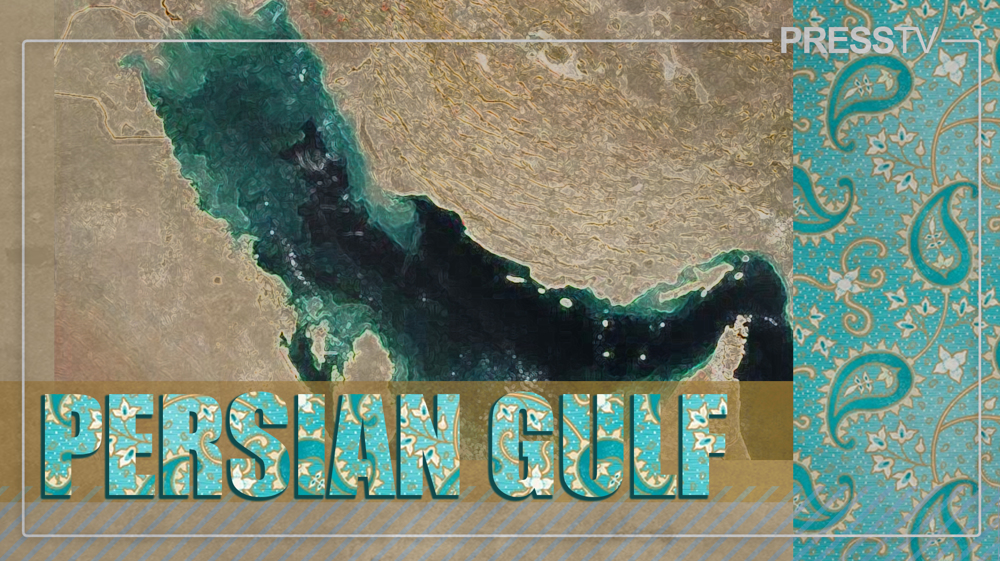
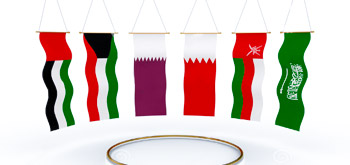
To get a better understanding of the Iranian place in the foreign policy of China, one should pay attention to the significance of the broader Persian Gulf region to Beijing. As the world's largest energy importer, China has deep dependence on the region's oil and gas. In addition to Iran, the Asian heavyweight has broader ties with the Arab countries of thd Persian Gulf, which are on the line due to the recent developments in the Strait of Hormuz.
China’s trade with the Persian Gulf Arab monarchies touched $280 billion in 2025, with Saudi Arabia and the UAE being the top trade partners and main energy suppliers.
On the other hand, over the past two years, China has dramatically ramped up its investments in Persian Gulf Arab countries, pouring in tens of billions of dollars. In 2024 alone, Beijing registered around $39 billion in its Belt and Road Initiative-linked projects across the region. Those investments, focused mainly on energy, infrastructure, petrochemicals, and technology, have continued their upward trend into 2025. This underscores that China is pursuing a multi-pronged, balanced policy in the region, seeing its interests best served by maintaining ties with all players.
Given this massive economic stake, the security crisis in the Strait of Hormuz has become a major concern for China. This strategic chokepoint is one of the world’s most critical energy shipping lanes, handling a significant chunk of China’s crude imports. Any disruption to tanker traffic there would directly threaten China’s energy security, and by extension, its economic stability.
That is why Beijing has consistently stressed the need to safeguard shipping security and freedom of maritime commerce, viewing any provocative actions in the area as a threat to global economic stability. In short, keeping the Strait open is a geopolitical priority for China, one that has turned Beijing into an active player in the region’s unfolding events.
So, as Iran’s FM visits China, Tehran is working to reassure its Chinese partner that stability and security in the Strait will be preserved, and Beijing’s economic and energy interests along this strategic route will not be disrupted.
From a geopolitical perspective, China views the current crisis not merely as a regional conflict, but as part of a broader rivalry with the US. In Beijing’s assessment, Washington’s strategy in recent years has been to tighten its grip on the world’s main energy arteries. China believes that the US first sought to cement its influence in the energy market by focusing on Venezuela’s oil resources, and has now turned its attention to the strategically vital Persian Gulf region.
Under this policy, the final goal of Washington is to press the independent energy suppliers to limit Washington’s import options prospectively. From this viewpoint, control of the viral energy transit routes is part of a broader geopolitical race to impact the global economy and influence Chinese economic growth.
So, the US loss to China can play into the hands of the Beijing’s strategic interests. Chinese view is that if Washington makes a landslide gain in West Asia region, it can apply the same model to press China in East Asia.
Meanwhile, the Taiwan Strait is of high sensitivity to China and Beijing is worried that the US position boost in the Persian Gulf will lead to higher capabilities and stronger later focus on East Asia front. Therefore, loss of the US in West Asia can to some degree mitigate the potential pressure on East Asia, giving China a higher opportunity to manage strategic competition in its peripheral environment.
Trump's important visit to China
Araqchi's visit to Beijing carries particular weight for the Chinese side, coming just before Donald Trump's upcoming trip to Beijing. Trump's visit comes at a time when the US is trying to hammer out new economic and trade frameworks aimed at extracting greater concessions in bilateral ties with China, meaning that Washington wants to sit down at the negotiating table while holding cards to play.
Despite political and trade tensions between the US and China in recent years, their economic relationship remains substantial. Even though two-way trade volume has dropped by about 18.7 percent, the US is still one of China's most important trading partners. Some estimates put the value of U.S.-China trade in 2025 at around $560 billion, roughly 8.8 percent of China's total foreign trade. In this context, Donald Trump is pushing new trade policies designed to tilt the balance of that economic relationship in Washington's favor.
In recent months, the US tried to build up leverage for such negotiations by creating pressure points on energy and critical oil routes. The focus on developments in the Strait of Hormuz should be seen through that same lens: controlling this energy chokepoint could have given America a powerful bargaining chip. But because Iran controls this strategic waterway, that strategy did not pan out, and related initiatives, including the so-called "Project Freedom" to reopen the Strait, effectively proved a failure story. The clearest sign of that failure was the postponement of the military operation only 24 hours after its launching.
So, Trump is engaging in new economic talks with Beijing without already securing energy play cards. From this perspective, Araghchi’s visit to Beijing can give China an opportunity for further coordination with Tehran to leverage West Asia geopolitical variables for recalibrating balance of power with the US and enhancing its position in the upcoming talks.