
















Alwaght- While the world community is putting high pressures on the Israeli regime to end Gaza war, the Israeli regime ruled by hardliners not only refuses to halt the conflict, but also by advancing destabilizing plans in other parts of the occupied Palestinian territories practically fans the flames of crisis.
In this context, the radical government of Prime Minister Benjamin Netanyahu on Sunday approved a new law according which the development of settlements and gradual annexation of the West Bank to the occupied territories will go faster.
The decisions include extending Israeli law to large parts of the West Bank's Area A and B, which are designated under the Oslo Accords as under full or partial Palestinian security control. The new measures grant Tel Aviv the authority to demolish Palestinian-owned buildings in Area A. Additionally, Israel will reactivate the "Land Purchasing Committee," a body that facilitates the acquisition of more West Bank land to expand settlements.
Among the most provocative steps is the repeal of a Jordanian law that previously restricted land sales to Jews. The package also transfers full administrative control of the Ibrahimi Mosque in Hebron, along with the Tel Rumayda and Qubeh Rachel neighborhoods, from the Hebron Municipality to Israeli authorities. In effect, these decisions shift key executive powers from the Palestinian Authority to Israeli bodies, paving the way for an increased military and administrative footprint in areas nominally under Palestinian governance.
The approval has sparked a wave of global backlash. Palestinian groups condemned the move as a flagrant violation of international legitimacy and signed agreements, particularly the Oslo Accords, and a direct threat to the Palestinian presence in the West Bank. Arab nations, the European Union, the United Nations, and several Western capitals have also denounced the decision.
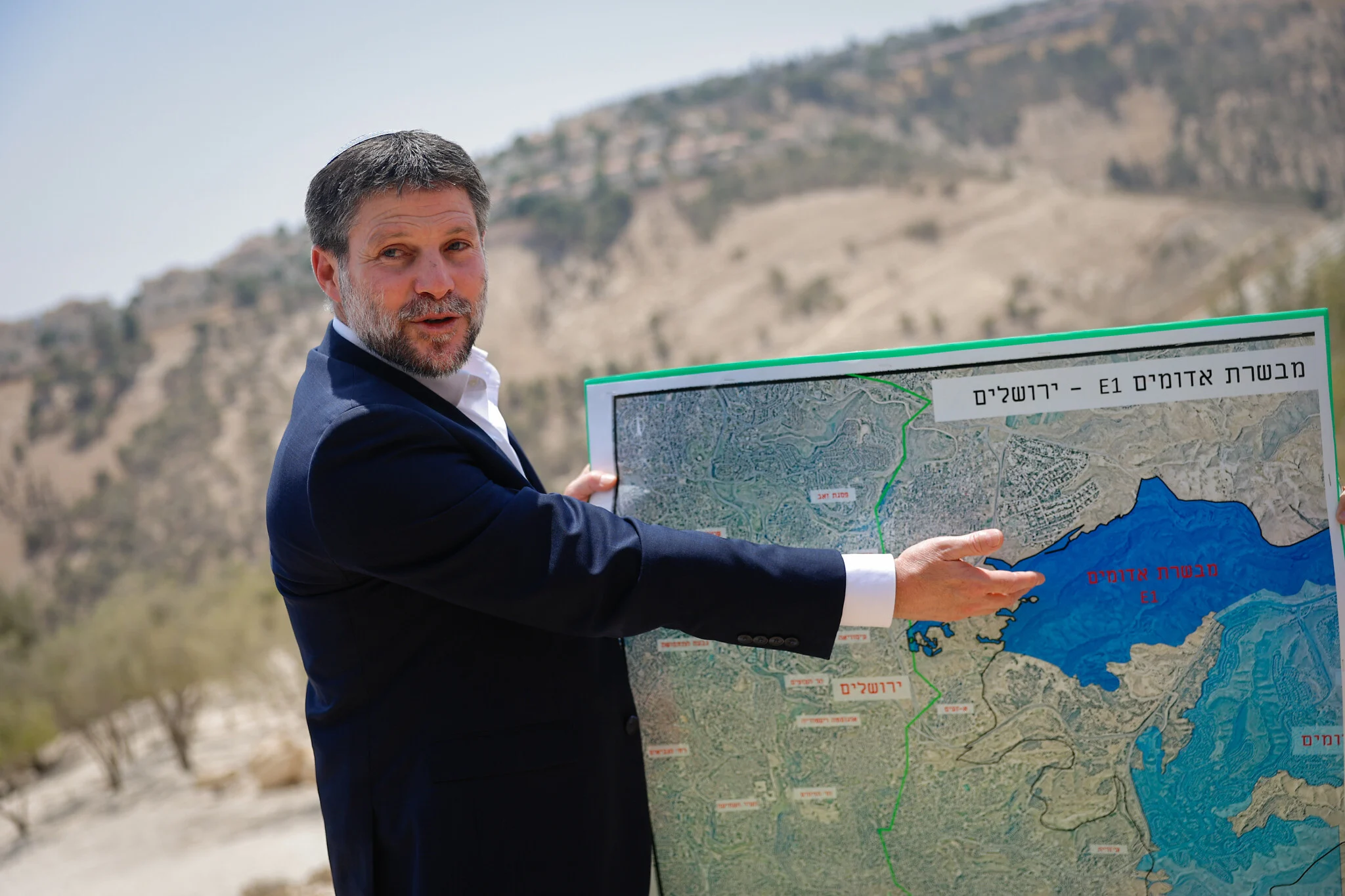
These latest measures are part of a broader annexation drive that gained momentum last July. Following that initial push, far-right Finance Minister Bezalel Smotrich unveiled a plan to annex 82 percent of the West Bank. The strategy aims to secure "maximum land with minimum Palestinians," while gradually dismantling the Palestinian Authority, which has served as the internationally recognized governing body in parts of the territory.
The push for settlement expansion and annexation represents a core ideological goal for the hardline factions within Israel's governing coalition. Netanyahu pledged to advance these policies in December 2022 to secure the support of his far-right allies when he took office. This latest move underscores the government's determination to press forward with its settlement agenda, showing blatant disregard for international law and Palestinian rights.
Death of Oslo Accords and two-state solution
The new law, which legalizes settlement and gradual annexation of the West Bank, marks a turning point in the course of the crisis between Palestine and the Israeli occupation.
This decision is not a simple executive process or technical amendment to a civil management system in the West Bank. Rather, it is a political and legal declaration about death of the Oslo Accords. Jamal Jumaa, the coordinator of the Palestinian "Stop the Wall" campaign told the Middle East Eye that "this decision is one of the most direct and most dangerous steps against the Palestinians. This means end of whatever was achieved by the Oslo Accords and will strip the Palestinian Authority of its rights."
The Oslo Accords, signed in the 1990s between the Israeli regime and the Palestinians, were based on the establishment of an independent Palestinian state alongside the occupying regime. But with the approval of this law, Tel Aviv has effectively transferred authority over key parts of the West Bank to itself and severely restricted the Palestinians' operational sphere. The primary goal of Tel Aviv’s territorial expansion in the West Bank is to cement permanent control over the land and alter realities on the ground in its favor.
This law has been passed at a time when several Western countries, including France, Spain, and Britain, formally recognized the State of Palestine just months ago. In this climate, the Israeli regime is using its new legislation to try and neutralize any international initiative supporting Palestinian rights and block diplomatic efforts on their behalf.
Netanyahu and his cabinet's radical ministers have repeatedly warned that they will not even allow the formation of a Palestinian state outside the occupied territories. Therefore, by expanding settlements and territorial encroachment in the West Bank while applying pressure on Palestinians, they are working to foreclose that scenario. This policy is effectively driving the two-state solution into a dead end and seriously jeopardizing the prospect of lasting peace in the region.
On the other hand, with hardline ministers conditioning their continued participation in the governing coalition on the perpetuation of occupation and the displacement of Palestinians from Gaza and the West Bank, this move by Netanyahu serves as a strategic concession to the right-wing faction, an effort to preserve his fragile alliance and prevent the government's collapse.
Netanyahu's government and his extremist allies are exploiting the security-driven and emotionally charged atmosphere stemming from the Gaza war to frame territorial expansion in the West Bank as a "legitimate response" to security threats, justifying it in terms of defending the regime's existence. This tactic is, therefore, a form of crisis exploitation meant to legitimize long-term aggressive actions.
That is why in recent weeks the Israeli forces, tightening security measures across the West Bank, have launched a new wave of arrests targeting the Palestinians. In the latest development, Israel forces raided Ramallah and Nablus, arresting 54 and injuring others. The campaign is aimed at intimidating the Palestinians to choke any opposition or resistance to the expansionist and occupation plans.
Tel Aviv’s new law is a kind of legitimization of construction of new Jewish settlements that according to reports have seen growth over the past three years. In 2023, Netanyahu’s government approved building 12,000 housing units in the West Bank and according to documented reports, thousands more were built in 2024. Even worse is the legalization of settlement outposts deemed illegal by Tel Aviv.
There are nearly 70 recognized rural and agricultural outposts that have received direct government funding to connect them to infrastructure, transforming these remote locations into daggers thrust into the heart of Palestinian villages. This systematic policy aims to create a contiguous settlement reality that consumes Palestinian living space and isolates them.
On the other hand, settlement expansion and changes to land ownership laws are poised to alter the demographic balance, marginalize the Palestinian population, and fracture Palestinian areas into smaller, isolated enclaves.
Hundreds of thousands of settlers now live in the West Bank, enjoying government backing, infrastructure, and special privileges. The recent legislation signals Israel's intent to cement its control over the West Bank through settlement expansion, restricting Palestinian access to land and resources, and intensifying administrative and military pressure. Furthermore, this decision is designed to facilitate the displacement of Palestinians from their ancestral land.
Escalation of tensions between Tel Aviv and Palestinians
After its experience of strategic defeats against the Palestinian resistance forces, Israeli regime is looking with great concern at the military influence of these groups in the West Bank. It has always feared the West Bank becoming a new front. And now understanding the security consequences, it is seeking to contain the nascent resistance groups in the West Bank befied they gain ground and establish their structures.
Still, Netanyahu’s adventures in the West Bank along with warmongering in Gaza can escalate tensions and push up attacks by Palestinian resistance groups and therefore threaten security of the Israeli settlers.
Hamas has issued a scathing statement condemning the Israeli cabinet's decisions as part of a broader annexation project and a policy of "ethnic cleansing," calling for an escalation in popular and on-the-ground resistance. The militant group's fierce response underscores how Netanyahu's push to implement expansionist plans in the West Bank risks igniting a new cycle of violence between the two sides.
Analysts warn that these measures represent concrete steps toward the gradual annexation of the West Bank, effectively creating new realities on the ground. In the long term, experts say, this trajectory is poised to heighten tensions, further erode Palestinian faith in international political processes, and render the already dim horizon for peace even more complex and unattainable.
In general, despite high logistical and military power of the Israeli regime, implementing controversial laws for territorial expansion in the West Bank amid Gaza war are seen by observers as highly risky and esclatory. Despite enjoying advanced arsenal of weapons and firm diplomatic and financial support of the West, Tel Aviv has not managed over the past two years to bring under its control the small Gaza Strip. So, the in West Bank which is larger and has bigger population, implementing annexation and settlement plans will face further obstacles.










