



Alwaght | News & Analysis Website

Editor's Choice

News

Most Viewed

Day Week Month

In Focus

Ansarullah

Ansarullah

A Zaidi Shiite movement operating in Yemen. It seeks to establish a democratic government in Yemen.
Shiite

Shiite

represents the second largest denomination of Islam. Shiites believe Ali (peace be upon him) to be prophet"s successor in the Caliphate.
Resistance

Resistance

Axis of Resistances refers to countries and movements with common political goal, i.e., resisting against Zionist regime, America and other western powers. Iran, Syria, Hezbollah in Lebanon, and Hamas in Palestine are considered as the Axis of Resistance.
Persian Gulf Cooperation Council

Persian Gulf Cooperation Council

A regional political u n i o n consisting of Arab states of the Persian Gulf, except for Iraq.
Taliban

Taliban

Taliban is a Sunni fundamentalist movement in Afghanistan. It was founded by Mohammed Omar in 1994.
  Wahhabism & Extremism

Wahhabism & Extremism

Wahhabism is an extremist pseudo-Sunni movement, which labels non-Wahhabi Muslims as apostates thus paving the way for their bloodshed.
Kurds

Kurds

Kurds are an ethnic group in the Middle East, mostly inhabiting a region, which spans adjacent parts of Iran, Iraq, Syria, and Turkey. They are an Iranian people and speak the Kurdish languages, which form a subgroup of the Northwestern Iranian branch of Iranian languages.
NATO

NATO

The North Atlantic Treaty Organization is an intergovernmental military alliance based on the North Atlantic Treaty which was signed on 4 April 1949.
Islamic Awakening

Islamic Awakening

Refers to a revival of the Islam throughout the world, that began in 1979 by Iranian Revolution that established an Islamic republic.
Al-Qaeda

Al-Qaeda

A militant Sunni organization founded by Osama bin Laden at some point between 1988 and 1989
New node

New node

Map of  Latest Battlefield Developments in Syria and Iraq on
alwaght.net
News

One Year On: Syria Stuck in Sectarian Strife, Justice and Reform Frozen

Monday 8 December 2025
One Year On: Syria Stuck in Sectarian Strife, Justice and Reform Frozen

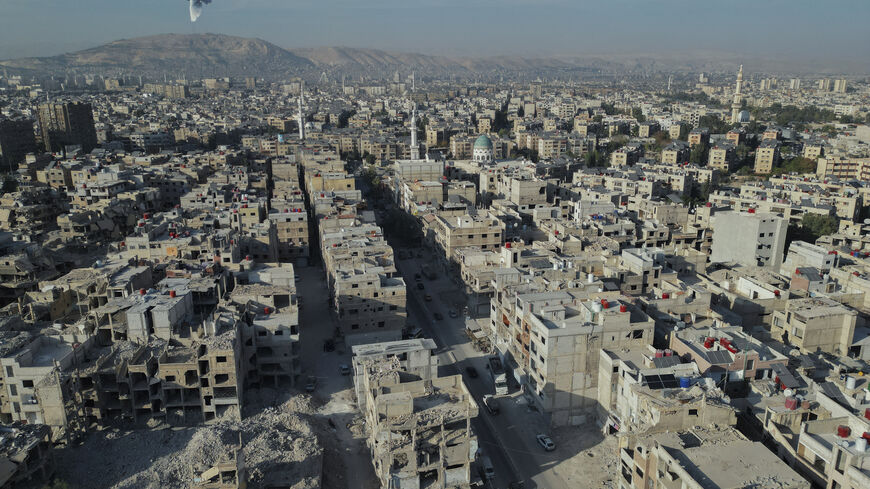
ALWAGHT- A year later, post-Assad Syria is still gripped by sectarian violence, stalled justice, and shaky reforms.

It has been one year since the sudden end of the Assad dynasty's 53-year rule, following a swift offensive. While the new government, led by Ahmad al-Sharaa, has successfully reintegrated Syria into the international community through diplomatic outreach and eased sanctions, the domestic reality is marked by deep uncertainty and unresolved trauma. Tens of thousands celebrated the anniversary, but many Syrians express fear and frustration over the slow pace of justice and accountability for past atrocities, with sectarian violence continuing to claim lives.

Despite international recognition, Syria's fragile recovery is overshadowed by persistent cycles of sectarian violence. Targeted killings occur almost daily in cities like Homs, and major massacres against Alawite and Druze communities have heightened fears and deepened divisions. These events have eroded initial optimism, leaving minorities feeling besieged and hardening local demands for independence, as seen in Sweida province, which has become effectively cut off from the rest of the country.

Transitional justice efforts have been symbolic and uneven, failing to keep pace with ongoing violence or provide comprehensive national reconciliation. While there have been isolated acts of accountability, such as the public confession of a perpetrator, activists warn that underfunded institutions and the lack of a clear national strategy risk closing the window for meaningful justice. The slow progress fuels public anxiety that daily assassinations could undermine the state's stability and the promise of liberation.

A year after the regime's fall, fundamental questions about democracy and freedom remain unanswered. Although public criticism of authorities is now possible, the political structure remains highly centralized, with a powerful presidency and a parliament not elected by popular vote. New security bodies, like the political affairs bureau, restrict political organizing and civil society, leading observers to warn of creeping dictatorship. Syria thus stands at a crossroads, balancing diplomatic gains abroad against the unmet demands for justice, security, and genuine democratic reform at home.


Tags :

Syria post-Assad sectarian violence HTS

Comments
Name :
Email :
* Text :
Send

Gallery

Photo

Film

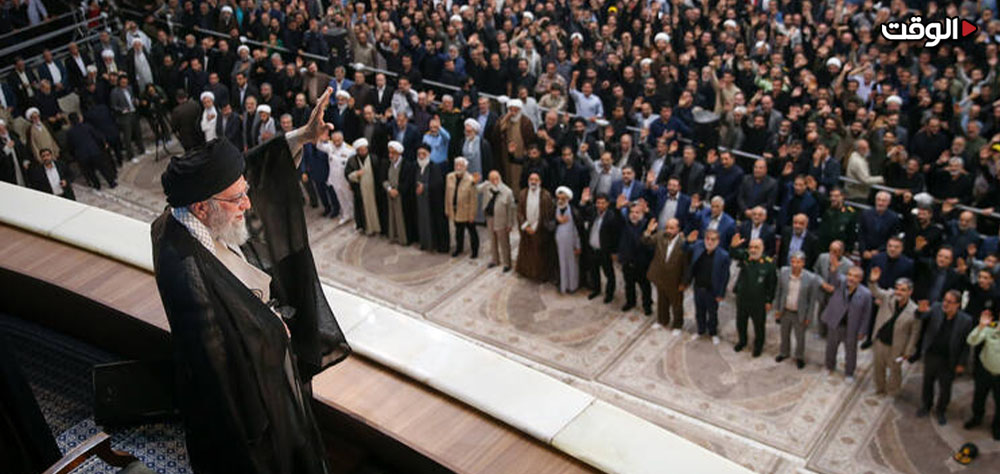
Commemorating the 36th anniversary of the passing of Imam Khomeini (RA), the founder of the Islamic Republic of Iran.

Commemorating the 36th anniversary of the passing of Imam Khomeini (RA), the founder of the Islamic Republic of Iran.