














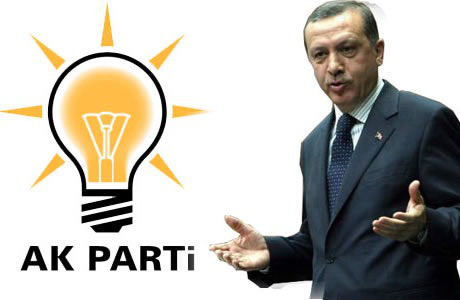


Alwaght- Turkey's Justice and Development Party (AKP) has declared victory in the country's early parliamentary elections, running counter to the expectations of most of the political experts and observers who are closely observing the Turkish affairs. Actually, the Turkish ruling party by this win has stepped in a long term of holding the party power in Turkey. But how were the Turkey's historical grounds in the time of foundation of AKP, and who are its present day leaders?
AKP was founded on August 14, 2001 by Recep Tayyip Erdogan, Abdullah Gul, Idris Naim Shahin, Binali Yilidrim, Boland Arinj, in an attempt to fill the vacuum created by the absence of a moderate Islamist party in the country. The party is currently led by Ahmet Davutoglu, Turkey's Prime Minister. The AKP's approach is a mix of conservatism, liberalism and neo-Ottomanism.
In the parliamentary elections in 2002, AKP won 34.3% of the votes with over 364 seats, and for the second time in the history of Republic of Turkey it rose to power as an Islamist party. But just unlike Welfare Party, AKP had a chance to develop and rule longer. In 2007 and 2011 parliamentary elections AKP won by 46.6% and 49.8% respectively. Winning less than 41% of votes in July 2015 elections, however, AKP failed to form a single-party government. As a result, in early November, snap election has been held, being the second parliamentary election in 2015. Securing 49.4% of votes in the country's 26th parliamentary elections, the AKP party has once again managed to lead a single-party government. The Erdogan's party has experienced big shifts continuously in its policies, from engaging in friendly ties with the Syrian President Bashar al-Assad's government to insisting on his removal, and from recognizing the Kurdish cause to denying it, and many other cases.
AKP's theoretical, economic and political views
Ideologically, detaching from a remarkably big part of the Kemalist government's legacy, the AKP has struggled to build a modern Turkey based on its ideological and theoretical principles. Despite having an Islamist vision of culture and the society, what makes the party different from Turkey's Islamist groups, and even the whole region, is its ideological leader's vision. The AKP, President Erdogan in particular, has been under influence of Ahmet Necip Fazil Kisakurek, the Turkish poet and thinker. Fazil was deeply in favor of Islamist government with a Turkish nature, a nationalist view to religion, and at the same time a single-party political system. He believed that Turkey should be ruled by a single party with a wise leader and a 101-member council and based on the Islamic ideology; a theory observably has influenced the AKP's policies and doctrine in recent years. This issue has been ignored by political experts in analyzing the AKP's ideological as well as political principles.
The ruling AK party has given the Turkish foreign and domestic policy a radical shake-up. Domestically, the ruling party's officials have reviewed Ankara's previous policies. Dealing with the Kurds, the government's secular policy, and the army's intervention in civilian affairs have been among the cases which have gone under fundamental transformations during the rule of AKP. For example, to attract the Kurdish citizens' votes the party has worked successfully, though the lasting Kurdish cause remains one of the AKP's strategic challenges.
On the other hand, Turkey's foreign policy has been arranged based on Ahmet Davutoglu's strategic depth doctrine. Highlighting the Turkish specific historical and geographical position, Davutoglu suggested that Turkey should play role as a central country in world's policy. Davutoglu also believed that Turkey should not be seen as a country dependent to the West or a buffer state between the East and West, but it is a pivotal country with a remarkable influence domain in its surrounding geographical region and even beyond. All in all, the strategic depth doctrine called for Turkey to fulfill a bigger role internationally, and in past few years Ankara has received a remarkable attention for its specific stances on the regional and international issues.
The success in the area of economy could be seen as the AKP's most significant breakthrough in the Republic of Turkey's history. Containing the country's raging inflation rate, the ruling party has paved the way for economic boom, in a way Turkey, in terms of economic growth, is known as the European China among the union's states. The high 70% inflation rate from which Turkey had been suffering for a long time was brought down to a single-digit rate, turning out as one of the Middle East's lowest inflation rates. Also, Turkey is considered among Europe's six largest economies. Moreover, the ruling Justice and Development Party in its ambitious long-term plan has promised the Turkish people that until 2023, which marks the 100th anniversary of foundation of Republic of Turkey, the country would rank among the world's ten largest economies.
The challenges ahead of Justice and Development Party
Turkey's AKP is facing simultaneously three big and strategic challenges, mostly deriving from the country's theoretical principles as well as its foreign policy approach.
1- The ruling party, AKP, during past years has shown noticeably its will to get a tight grip on the country's politics and power. A simple example is observable in the President Erdogan's big and luxurious palace, which he built with a total cost of over $600 million, containing 300 rooms. The AKP party intends to transform the country's political system from parliamentary to presidential initially, then, it would move to arrange the Turkish policies based on Ahmet Necip Fazil Kisakurek's political ideas. In this course, the ruling party is eyeing to build powerful and single-party Turkey. As it has kept following its political goals, AKP has put down the opponents, including fans of Fathullah Gulen, a Turkish US-based preacher and former Imam leading some opposition against Erdogan's government. Erdogan's party has also detained many journalists, making Turkey stand among the countries with largest number of detained journalists. It also intervened in the country's judicial system, quelled the opposition's protests, and suppressed the opposition groups and the civil society.
2- To find solution to the Kurdish cause, the AK Party is facing big challenges. Despite the fact that the ruling party has entered negotiations with the Kurds since 2009, called Oslo Negotiations, no concrete and legal results have come out of them so far. In past few months, the peace process has returned to its initial point after the armed clashes have erupted afresh between the two sides. During this period the AKP has followed the preceding Turkish governments in making polices and dealing with the Kurdish-populated areas.
3- Another big challenge which has remarkably damaged the credibility of Ankara government is concerned with the country's foreign policy, specifically in West Asia and in dealing with the neighboring countries, although a major part of the Davutoglu's strategic depth doctrine demanded zero problems with neighbors.”
The country improved ties to a great extent with Armenia and Greece as well as Iraq's Kurdistan and Syria through adopting the football policy.” However, after the Islamic Awakening in 2011, the Turkish foreign policy has been mostly based on ideological expansion, that led to Turkey's isolation in the region. At the time being, besides having deep discords with the President Bashar al-Assad's supporters in Syria, Turkey has a serious challenge in relations with regional countries, even with Egypt.










