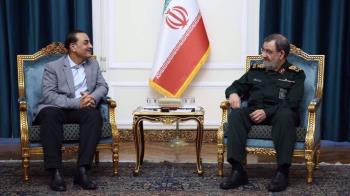







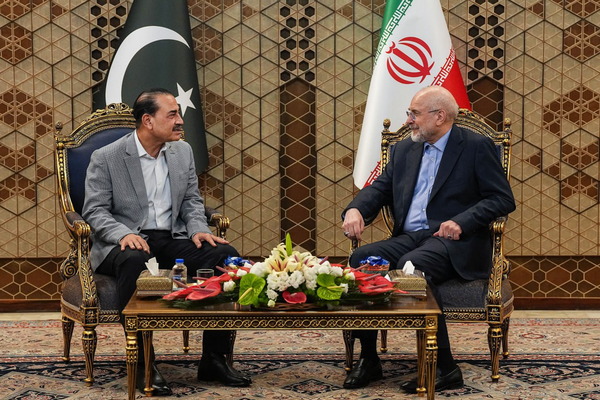


Alwaght- On Tuesday, in an important and attention-grabbing visit to Iran, the Pakistani army chief Asim Munir arrived in Tehran and held meetings with senior Iranian officials.
In the months since the 40-day war, diplomatic trips by officials from both countries have surged dramatically, and Munir is now embarking on his fifth diplomatic mission to Iran, yet this latest visit carries a markedly different mood from those that came before.
First, the prospects for a deal and mediated solutions between Iran and the US have dimmed considerably amid the White House's broken commitments, multiple fresh waves of conflict, and escalating tensions in the Strait of Hormuz; Washington's overreach has left little hope for reviving negotiations. Second, regional developments, particularly in Yemen, have pushed Pakistan out of its behind-the-scenes mediator role and toward a more active posture in the conflicts. Third, the border issue has opened a new chapter in the substance of talks between officials from both sides.
Together, these three dynamics have created an atmosphere that has profoundly shaped both the Pakistani army chief's visit and the Iranian side's reading of Islamabad's role, so much so that the two parties now hold sharply divergent views on what tops the negotiating agenda. While Asim Munir has placed mediation and easing the political and media climate to restore the diplomatic channel at the top of his trip's objectives, Iran regards bilateral relations as the more important priority.
Bilateral ties
The Pakistani army chief's trip to Iran came amid emerging challenges to bilateral ties and to the progressing course of political, security and trade relations. Specifically, two challenges stand out: a surge in terrorist activity along the two countries' shared border in recent weeks, and disruptions to overland trade, particularly the slowdown in goods movement through the Rimdan–Gabd crossing, which had brought trucks to a halt and created traffic at the border.
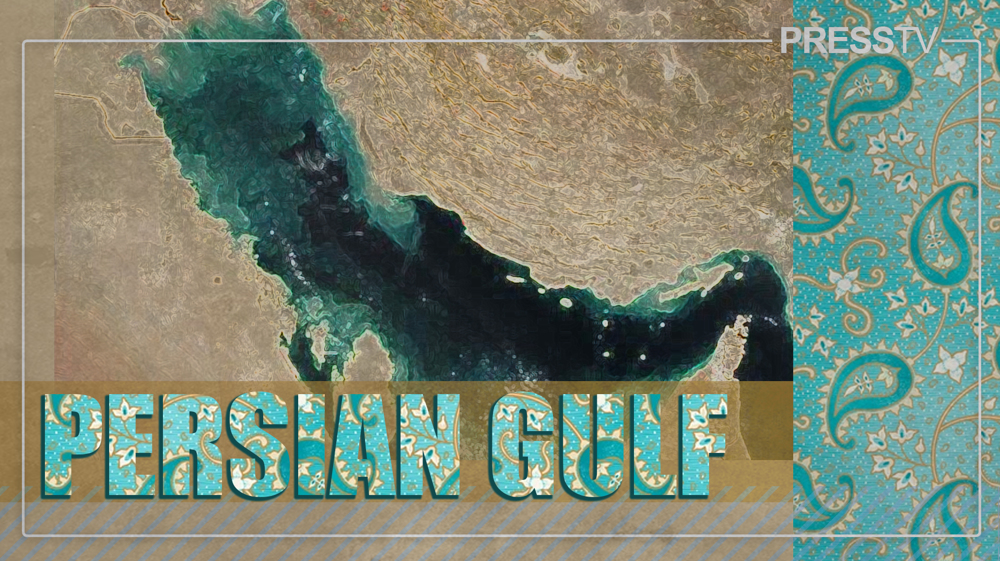
Amid Washington's intensifying economic and sanctions pressure, above all through its naval blockade across the waters of the Persian Gulf overland trade with neighbors has become one of the foremost governance priorities in Iran's foreign policy. Because of its impact on the critical component of economic resilience, the issue is indirectly bound up with the fate of the war. That is why, on this trip, resolving the border problems sat at the top of the Iranian side's demands. Responding to the parliamentary speaker's follow-up on cross-border exchanges between the two countries, Munir said the border issues had been temporary and technical, and that the border had been reopened as of today.
The other border issue concerns security. Tehran is demanding that Pakistan take its neighborly commitments more seriously in controlling and confronting threats emanating from its territory against Iran's national security and territorial integrity. In recent weeks, terrorist raids by hostile, separatist, and takfiri groups on border towns in Sistan and Baluchestan have killed a number of security personnel and civilians and created security challenges for local residents. Although the Islamic Republic's military, security, and intelligence forces have acted firmly and decisively in dismantling the American and Israeli mercenaries and have not allowed these elements to flex the muscles, from the Tehran's standpoint Islamabad's actions against these threats have been insufficient, something that could strain the two countries' fraternal and neighborly ties.
Regional issues and Yemen crisis
Another aspect of the trip is the dialogue over regional developments and the escalation of clashes in the Persian Gulf region, especially in Yemen and Bab-el-Mandeb Strait, which involves the Pakistani interests.
In this context, Pakistan's diplomacy is being read not as that of a neutral mediator but as part of the American-Saudi game, with its pieces deployed against the Iran-led Axis of Resistance alliance in the war, with a focus on controlling the energy crisis.
In the Yemen war, the Saudis in recent years have arrogantly refused to take any step through diplomacy and Omani-Qatari mediation toward lifting the inhumane naval blockade on Yemen and reopening Sana'a airport. Even when Sanaa government launched a legitimate military operation advancing into occupied areas on the western coast overlooking Bab-el-Mandeb aimed at lifting the blockade and establishing deterrence against Riyadh, and adopted a policy of reciprocal naval and aerial blockade against Saudi Arabia, the Saudis refused to retreat in the face of Ansarallah's legitimate demands, hoping to force Yemeni forces back into retreat and acceptance of defeat with the help of mobilizing a network of mercenary forces and bringing regional (Turkey-Pakistan) and international (West) allies into the field. But when evidence showed that this coalition-building campaign had failed and the Saudis were mired deep in the war's quagmire, they now hope that at this stage, and only until the anti-Sana'a front can regroup and perhaps the Egyptians enter the conflict in support of Riyadh, Pakistan will pave the diplomatic path, especially since Islamabad has shown no appetite for a military role in the war against Yemen, given widespread domestic public opposition and concern over regional consequences.
In this regard, Iran's principled policy has consistently stressed the futility of war with Sana'a and the necessity of addressing the war's root causes, a complete halt to Saudi aggression against Yemen, a full end to the blockade, and an end to interference in the country's internal affairs to pave the way for a political and diplomatic settlement. But at this stage, with Sana'a holding the upper hand in the war, diplomacy must naturally be pursued on the basis of realities on the ground.
Mediation amid collapse of Islamabad agreement
As said before, behind the renewed diplomatic push by Pakistan rests the concern over energy crisis, which has become the top priority of the US or better to say Trump. The US president has repeatedly said he has close and even friendly relationship with Munir and even coordinates his demands with him more than with the Pakistani government and the PM Shahbaz Sharif.
Now, with the crisis escalating in the Strait of Hormuz, tankers struck daily in the Persian Gulf and the Sea of Oman, and instability spilling over into another vital energy artery at Bab-el-Mandeb, heavy pressure has borne down on the oil market. As prices climb and American public opinion seethes over inflation and the economic fallout, the Republican campaign for the midterm elections has been thrown off course, leading Trump to conclude that the quick fix is to soften the atmosphere with a diplomatic play. Indeed, in this short span, oil prices that had reached $110 a barrel have already fallen by $5.
The manner in which Iranian officials engaged the Pakistani army chief made plain that they grasped the intent lurking behind the White House's move, ensuring not to play into hands of Trump. Parliament speaker Mohammad-Baqer Qalibaf, who heads the negotiating team in the Islamabad talks, recited the US long record of hostile acts against Iran before and after the Islamic Revolution and stressed the depths of mistrust toward Washington.
"Now, too, with the Trump administration's violation of the Islamabad memorandum and his repeated threats, the foundation of this mistrust stands taller than ever," he said.
Qalibaf made clear that Iran has nothing new to offer and that Washington cannot earn Tehran's trust except by implementing the seven conditions the Islamic Republic presented in New York.
In general, Iranian officials have taken Munir's trip to Tehran not as an issue inviting for optimism to the American and Saudi policies but within the framework of developments and the war requirements, an approach that rests on distrust in Washington and the need to calibrate diplomacy with the field realities.