















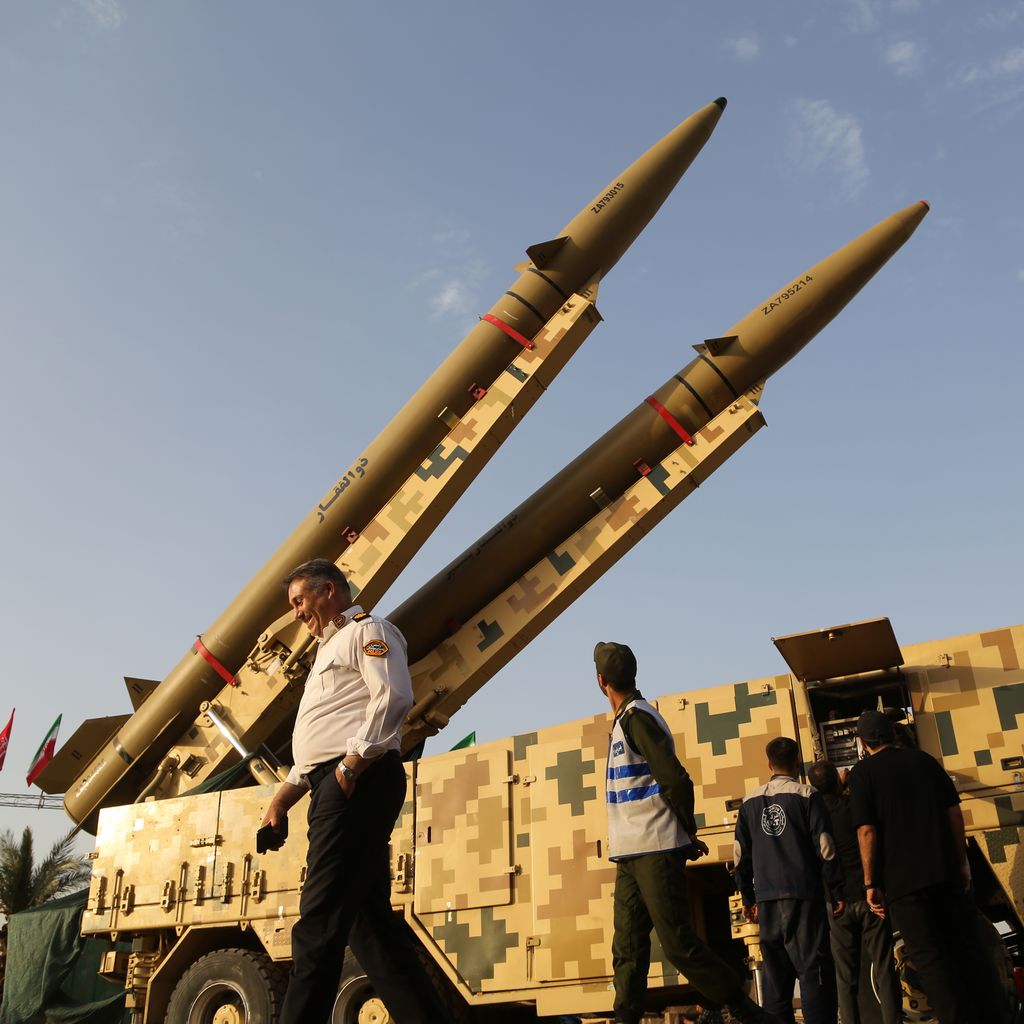


Alwaght- In the shadow of the informal ceasefire between Iran and the US and continuation of no war, no peace condition, the weapons stockpiles have become one of the most important issues discussed by military analysts.
While the Pentagon, under the influence of this atmosphere, has put forward an array of plans to increase its weapons production, the Iranian side has done the same and it is fast refilling its arsenal and developing new models that the Iranian officials say if Washington resumes its aggression, they will change the battleground equations and carry new surprises to the aggressors.
In this regard, IRGC Brigadier General Hossein Mohebbi addressed Iran’s military capabilities and the upgrading of its missile warheads after the second and third wars, stating: “We are advancing day by day across all categories of weaponry, and we are producing our arms with greater precision, higher destructive power, and more advanced technology.”
“If war breaks out again, our weapons will certainly be different from those of the past, whether in warhead generation, strike accuracy, missile range, or any other area,” Mohebbi said. The spokesman, asserting that Iran has never paused weapons development, emphasized: “Our missiles are guided and capable of in-flight course correction; they can alter their trajectory to evade defense systems and redirect toward a secondary target.”
Meanwhile, Defense Ministry spokesman Brigadier General Reza Talaie-Nik stressed that new arms are being produced to counter any future confrontation: “Our production over the past year has doubled compared to normal defense output. From February 28, the start of the third war of aggression, the defense production pipeline not only did not halt, but output of certain strategic items and priority munitions for combat needs more than tripled compared to peacetime rates.”
On why new weapons are not being unveiled under current conditions, Talaie-Nik said: “To prevent vulnerabilities and to surprise the enemy, it is imperative that information about the armed forces, the defense industry, and the logistical support cycle be safeguarded to the greatest extent possible.”
The Defense Ministry spokesman, stressing that the pause in unveilings does not mean a halt in weapons development, added: “Our commanders have full visibility and are closely tracking every dimension of production and upgrades, from ballistic and cruise missiles to drones, air-defense systems, and all other platforms required by the armed forces.”
New weapons are coming
In recent weeks, part of the weapons newly produced by the defense industries of Iran have been used in the battleground.
The last month attack on Muwaffaq Salti military base in Jordan was among cases that put the new missile capabilities of Tehran to display, drawing attention of the security and political circles of the US to the growing capacities of Iranian missile arsenal.
After receiving heavy blows from Iranian armed forces in the Persian Gulf, the US moved part of its forces, equipment, and military aircraft to Jordan to expand its operational distance from Iran in a bid to protect them from Iranian missiles and reduce their vulnerability. However, striking deep in Jordan by Iran despite intensive air defense coverage from inside Israeli regime and sustaining substantial damage shatterred this idea of immunity.
Following Iran's crushing strikes, The Wall Street Journal, citing US officials, reported that Tehran has upgraded its methods for evading American missile defense systems and used hypersonic missiles in its attacks.
The development signals a potential leap in the precision, guidance, and operational capabilities of Iranian missiles compared to earlier iterations, suggesting that in any future conflict, Iran's armed forces, relying on this new generation of weaponry, would be able to strike American assets and interests across the region with far greater accuracy.
Flexing muscles at all levels
The development of Iran's new-generation weaponry, across warhead design, weight, strike precision, and missile range, directly shapes the country's deterrence power and its capacity to inflict damage on adversaries, as security officials have underscored.
Greater missile accuracy signals a shift away from purely saturation-style barrages toward precision strikes. A missile with advanced guidance and higher precision can achieve greater effect with fewer launches, while placing heavier strain on the opponent's defense systems, a dynamic we witnessed firsthand in the strike on Jordan.
Following that attack, the Wana news website reported: "These changes go beyond enhanced firepower; they encompass greater strike precision, improved penetration of air defenses, expanded real-time intelligence capabilities, and a broader focus on disrupting military logistics. This may indicate the deployment of newer missile systems, upgrades to existing arsenals, or advances in guidance and targeting technology. Greater accuracy enables the targeting of vital military assets with fewer weapons, while simultaneously increasing the burden on defensive systems."
Alongside precision-strike advancements, upgrades to missile warheads could also reshape the battlefield equation. Enhanced destructive power, along with optimized weight and design, increases the damage per hit and amplifies the overall impact of Iran's missile strikes.
Extended missile range, if operationally realized, would expand the geographic scope of potential targets, allowing strikes against more distant objectives. When greater range is combined with higher accuracy and advanced guidance systems, Iran's capacity to threaten U.S. military assets across a broader regional expanse grows significantly.
A recent Financial Times report, citing Iranian sources on options under consideration for targeting US interests and assets in Europe, particularly in Cyprus and Bulgaria, should war resume, further suggests that Iran's missile reach now extends beyond West Asia. In the event of an expanded conflict, that capability could impose considerable costs on Washington even outside the region.
Quantitative growth of arms
Beside qualitative upgrade, increased production capacity can be of strategic heft. Multifold increase in production of some military wares during the war, as asserted by Iranian defense officials, shows that Tehran has pushed to develop its industrial capability and military industry proportionate to the requirements of a lengthy war.
Such capacity, in the event of a war of attrition, would allow Iran to replace expended munitions more readily and sustain operational continuity. The combination of qualitative upgrades with increased production output could therefore complicate the cost-benefit calculus for any adversary contemplating a new confrontation.
Separately, the maneuverability of Iran's new missiles, including their ability to alter flight paths and evade air-defense systems, if fully operational, would make trajectory prediction and impact-point calculation far more difficult for defensive systems, while shrinking response windows. This dynamic was starkly evident in the failure of Patriot and THAAD batteries in Jordan.
The American military assessments now indicate that Iranian missiles possess greater terminal-phase maneuverability, making interception harder even for advanced systems like the Patriot.
The American officials told The Wall Street Journal that the frequency of attacks and resulting casualties suggest Iranian forces still hold large missile reserves and have grown more adept at evading American air defenses.
This maneuvering capability, coupled with CNN reports that roughly 80 percent of THAAD interceptors were expended in the recent conflict, and that replenishing those stocks would take considerable time, could heighten Washington's vulnerability in any next engagement.
That Iranian political and security officials are warning that any US military action will be met with a proportionate, level-matched response may well signal Tehran's confidence in its new missile and weapons capabilities.
Finally, the main message Iranian security officials want to send is that in a rejuvenated war, Washington will face a new arsenal in which combination of broader range, higher precision, higher maneuverability, more destructive power, and higher production capacity can only erode the American defense equipment further and increase risk and cost of its military presence in the region.










