









ALWAGHT- From a postwar import economy to a sanctions-resilient powerhouse: Iran's Khamenei-era advances in missiles, drones, space, nuclear infrastructure, and science.
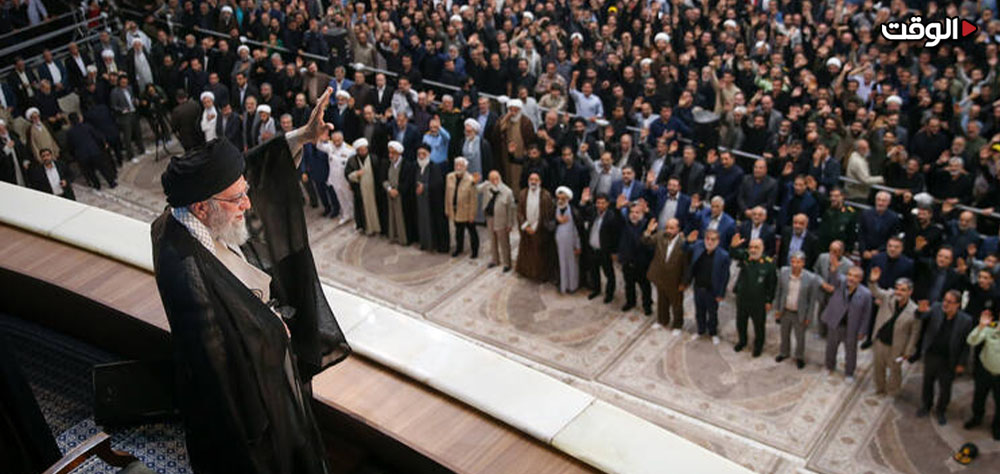
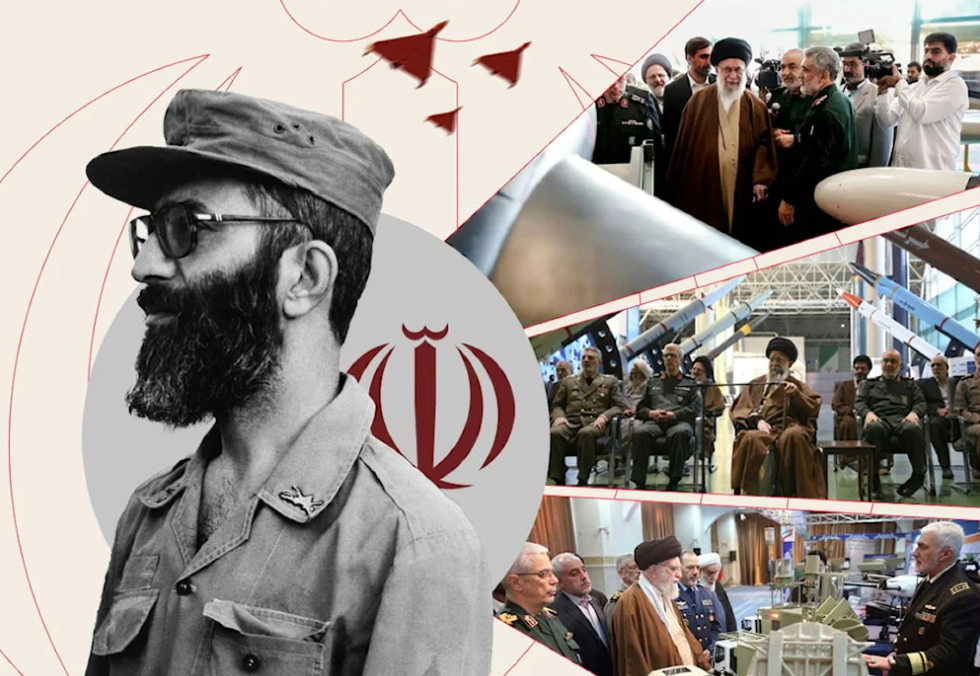
Under Ayatollah Seyyed Ali Khamenei's 37-year leadership (1989–2026), Iran transformed from a war-ravaged, import-dependent state into a sanctions-resistant regional power. Faced with embargoes, military threats, and isolation, Tehran pursued a doctrine of strategic self-reliance—turning pressure into an incentive for domestic capacity-building. By the end of his era, Iran had built indigenous strength in missiles, drones, space technology, nuclear infrastructure, and advanced scientific fields such as nanotechnology and biotechnology, making sovereignty and deterrence the twin pillars of its rise.
Iran's missile program became the clearest expression of this transformation. Beginning with inherited Scud-derived systems, Tehran developed an increasingly indigenous arsenal featuring solid-fuel missiles like Fateh, Zolfaghar, Dezful, and Sejjil, alongside longer-range systems such as Khorramshahr and Kheibar Shekan. The unveiling of Fattah, a hypersonic missile, in 2023 marked a new stage in deterrence. Operational use—against ISIS, Kurdish opposition, US forces at Ain al-Asad, and directly against Israel in 2024—demonstrated that Iran's missile force had moved from symbolic deterrence to credible combat capability, backed by underground "missile cities" designed for survivability.
Drones became the second major pillar of Iran's strike complex. The Shahed-129 provided persistent surveillance and strike capacity, while the Shahed-131 and Shahed-136 one-way attack drones gained international recognition for their range, affordability, and suitability for saturation attacks. The 2011 capture and reverse-engineering of a US RQ-170 Sentinel showcased Iran's ability to adapt foreign technology under sanctions. Together with missiles, UAVs gave Tehran flexible, scalable, and economically asymmetric tools for regional power projection and retaliation.
Iran's space and nuclear programs advanced alongside its military capabilities. The Omid satellite launch in 2009 made Iran one of the few states with sovereign satellite-launch capability, followed by the Simorgh launcher, IRGC's military satellite track with Qased and Qaem-100, and record payload missions in 2024. On the nuclear front, Bushehr-1 became operational in 2013, while enrichment advanced to 60% after the US withdrawal from the JCPOA—though the IAEA consistently reported no credible indication of a coordinated weapons program. For Tehran, both programs remained tied to sovereignty, energy security, and scientific independence.
Beyond defense and nuclear sectors, Iran made significant strides in science and innovation. It ranked among the world's top producers of nanotechnology research, expanded its pharmaceutical and biotechnology sectors, and grew its knowledge-based economy to over 9,500 firms by 2024. The Khamenei era's enduring legacy is a model of development built on self-sufficiency under constraint: sanctions did not halt Iran's progress but instead entrenched a doctrine of technological sovereignty, turning pressure into a state project of resistance, scientific advancement, and national dignity.