

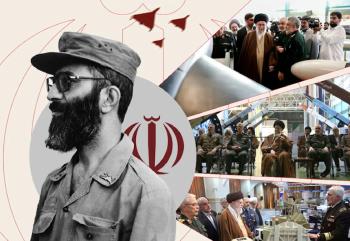















Alwaght- The funeral of martyred leader of Iran has turned into one of the most memorable and historic scenes of contemporary Iran and Islamic world. The ceremony not only saw massive turnout by people from Iran and various countries, but also drew massive media coverage from the world media and political circles. The popular turnout, the geographical scope of the commemorations, and reactions to them showed that this funeral was not just a mourning event, but one with political, social, cultural, and geopolitical aspects.
The ceremony bore in its heart various messages; from the deep bond among people and leadership to the reflection of the place of resistance among the public opinion and the regional dynamics. Shedding light on these aspects can given a clear picture of the significance of this historic event and its impacts on the future developments.
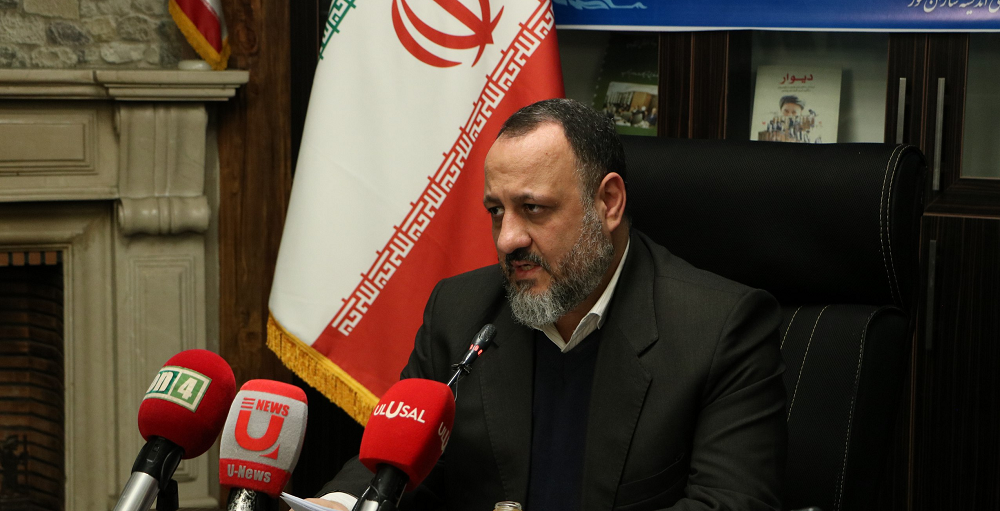
In this relation, Alwaght has talked to Ahmad Zarean, a political analyst and the head of Tehran-based Andisheh Sazan-e-Nour Institute for Strategic Studies.
Alwaght: How do you see the significance and messages of the historic funeral for the martyred Supreme Leader?
Zarean: The funeral procession for the Leader of the Revolution carries immense significance on multiple levels. He was no ordinary figure because he stood as one of the most towering personalities in Iran's history, across the region, throughout the Islamic world, and even on the global stage. He occupied the highest peaks of Islamic jurisprudence and scholarship, serving as one of the premier sources of emulation for millions. For 37 years, he steered the ship of a nation as large and complex as Iran, while simultaneously leading the Islamic Revolution and championing the broader movement of Muslim awakening and the world's oppressed.
Beyond that, he was the ultimate symbol of anti-authoritarian, anti-arrogance, and anti-Zionist resistance worldwide. The very manner of his martyrdom adds yet another profound layer. On the 10th day of the holy month of Ramadan, while fasting, in his workplace, with his family, reciting the holy Quran, he was attacked by the American-Zionist enemy. The reason for the this crime was that he refused to surrender the Iranian nation to the US. This echoes his famous words, uttered just ten days before his assassination on February 17: a resounding repeat of the Imam Hussein's declaration: "Someone like me does not pledge allegiance to someone like Yazid", with Trump as the Yazid of our time. This stance, this discourse, this unshakable belief, channels the very spirit of the Ashura movement, and that is yet another dimension of his martyrdom and the profound outpouring of grief that has swept the Iranian people.
All of these elements converge to make this funeral procession extraordinary. It has become a gathering of awakened consciences and pure human souls rising against the forces of evil on earth, a living embodiment of truth confronting falsehood. It is a raw display of free people everywhere standing up against tyranny, aggression, occupation, corruption, despotism, and colonialism, every last one of them.
So, the International imperialism and Zionism fronts mobilized their media and substantial resources to influence this large congregation of freedom-seekers in Iran and all countries that took to the streets to honor this great man.
Meanwhile, anti-Islamic Revolution groups and those who have no signs of humanity, patriotism, and dignity have tried, through rumors, hate speech, polarization, downplaying, and highlighting the marginal issues, to influence this big humanitarian movement. It appears that the Americans and Zionists have now suffered yet another defeat, this time on a entirely different battlefield. After failing in their 40-day war and coming up short in their bid to dictate terms at the negotiating table, they have now been routed on the front of public opinion and the war of narratives. This time, the people answered back, with tens of millions pouring into the streets of Tehran, Qom, Iraq, and Mashhad, delivering yet another stinging blow to the Americans, the Zionists, and their domestic and foreign lackeys. And the enemy is furious.
Alwaght: What is the secret of this deep emotional bond of the Iranian nation with the martyred leader. Why does the world just sees such scenes only in the funeral ceremony of the martyred Supreme Leader of Iran?
Zarean: Our martyred Leader was a man who ruled over hearts, not through force, but through genuine connection. If you scan the keywords that Supreme Leader Ayatollah Sayyed Ali Khamenei used throughout his 37-year tenure, one word towers above all others: "the people." For him, the people were not a rhetorical flourish or decorative phrase, they were the true engine of the Islamic movement, the anti-colonial struggle, and the fight against imperialism. He forged a deep, emotional bond with the masses, and his influence over them came from multiple directions. On one level, it was religious. He was a premier jurist, a religious authority of the highest rank, a cleric of rare piety, steeped in asceticism, God-consciousness, and simplicity, fully committed to Islamic ethics. That earned him love and moral authority among the people. On another level, it was his role as the helmsman of the Islamic system. Under his wise stewardship over 37 years, he propelled Iran toward genuine power. Today, every ounce of Iran's strength, its security, its national sovereignty, and its territorial integrity is owed to his far-sighted guidance. And the people are deeply grateful.
Then there is his scholarly legacy, his profound understanding of the value of knowledge, which he translated into a national drive for scientific advancement. And his unwavering focus on culture and the arts. The people grasped all of this over time. Even those who had been swayed by enemy psychological operations, who didn't fully see it before, came to understand the truth after his martyrdom. They found the motivation to make up for lost time, flocking to his funeral and other farewell ceremonies in droves.
Why do not we see such scenes anywhere else in the world? Because elsewhere, the relationship between leaders and the people is one-way and top-down. But in Iran, it is a deeply emotional, two-way bond. And if the martyred Leader's love for his people was not greater than theirs for him, it was certainly no less.
Alwaght: One of outstanding characteristics of this historic funeral procession was use of symbols and slogans by people. What is your assessment of the discourse driving this symbolism?
Zarean: At the funeral procession, we witnessed a flood of chants and slogans from the masses, each one carrying a clear, powerful message. The first theme: a steadfast pledge to continue the path of the martyred Imam. The second: a public oath of allegiance to his successor, Ayatollah Seyyed Mojtaba Khamenei. And the third: a roaring demand for revenge. The people are calling for vengeance, for the killers to be brought to justice. These three pillars formed the very backbone of the popular will on display throughout the funeral ceremonies, shaping the direction of every chant, every demand, every cry from the heart of the crowd.
Alwaght: What is the significance of holding the funeral procession in the Iraqi holy cities of Najaf and Karbala?
Zarean: The funeral of the martyred Leader in Iraq sends a powerful message: his leadership was never confined to Iran's borders and he was the Leader of the entire Islamic ummah. Had circumstances allowed for similar ceremonies in Yemen, Lebanon, Afghanistan, Pakistan, Turkey, or countless other nations, we would have witnessed the same million-strong outpourings of grief. That it happened in Iraq is but one living example of a broader truth: he was not merely Iran's leader, but the leader of the Muslim world. And the love, devotion, and conviction that millions now feel for him will, by nature, extend to the new Leader of the Islamic Revolution as well.
This funeral also stands as a testament to the deep bond between the Iranian and Iraqi people's, a powerful display that the Iraqi nation remains firmly committed to the discourse of resistance. And God willing, they will carry forward the martyred Leader's path in pursuing the anti-American and anti-Zionist ideals he championed.
Beyond that, the million-strong funeral in Iraq is itself a staggering demonstration of the credibility, influence, and sheer political weight of the resistance discourse across the region, especially in Iraq. And just as we saw in Tehran, the chants of blood-for-blood echoing in Iraq's holy cities carry the same demand: the call for retribution, for justice against the killers of the martyred Leader. It is a roar from the Muslim masses across the region, and soon, God willing, the enemies of Islam and the assassins of the Leader will face the wrath of Islam's fighters.










