













Alwaght- The Palestinian cause is one of the most intricate cases of the history. The many developments happening in connection with the Muslim's top-priority issue indicate its complication. In the time of the Islamic Era, Palestine was several times exchanged between the Muslims and Non-Muslims. Every time exchange of the Palestine was accompanied by odd incidents.
To avoid Palestine's falling to the Muslims, the Romans showed great resistance, and finally when they succumbed to the Muslims in the time of the Muslim caliph Umar bin Khattab, the sacred and historical places of Palestine had already received serious damages.
In late 12th century, the Ayyubid dynasty, a ruling dynasty in Egypt and Syria at that time, decided to take Palestine back from the Christian Crusaders. The Christians resisted so much and lost many of their forces but ultimately they had to give in to the army of the Ayyubids’ leader Salahuddin al-Ayubi.
Not forgetting the bitter memory of losing Palestine, the West eight centuries later decided to seize control of Palestine back by taking advantage of the weakness of the Ottoman Empire, the power ruling almost the whole Muslim world at that time. So, the West planned for a scenario of gradual occupation of Palestine by the Jewry. The Christian Europe in late 18th century and during a meeting in Basel, Switzerland in 1897 started implementing a plan to gradually occupy Palestine. Some 50 years later, it managed to realize its aims in Palestine. During the 50 years that it took to occupy Palestine, hundreds of thousands of Palestinians were killed and hundreds of thousands of others were displaced. Now, the displaced Palestinians account for world's largest displaced population.
Even today, the Israelis are engaged in their transfer and establishment process in Palestine. The Palestinians are, on the other hand, grappling with the same problems they faced in the initial years of their country's occupation. The al-Quds and the perils it faces, the Palestinian refugees and the challenges of returning home, the organized violation of the human rights in occupied territories by the Israelis, the Palestinians’ being ignored by the Muslims, the weakness of the leaders and organizations which are supposed to be effective in terms of defending the Palestinian rights, all are difficulties in the eyes of the Palestinians.
In recent years, the existence of terrorist organizations in the region which have exhausted all of energy and attention of the Muslim and Arab countries have been significant in pushing to the sidelines the Palestinian cause as top challenge of the Muslim world.
A part of Palestine is Gaza Strip, where the people are dying a gradual death due to the 9-year siege imposed on them by Tel Aviv. Another part of Palestine is the West Bank which is suffering from an identity crisis due to deep rifts between Hamas and Fatah, two leading movements of Palestine. The situation of the Palestinians living inside the 1948 territories, namely the first Palestinian lands occupied by the Israelis, is largely uncertain.
In the heart of Palestine's community, the quest for an established identity is still a top issue. The young generation of Palestine which lost hopes in the nationalist and leftist Palestinian groups in the mid-1980s, now and under the effect of Palestinian Islamist groups’ infighting is shifting to a new approach which has kept the strategy of fight against the Israeli regime as a major choice — an approach similar to the ideological framework of the revolutionary youths of Egypt, Tunisia, Yemen and Libya in 2011.
In fact, Palestine is undergoing a restoration of energy three decades after the 1980s. On the other side, the Israeli moves have witnessed a tangible intensification. The current cabinet of the Israeli Prime Minister Benjamin Netanyahu is reeking of willingness to impair the Palestinians.
Appointing Avigdor Lieberman, the leader of Israeli regime’s most extremist political party the Yisrael Beiteinu, as Tel Aviv’s minister for war affairs shows that the Israelis fell freer to putt further strains on the Palestinians. All these are part of a bitter truth of the circumstances of Palestine.
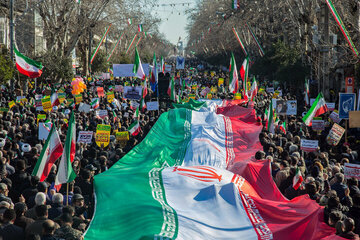
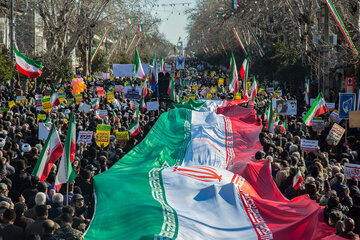
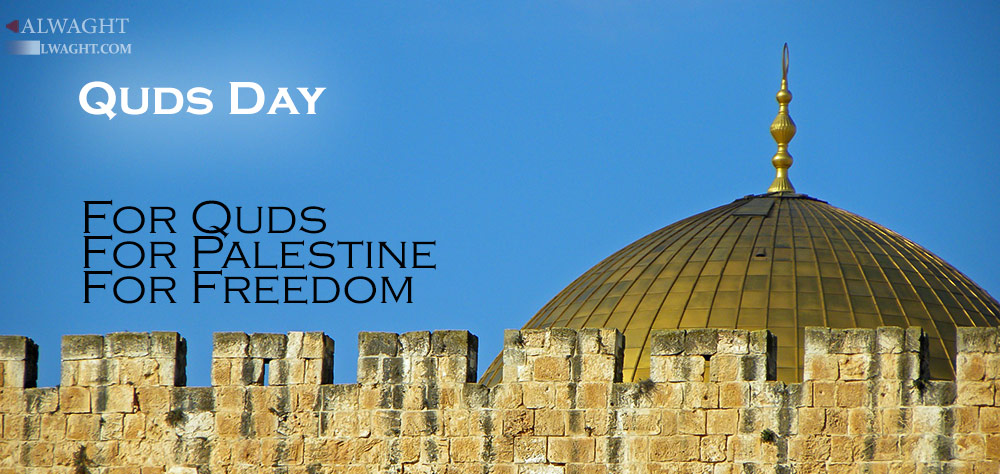
The Quds Day rally, which is marked on last Friday of the holy Ramadan month every year, must be held as warm as possible to bring about for Palestine refreshed morale and atmosphere, otherwise, it is likely that it doesn't take long time for Al-Quds to be fully swallowed up by the “unfeeling” Israeli regime.