
















Alwaght- The developments in Afghan province of Badakhshan over the past two to three weeks, along with the clashes there, are no fleeting local skirmishes. They point to something far bigger, especially now that Hezb-e-Islami’s active involvement, under Gulbuddin Hekmatyar’s banner, has injected a new, more dangerous dimension into the conflict. The blunt statements from Habib-ur-Rahman Hekmatyar, the party leader’s son, backed by certain analysts’ assessments, signal this political-military faction’s formal, strategic entry into the new developments of the political order of the Taliban in Afghanistan.
Habib-ur-Rahman has explicitly framed armed resistance as a legitimate principle. Seizing on the escalating Badakhshan tensions, he fired off a sharp, immediate response Monday on X, posing a fundamental question and throwing his weight behind the Taliban’s armed opponents.
"If the Taliban claim the right to seize power through war," he argued, "then others have every right to fight for their say in this country's future," he said.
With that logic, he dismissed any attempt to deny opponents their "inalienable right" to resist. While noting that "no Afghan citizen wants insecurity," he pinned the recent turmoil squarely on the Taliban's failed governance, accusing them of rejecting "any reasonable solution", meaning inter-Afghan dialogue for an inclusive interim government, and clinging to power monopolization and imposed diktats. In a warning tone, he added that "hostility toward fellow compatriots could backfire badly," and if the situation spirals further, "history, the people, and the world will heap the blame on the Taliban’s shoulders."
He also predicted that Badakhshan’s unrest could rapidly spread to other provinces, with the Taliban losing checkpoints and supply routes, and facing an expanding guerrilla-style insurgency.
Habib-ur-Rahman’s words are no mere media soundbite. They lay bare a simmering resentment and a clear drive to mobilize a cohesive structure for serious opposition to the Taliban’s totalitarian rule. Crucially, Hezb-e-Islami elements have long been active in Badakhshan; Kunduz and Badakhshan have essentially served as the party's strongholds, and it remains one of Afghanistan’s historically entrenched political forces.
Field evidence shows that after Gulbuddin Hekmatyar joined the previous government, his party's forces were mobilized and equipped as local police units across most provinces, including Badakhshan, Kunduz, and Takhar. That existing infrastructure has now become a ready-made springboard for the current maneuvers.
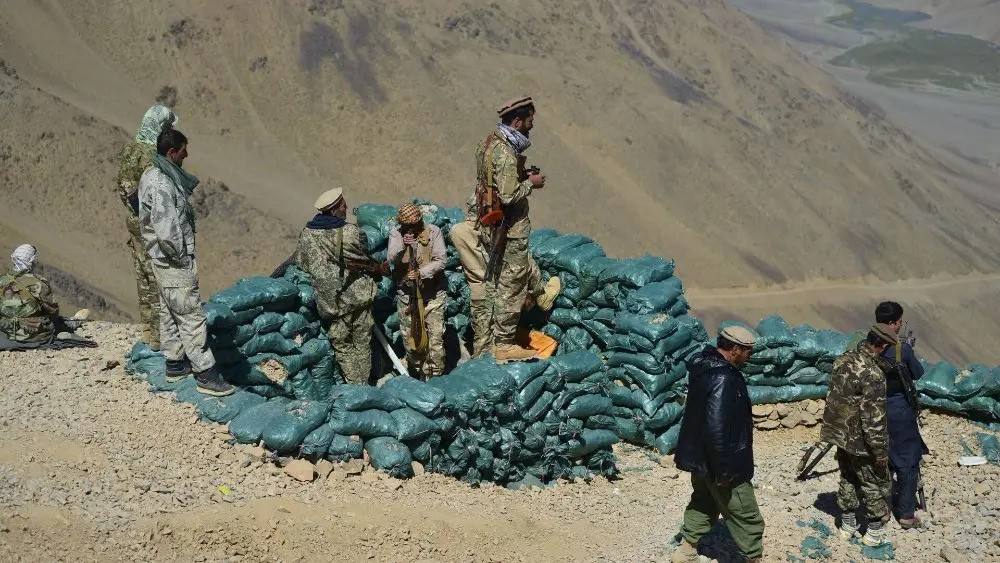
Equally serious is Hezb-e-Islami’s alignment with anti-Taliban fronts. Habib-ur-Rahman’s statements come as the Afghanistan Freedom Front and the National Resistance Army for the Homeland have been locked in heavy clashes with the Taliban in Badakhshan’s Zebak and Yaftal districts. By championing these groups' "right" to fight, Hezb-e-Islami is effectively offering political cover and de facto legitimacy to those operations.
At its core, Hezb-e-Islami seeks a "united Islamic state", a vision fundamentally at odds with the Taliban’s tribal-centric approach. That ideological rift has increasingly translated into open rivalry and armed confrontation between the two factions on multiple fronts.
Starting new phase of resistance
Afghanistan affairs observers insist that these developments bear witness to start of a new period and they describe Badakhshan unrest as the "initial sign of the growing popular resistance", adding that entry of an organized and ideologically backed party like Hezb-e-Islami goes beyond a local insurgency.
So, these tensions could well spiral into a nationwide, strategic Flashpoint, and potentially set a template for other anti-Taliban groups across Afghanistan to follow.
Taken together, the evidence clearly points to Hezb-e-Islami, under Hekmatyar’s leadership, repositioning itself as a key player in Afghanistan’s new power calculus, staking out an unequivocal pro-armed-resistance stance while mobilizing its own organizational machinery. This intervention has dramatically upped the security and political ante for the Taliban.
Still, the coming days will tell whether this analysis holds up on the ground, or whether Habib-ur-Rahman’s rhetoric has been blown out of proportion by the media.










