









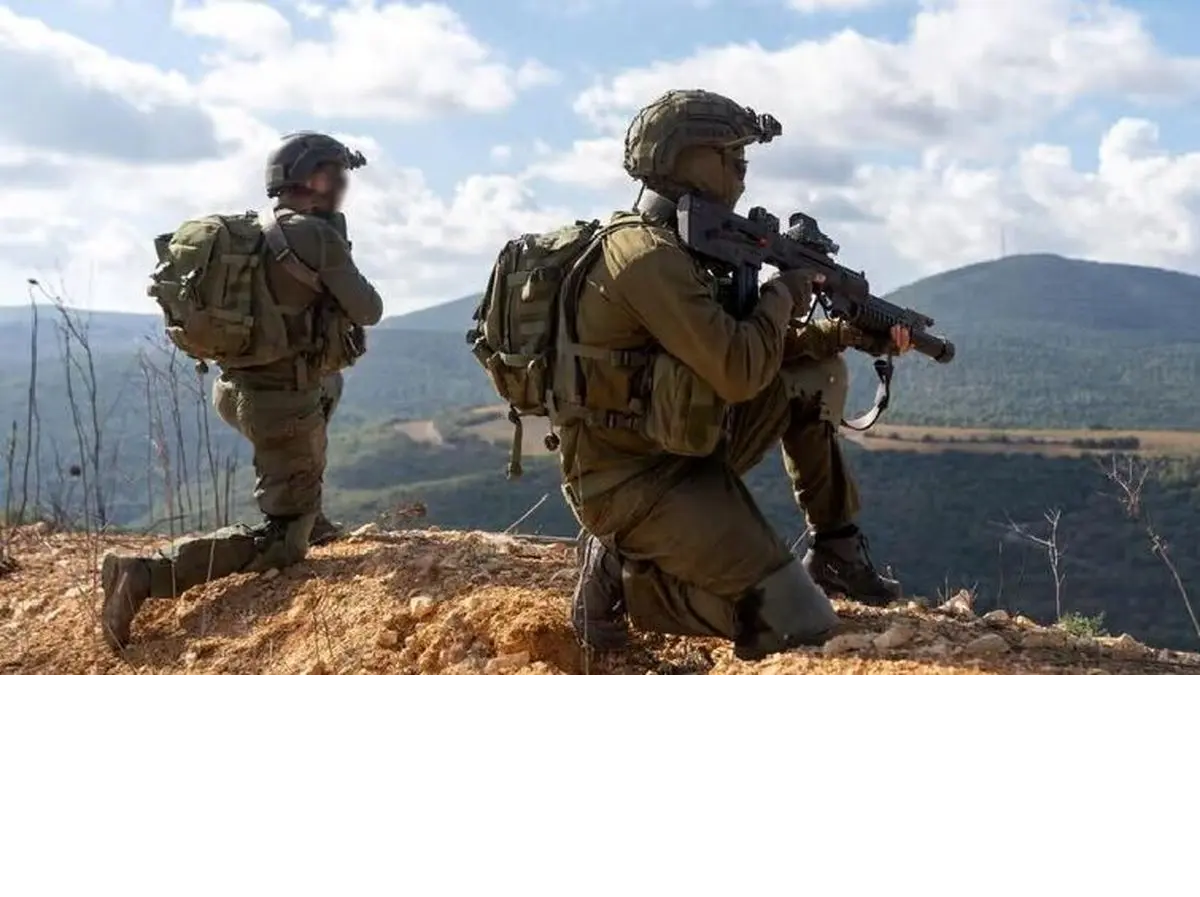


Alwaght- While regional mediators and key international actors are trying to end a lingering crisis and restore stability by pushing for end of the war in the Persian Gulf, the Israeli war machine in Lebanon is moving to generate further crisis and chaos. Tel Aviv not only has not stopped its attacks on southern Lebanon, but also broaden its range.
Israeli Prime Minister Benjamin Netanyahu on Tuesday said that Tel Aviv has decided to escalate war in Lebanon, claiming that the army is operating inside Lebanon with massive forces. He added that it has seized a number of strategic positions and is boosting a safe zone on northern borders. These remark indicate continuing pro-military approach of the Israeli regime and disregard of the efforts to bring calm back to the whole region. According to reports, the occupation forces have issued immediate evacuation orders to 13 towns in the south.
The escalation comes before a new wave of talks between Beirut and Tel Aviv talks mediated by Washington, suggesting that the Israelis plan no concessions in diplomacy and essentially as Hezbollah had warned the Lebanese government about the risks of negotiations for Lebanese home security, diplomacy is serving as another side of the blade of the Israeli military operations.
From the outset, the Hezbollah’s calculus has been built on one core conviction: the only path to liberation, deterrence, and forcing the enemy to retreat is the fighting force on the ground, not political promises or agreements that Tel Aviv has never honored.
So Hezbollah, paying no heed to political threats or pledges, has thrown its full weight behind countering advances and the regime’s latest military escalation, seeing it as a dangerous move that could shatter Lebanon’s internal stability.
Yet, looking at recent developments, the new wave of Israeli army attacks seems less a sign of battlefield superiority against the resistance and more a reflection of the difficult, tangled situation Tel Aviv finds itself in. From internal crises and political pressure on Netanyahu’s cabinet, to shifting dynamics in Lebanon and rapidly changing regional equations, the Israelis are being pushed toward escalation.
That’s why Tel Aviv’s intensifying strikes convey less a message of strength than one of anxiety, confusion, and a desperate bid to escape mounting political and security deadlocks.
Dissolution of the Knesset; Netanyahu in home swamp
Announcing a new wave of military advances deep into Lebanon comes as inside Israel, Netanyahu is being squeezed by one of the most critical periods of his political life.
As the regime moves to the parliamentary elections of November, Knesset has recently voted to self-dissolve, putting the government at a shaky ground. Gaps inside the ruling coalition and dropping public trust have put the PM in a tight spot, motivating him to resort to security and military instruments to escape this predicament.
Netanyahu knows very well that whenever political atmosphere casts its weight on him, reactivating foreign fronts can distract the Israeli public opinion and produce a kind of security and political cohesion around his cabinet.
So, for him, keeping tensions high on the Lebanon border and continuing the fight with Hezbollah is not just a military matter, but it is a political tool to manage his domestic crisis and prolong his government’s survival. In fact, after hardliners in his cabinet, like National Security Minister Itamar Ben Gvir, erupted over the ceasefire in Gaza, the war in Lebanon became one of Netanyahu’s key ways to keep them on board.
Failure of the plot to disarm Hezbollah using Lebanese government
Lebanon’s internal dynamics are another factor driving Israeli regime to keep ratcheting up the conflict and push ahead with its objectives. Over the past few months, Netanyahu sought to pressure the Lebanese government into signing off on Tel Aviv’s demands, particularly on the issue of Hezbollah’s disarmament, through political pressure and negotiations. However, this effort failed to pan out, both at the negotiating table and on the domestic front in Lebanon.
Attempts to step up political pressure on Hezbollah through Beirut government and stir up internal divisions within Lebanon also failed to yield any tangible gains for Netanyahu’s government. These setbacks have prompted Tel Aviv to fall back on the option of military aggression once again, in the belief that it can achieve on the battlefield what it was unable to pull off through diplomacy.
Some analysts argue that Israel’s attacks are less a sign of strategic superiority than a reflection of Tel Aviv’s political and security deadlock in the Lebanese arena. Lebanese analyst Ali Haidar told Al Jazeera that “the real driver behind this escalation is Israel’s sense that it is boxed in. It is neither able to fend off the resistance’s attacks, which are mounting by the day, nor can it back down, since doing so would amount to a major strategic defeat. As a result, it is trying to make some sort of achievement, at least in terms of its image and standing.”
Worry about Iran-US agreement
On top of these issues, regional developments are also playing a major role in driving Tel Aviv’s escalatory behavior. Reports about progress in Iran-US talks and the two sides reaching preliminary understandings on certain points of contention have caused clear anxiety in Tel Aviv. Netanyahu fears that any potential deal between Tehran and Washington would only strengthen the Iran-led Axis of Resistance in the region and cement a ceasefire on the Lebanon front. Iran has made the cessation of war on all fronts, especially in Lebanon, one of its main conditions and red lines in any agreement. Meanwhile, some reports point to rising tensions between Netanyahu and Trump over this very issue.
In this atmosphere, Netanyahu and the hardliners in his cabinet are trying to complicate any regional deal by ramping up tensions on the northern front. His repeated insistence that the Lebanon case has nothing to do with talks with Iran should be understood in this same context. Tel Aviv is trying to send a clear message, suggesting that in Lebanon case, it will act independently of any regional diplomatic developments, and it has no intention of backing down.
Lebanon, an impossible task
Though like before Netanyahu tries to, relying on military power, advance his occupational agenda in the region and Lebanon, the developments of the past months show that continuation of this hawkish policy will yield no fruits to Tel Aviv.
Lebanese political analyst Ali Haidar weighed in on the security fallout of Tel Aviv’s provocations, saying: “These incursions are expanding the occupying army’s footprint in southern Lebanon, which in turn makes it easier to expose new surprises for the resistance. So the resistance may unveil fresh battlefield achievements, as it has accustomed us to gradually rolling out its tactical cards throughout the war.”
According to the Lebanese analyst, one of Hezbollah’s possible shockers could be the unveiling of drones with a 50-kilometer range, especially since it has not yet revealed 30-kilometer-range drones.”
It is noteworthy that in recent weeks, Hezbollah has already been shifting the battlefield equation against the occupying regime by using fiber optic-guided drones. These low-cost drones have inflicted significant blows on Israeli forces, so much so that Israeli troops see retreat and abandoning the battlefield as the only way to survive attacks from these small weapons.
Israeli news outlets have recently confirmed that the Israeli army has withdrawn from certain areas in southern Lebanon to reduce casualties from Hezbollah's drone attacks. Israeli officials and political analysts also acknowledge that they currently have no effective way to counter these drones, and as a result, they are suffering significant losses and casualties on the battlefield.