












Alwaght- The Israeli Prime Minister Benjamin Netanyahu, who has proven a pro in evading the critical junctures at home politics, is finding himself in a trouble anew. As his political allies in the parliament separate ways from him one by one these days, he is feeling the shadow of political death more than any other time upon himself.
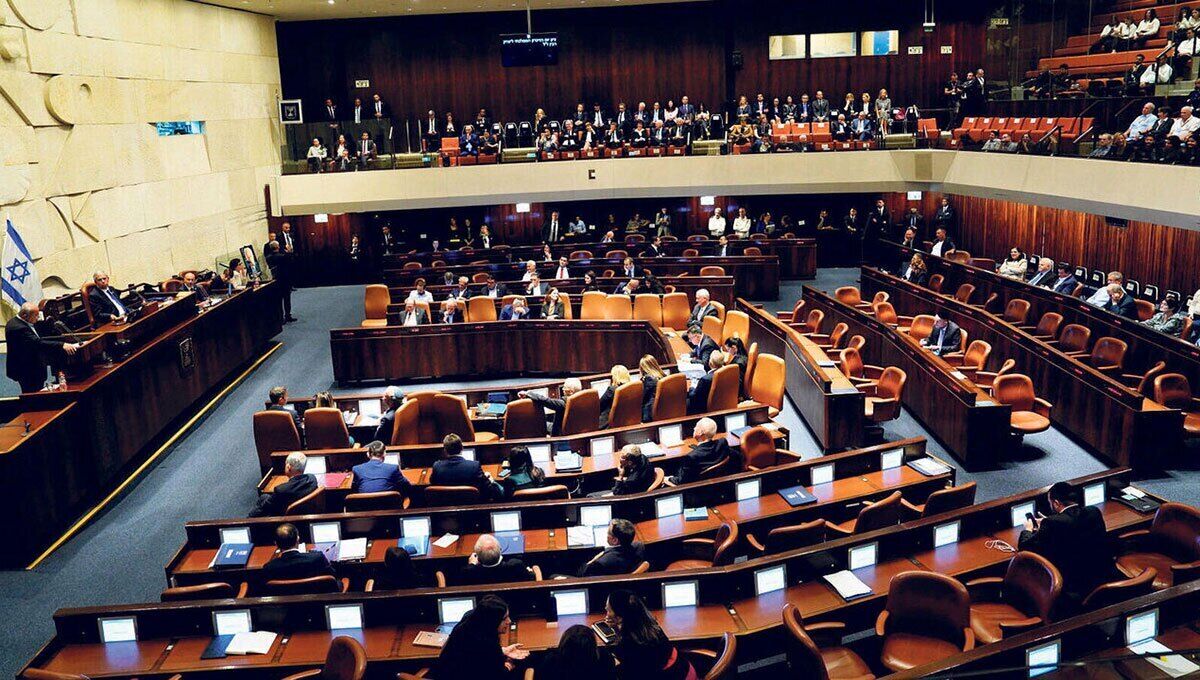
It started when the Knesset on Wednesday put to vote in early reading a draft bill calling for self-dissolution, one that was passed after an unprecedented support and a landslide vote of 110 members of the Israeli parliament, with none voting no. However, this is the start of a legal motion and to conclude, it needs to pass three other stages of debating and voting, expected for the coming weeks.
With this preliminary approval, the legal process of dissolving parliament has entered a more serious phase, and discussions on scheduling early elections are now on the agenda. According to the current political calendar, the current Knesset term ends in October, with elections already slated for October 27. Therefore, if the dissolution plan is finalized, given Israel’s legal election procedures, the vote will most likely take place within the same pre-set timeframe, with little to no change to the scheduled date.
This marks the second time in the history of the Israeli regime that its parliament has voted to dissolve itself. The first such decision was made back in June 2019, also during a Netanyahu premiership, which at the time plunged the political atmosphere in the occupied territories into a new phase of instability and an early election race.
Influential vote of Haredis
Though the opposition leaders were eyeing dissolution of the parliament months ago, advancing this initiative without backing of the parties within the ruling coalition was far from possible. However, with Haredis and Netanyahu allies joining the motion, the project gained the adequate support to advance.
Actually, the demand for ddissolution of the Knesset surged after Netanyahu starkly warned the leaders of these parties that he did not intend to pass the law calling for exemption from the mandatory military service for the ultra-Orthodox parties, while he earlier had openly backed this call. This position shift drew strong reaction from the religious parties, practically showing that inter-coalition gaps reached a point beyond ability to be managed.
The exemption of ultra-Orthodox Jews from military service has become one of Israel’s major domestic challenges in recent years. Originally granted to religious seminary students since the state’s founding, the exemption has turned into a flashpoint as the ultra-Orthodox population has grown and the military’s need for manpower has intensified. Amid mounting security pressures, prolonged reserve duty, and the growing burden on secular society, criticism over inequality in the distribution of military service has surged.
The issue has deepened social divisions and fueled political tensions within the ruling coalition. Religious parties have pushed to codify the exemption into law, while the government has resisted their demands. Ultimately, these disagreements widened the rift between the two sides and undermined the coalition’s political cohesion.
On the surface, the dispute over exempting ultra-Orthodox Jews from military service is being cited as the main reason for dissolving the Knesset. But the reality is that aggressive regional policies and active fighting on multiple fronts have imposed heavy security and military costs on the regime’s economic and social fabric.
This situation has fueled growing concern among segments of society and within the political elite, pushing lawmakers toward self-dissolution. As a result, party leaders have decided to let the ballot box once again determine the political fate of this regime, resetting the future direction of governance and the balance of political power.
In this context, political parties and factions, aware of the fragility of the current situation, are trying to shift the balance of power before the parliamentary elections. Their goal is to push Netanyahu out of the executive branch’s top seat and pave the way for a sweeping reshuffle of the internal power dynamics.
Consequences of Knesset dissolution
Dissolving the Knesset can carry consequences for the Israeli regime at political, economic, and social levels.
If done, Tel Aviv will have to hold early elections that will determine not only the fate of Netanyahu’s cabinet, but also can turn the balance of power in the Israeli political system on its head.
Under such conditions, Netanyahu’s government will act temporarily with limited powers. Furthermore, deeper gaps among the coalition parties can disrupt the key decisions in security and war areas. Additionally, political instability will put pressure of the public opinion and the rivals on the cabinet and tie the fate of Netanyahu’s power to the election outcome.
Given that polls suggest a likely defeat for Netanyahu’s party and the right-wing bloc, dissolving the Knesset could pose a serious risk for him potentially even marking the end of his three-decade political career. Already facing multiple corruption and legal cases, Netanyahu now confronts the possibility that a cabinet collapse and electoral loss could further weaken his position and intensify judicial and political pressure on him.
At the same time, Benjamin Netanyahu’s opponents remain deeply divided and have yet to agree on a unified strategy for forming the next government. This political fragmentation undermines the prospect of a cohesive coalition and complicates the competition among rival factions. As a result, the likelihood of yet another fragile parliament remains high, one where coalitions lack stability and government formation faces serious obstacles. Under such circumstances, any future government would be forced to rely on temporary and fragile deals just to survive, a dynamic that would significantly erode governance efficiency.
On the economic front, political instability could shake the confidence of both domestic and foreign investors, trigger volatility in financial markets, especially the Tel Aviv Stock Exchange and the shekels, and delay major state-led long-term projects. Given the sharp rise in military spending over the past three years, this could place an additional financial burden squarely on the shoulders of settlers.
Socially, dissolution of the Knesset can deepen the gaps specifically among the ideological and sectarian communities. So, the public atmosphere may go more polarized, leading to street protests.
Finally, dissolving the Knesset should be regarded as a sign of deepening political, social, and ideological chasms inside the Israeli regime, so deep that even upcoming election alone cannot mend, and so it is likely this regime will enter a new period of chronic political instability.