








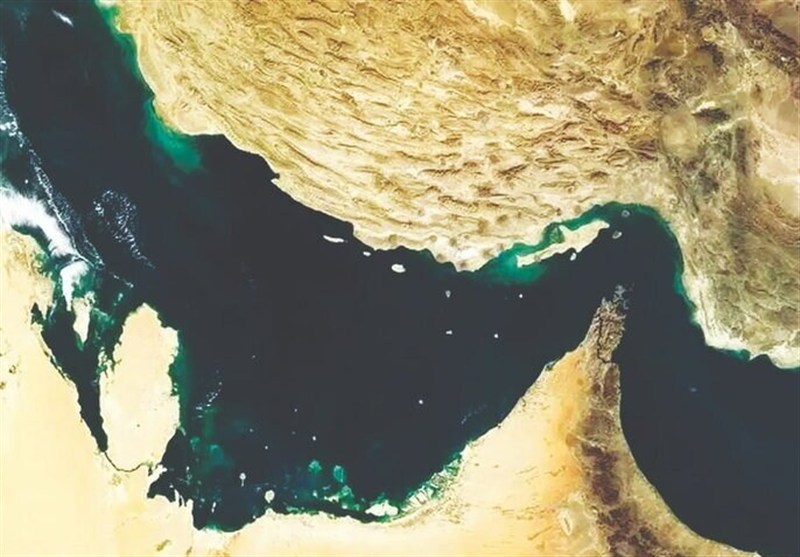


Alwaght- The Strait of Hormuz remaining closed three weeks after start of the US-Israeli aggression against Iran has put the US President Donald Trump into a tight spot and now he finds no way but to openly beg other countries for help.
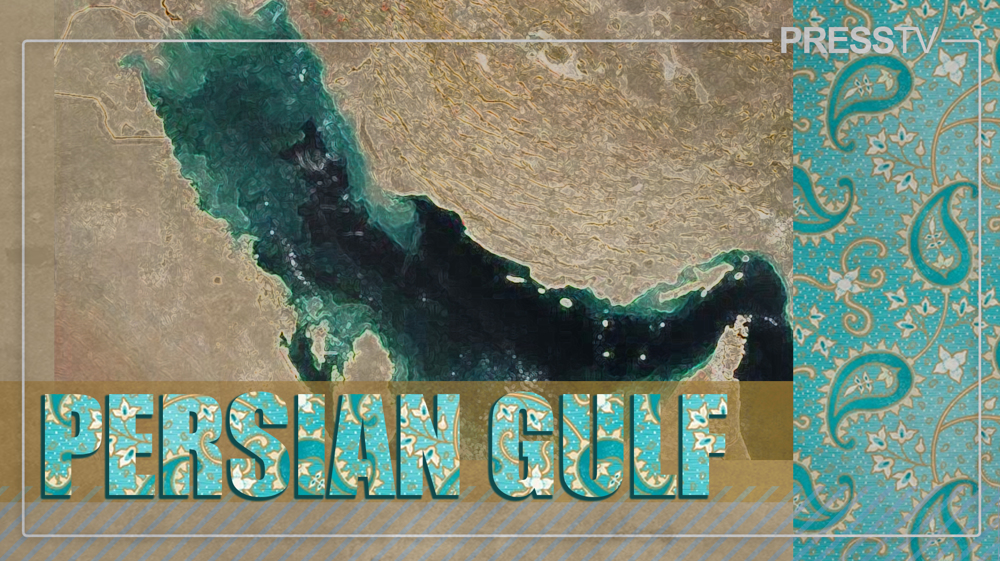
On Tuesday, in his speech Trump called on countries like China, France, Japan, South Korea, and Britain to send warships to the Persian Gulf to ensure flow of energy from the Strait of Hormuz, now dubbed by some media outlets the “strait of death” for the US. But to Trump’s frustration, no country has responded to this call affirmatively.
The French government has rejected Trump’s request for military assistance in the war against Iran and has denied rumors about the deployment of its warships to the Strait of Hormuz, urging an end to the sensationalism surrounding the matter. Earlier, Britain also announced that it would not be sending any forces to the Persian Gulf.
In addition to their Western partners, Washington’s Asian allies are showing reluctance to align with anti-Iranian policies. Japanese government sources stated that decisions on this issue will be made independently, and no warships will be dispatched simply at Trump’s request.
“I believe it is very difficult to send Japanese naval ships to this region under existing Japanese laws,” said Takayuki Kobayashi, head of policy for Japan’s ruling Liberal Democratic Party.
South Korea, taking a cautious stance, stated that “we will maintain close communication with the United States on this matter and will make decisions on deploying ships after careful consideration.” Meanwhile, China emphasized that the Strait of Hormuz is part of Iran’s legitimate sovereignty and called for an immediate halt to hostilities in the region.
Trump desperate in the face of Iran
With Eastern and Western actors rejecting his call for help in reopening the key energy lifeline, Trump feels extremely desperate and finds himself alone in his struggle to get of this humiliating situation.
Trump’s pleading request for countries to send forces to the Strait of Hormuz comes despite his claims of having completely destroyed Iran’s military capabilities, asserting that Tehran can no longer shoot any missiles or drones. However, the armed forces of the Islamic Republic have expanded their operations to target US bases and occupied territories following these statements that were described as “hilarious” by Iran’s national security chief Ali Larijani, even unveiling new missile achievements that have left the Americans and Israelis stunned.
Previously, Trump had claimed that the American military forces would escort ships in the Strait of Hormuz, but later clarified that this would not be feasible in light of Iran’s threats.
The US president’s desperation for support from other nations indicates his search for a way out of the conflict with Iran, with his economic advisors at the White House continually encouraging him to exit the war.
The reluctance of European and Asian partners to engage in Trump’s aggressive policies stems from their understanding of the realities of war and the battlefield dynamics. They have realized that reopening the Strait of Hormuz does not have a military solution, and that no amount of military force can accomplish this objective. They recognize that if the US, the most powerful among them, is unable to reopen this waterway, then others will certainly not succeed. Entering a direct confrontation with Iran could entail even heavier costs. Consequently, some countries have recently exercised pragmatism and initiated dialogues with Iran to allow certain vessels and oil tankers to pass through the Strait.
Given that the closure of the Strait of Hormuz poses a serious threat to the global economy and drives up energy prices, Washington is scrambling in every possible direction to mitigate the repercussions of this warmongering. In this context, Trump is struggling to manage the energy market with rhetoric, claiming that stability will soon return to oil markets. Meanwhile, the US Treasury is attempting to manipulate energy markets to prevent prices from rising further.
The outcome of these developments suggests that so far Trump has been the loser side of the war, and the longer this war drags on, the more his temporary sedatives to the energy markets will be ineffective. This explains why in recent days he added to his strong tone, not only threatening the Iranian government but also the whole Iranian people.
A review of the US reactions to the closure of the key strait leads us to the fact that Trump has no military plan for reopening it. He is now caught in a situation where he can neither reopen the Strait of Hormuz himself nor create conditions that would force Iran to do so. Therefore, European and regional countries, realizing that the US military lacks the capability to reopen this waterway, are trying to pressure Trump in various ways to halt the conflict and initiate negotiations for the reopening of the Strait of Hormuz.
A strait shaping the equations
This strait is the flow way to a major part of the Persian Gulf Arab monarchies’ oil output and its closure over the past 17 days has cut off a considerable amount of oil from the region to the world markets, heavily straining them.
The closure of the Strait of Hormuz has made it difficult for aggressors due to its significant economic implications for the world. One key point in the global economy, particularly during Trump’s administration, has been the claim that no major event occurs without the US’s approval. Trump aimed to seize the pulse of the global economy through tariffs, but in the conflict with Iran, all these illusions were shattered, and the world has recognized Washington’s weakness in managing the international economy and energy.
Currently, Iran has not closed the Strait of Hormuz but is smartly managing it, allowing countries to navigate this vital waterway only with its permission. This signifies that decisions regarding a crucial part of the global economy, specifically energy, are made under Iran’s management, derived from its indigenous military strength.
Although Trump has attempted to mitigate the consequences of the closure of the Strait by lifting oil sanctions on Venezuela and Russia, these strategies have not yielded success. Brent crude oil has surpassed $103, and US crude oil has exceeded $100. Some analysts predict that if this international waterway remains closed for an additional two weeks, oil prices could potentially rise to $200.
Given the strategic geographic position of the Strait of Hormuz and Iran’s role in its security, Iranian officials have warned that in the event of a war against Iran, this vital waterway would be automatically closed. However, Americans have made a significant miscalculation regarding Iran’s response. Trump, based on previous assessments, believed that even after attacking Iran, Tehran would still ensure the safe passage of ships through the Strait. Yet, on the very first day of conflict, the Strait of Hormuz was closed. Consequently, the primary culprits behind the crisis and its economic repercussions in the Strait are the US and the Israeli regime, who, driven by their own ambitious interests, have plunged the global economy into a new crisis.
Iran has shown that the equations governing the Strait of Hormuz will not revert to the pre-war era. For the past 47 years, Iran has exercised restraint in not leveraging this critical strategic asset. However, now, in light of the malevolent plans by the U.S. and the Israeli regime against its sovereignty and territorial integrity, Tehran has decided to make its geopolitical realities palpable and forge genuine relations both regionally and globally. Today, the global oil economy is no longer dictated by American interests but is instead shaped and executed according to Iran’s calculations. It is Iran that now determines which countries’ ships can pass through the Strait of Hormuz and which ones are to be halted.
Today, the equations are defined by Iran’s power based on the “for all or for none” interests and the regional countries should have by now gotten the point that the time of delusion of the US protection and support is gone and they have to consider a new equation based on regional convergence with reliance on the Iranian power, the outcome of which will be sustainable security through the US expulsion from the region and uniting their ranks against the Israeli regime.