










Alwaght- Trump's push for acquisition of Greenland and imposition of tariffs on the Western countries opposing his bid has caused waves of concerns among Washington’s allies, to an extent that Canada as the US neighbor is alarmed by more political and security implications. In this connection, the Canadian officials in recent days have made serious reactions to the Trump's policies.
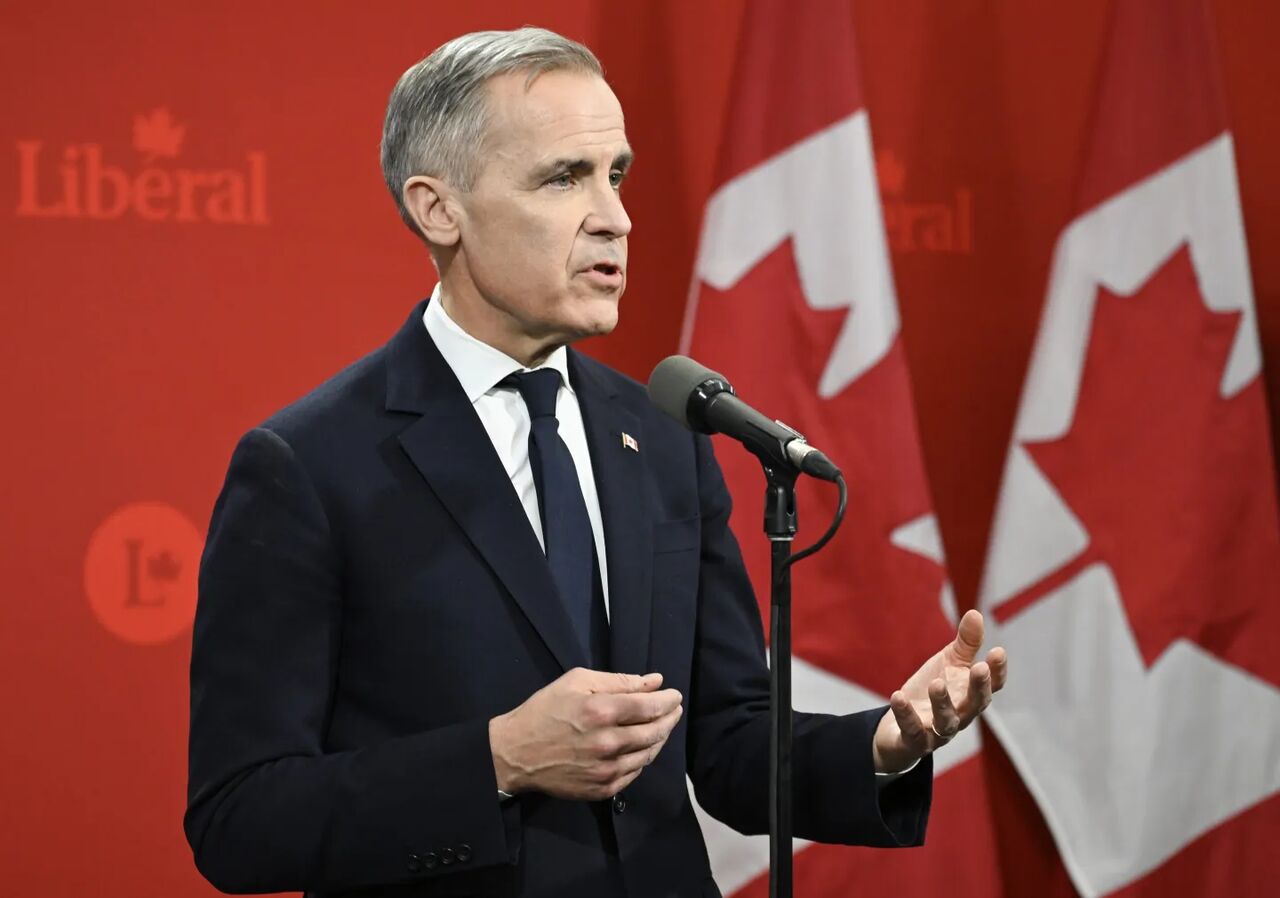
Canadian Prime Minister Mark Carney sharply criticized recent remarks made by Trump, stating, "Canada is not alive because of America; Canada thrives because of its own values." Carney emphasized that Canada can demonstrate to the world that the future does not have to be authoritarian.
Without naming Trump, Carney condemned the use of force by major powers against smaller countries. He noted that Ottawa and Washington have established significant collaboration in areas such as economy, security, and cultural exchange, asserting: "We are the masters in our own home; this is our country, our future, and the choice is ours."
Carney's comments came after Trump claimed, "Canada is alive because of the United States. Mark, keep this in mind the next time you make a statement." Following Carney's remarks, Trump also withdrew an invitation for Canada to join the Gaza Board of Peace, underscoring that tensions between the two neighboring countries have reached an unprecedented level.
Divergence in the Western order
Recent developments in the US relations with its allies are indicative of a major shift in the security and political architecture of the Western world. Embracing unilateralism, the Trump's foreign policy has caused major divergence inside the trans-Atlantic coalition and has raised fundamental questions about how the future liberal order will look like.
European and Canadian governments are increasingly concerned that the US is distancing itself from its role as a "supportive power" and shifting towards a "revisionist power" within the Western bloc. The initial signs of this transformation manifested through the economic policies of the Trump administration, including heavy tariffs imposed on European and Canadian allies and threats to revoke trade agreements. However, the critical shift occurred when the White House brought up the issue of acquiring Greenland, an action that holds strategic implications not only for Denmark but for the entire European Union.
Greenland has long been significant for the West due to its geostrategic location in the Arctic, access to rare resources, and importance in the competition among great powers. The fact that Washington pursued this matter not through collective cooperation but with a logic of territorial acquisition surprised and worried Western leaders. At this point, some European leaders, including the Prime Minister of Belgium, stated: "Europe is not America's slave," emphasizing that the preservation of European territories and interests is not something to be easily subjected to the control of others.
Trump has repeatedly asserted that the existence and strength of NATO is the result of what he called the US" generosity," and if Washington reduces its support, the military alliance would face survival challenges. These claims have prompted some European leaders to demonstrate that Europe can play a determining role on the world stage and overcome regional crises even without the US.
Europe and Canada view Trump's ambitious policies as imperialistic, seemingly aimed at dominating Western societies and absorbing traditional allies of Washington.
Canada worried about Trump's territorial expansionism
In such conditions, Trump's adventurous measures have caused Canada, a strategic ally of the US in North America, to grow concerned about its interests more than any other time. Trump's desire for Canada and Greenland acquisition is par of a broader strategy of him to establish power and influence in Western Hemisphere.
Consequently, Ottawa believes that if Washington were to assert control over Greenland today, Canada might face a similar fate tomorrow. Recently, some close associates of Trump have revealed that the next step in his global control agenda could potentially involve Canada. This prospect has intensified strategic concerns among Canadian officials, prompting them to adopt firmer stances and prepare to counter Washington's unilateral actions.
This assertiveness stems from Trump's recent claims that Canada should become the "51st state" of the US. Even if this rhetoric is symbolic, it indicates a shift in the strategic mindset of Washington, an evolution that Canada cannot ignore, especially given their thousands of kilometers of shared border and extensive economic interdependence.
As a result, Canadian officials are striving to adopt a more assertive posture against Washington's unilateral policies, fully aware that any complacency could result in irreparable consequences for the country's security and national interests. Ottawa's recent announcement of readiness to deploy troops to Greenland can also be interpreted in this context, as it aims to limit Trump's influence and actions in acquiring Western territories in collaboration with European allies.
This approach, beyond its military aspect, sends a strategic message to Washington that Europe and North America can no longer tolerate Washington's unilateral actions without a response, and any repetition of such policies will face collective resistance.
Canada's pivot to East
Though after the WWII the Western countries have pushed to contain Eastern powers and maintain the Western liberal order strong and cohesive, the US's imperialist approaches at present have motivated allies like Canada to pivot to emerging Eastern powers who are playing as Washington’s serious rivals globally.
In this relation, the Canadian PM announced an increase in economic relations with China amid tensions with the US. Mark Carney, who recently visited Beijing, expressed hope during a meeting with Chinese President Xi Jinping that this trip would mark the beginning of a new era of growth and development in the relations between Canada and China, particularly in their economic ties.
Carney also noted that Ottawa aims for China's large economy to become one of the target markets for Canadian exports, stating: "My goal for this trip is to expand bilateral trade exchanges."
He announced a reduction in trade tariffs between the two countries and expressed hope that this move would improve their economic relations.
The Canadian leader mentioned that, based on the agreements made between the two countries, more than 49,000 electric vehicles will be imported from China to Canada. Canadians have indicated that imports of other goods from China will also increase. Meanwhile, the Chinese government welcome the strengthening economic relations between the two nations and announced that from now on, tourist visas for Canadians will be issued free of charge.
Rising political and trade tensions between Canada and Trump administration have brought about a new geopolitical atmosphere, pushing Ottawa to think about diversifying its security and economic partners. China, as the world’s second largest economy, can play a key role in this path.
From a strategic perspective, Canada does not want to define its foreign policy solely around the US, as excessive dependence on Washington creates structural vulnerabilities. This vulnerability was evident during the Trump era through the imposition of trade tariffs, threats to cancel bilateral agreements, and harsh statements towards Western allies, highlighting that the traditional order is no longer reliable.
In such circumstances, China has become a significant alternative option for Canada, not only because of Beijing's economic weight but also due to its role in redefining global power relations. Ottawa believes that cooperation with China can enhance its bargaining power against Washington and prevent Canada from becoming a passive player in North America.
Therefore, Canada's tilt towards China is not merely an economic tactic; it is part of a larger effort to elevate its strategic position in the changing global order. This is why Trump, alarmed by the economic collaborations between the two countries, stated that "China will eat Canada up" in the future, perhaps in an attempt to prevent deepening ties between the West and a rising competitor, while being oblivious to the fact that his own ambitions have pushed Washington's partners into Beijing's embrace.
Furthermore, given Trump's imperialist policies against European allows, it is expected that Western powers will move to strategic cooperation with China, something that will put the Western alliance on a shaky ground and tip the scales in favor of the Eastern powers. As a result, with allies of Washington separating ways from it, the US loses its influence on the world stage.