





Alwaght- For years, Iranian analysts have been talking about their country’s ignoring of opportunities in Africa. Some encourage a redefinition of the relations with this continent while others talk about investing there. But the reality is that when they talk about significance of Africa and reactivating the Iranian role, they talk about North Africa, like Egypt, Libya, Algeria, and Morocco as they are the most important countries in this part of Africa, where they have many cultural and religious commonalities with Iran and just contrary to South Africa are less influenced by the Christian culture and indeed the West. But this is not an easy path.
First, many countries in Africa’s north are established regional powers. While they can act as allies, they will not grant Iran broad security and political influence, Algeria being one example. Then there are other nations with whom Iran’s historical relations are so complex that realistically redefining or rebuilding them in the medium term is hardly feasible. These countries have long positioned themselves within a different strategic framework that does not easily permit cooperation with us. Egypt and Morocco fall into this category. There are also unstable regions like Libya, where political and economic volatility makes them unreliable partners.
That said, these countries should not be ignored, and their potential for engagement must be leveraged. Yet today, a narrow window of opportunity has opened for the Islamic Republic of Iran, one that may not remain open for long, nor under what conditions. Now is precisely the time to act. This opportunity lies in the Sahel countries.
The term “Sahel countries” refers to a geographical belt separating sub-Saharan Africa from North Africa, stretching from Mauritania on the southern coast to Sudan and Eritrea along the Red Sea. This belt is ripe with turbulence.
Even now, Sudan remains hammered by civil war, a theater where global and regional powers have lined up behind two rival factions. The army, backed by China, Russia, Saudi Arabia, and Turkey, faces off against the Rapid Support Forces (RSF) supported by the West and the United Arab Emirates. Each seeks a stake in shaping the future of this region.
The UAE is heavily invested, pouring extensive resources into Sudanese agriculture and mineral wealth, and has no intention of relinquishing this opportunity. Meanwhile, Sudan’s central government and army appear to have decisively pivoted toward the East, with no clear alternative path forward. Although Iran has chosen its side in this conflict, standing with the central government, Sudan’s future remains highly uncertain. In this landscape, Iran’s real opportunity may well lie in the Alliance of Sahel States, or AES Confederation.
This nascent alliance came to existence following a chain of coups. In 2020, for the first time a coup was staged in Mali following protests and strikes by anti-Western and anti-French movements, delivering the power to General Assimi Goita.
In the first week of his rule, Goita expelled French soldiers from the country as he led anti-imperialist reforms in Mali.
On September 30, 2022, a similar coup took place in Burkina Faso, giving rise to young General Ibrahim Traore.
Captain Ibrahim Traoré, 37, rose to power in late 2022 after ousting the France-aligned President Roch Kaboré amid widespread protests and insurrections against the former government’s failure to ensure stability and against French interference in national affairs. Just two months after taking charge, Traoré ordered French troops to leave Burkina Faso. He denounced the former president as a puppet of the Paris government and promised his people that foreign powers would no longer plunder the country’s wealth.
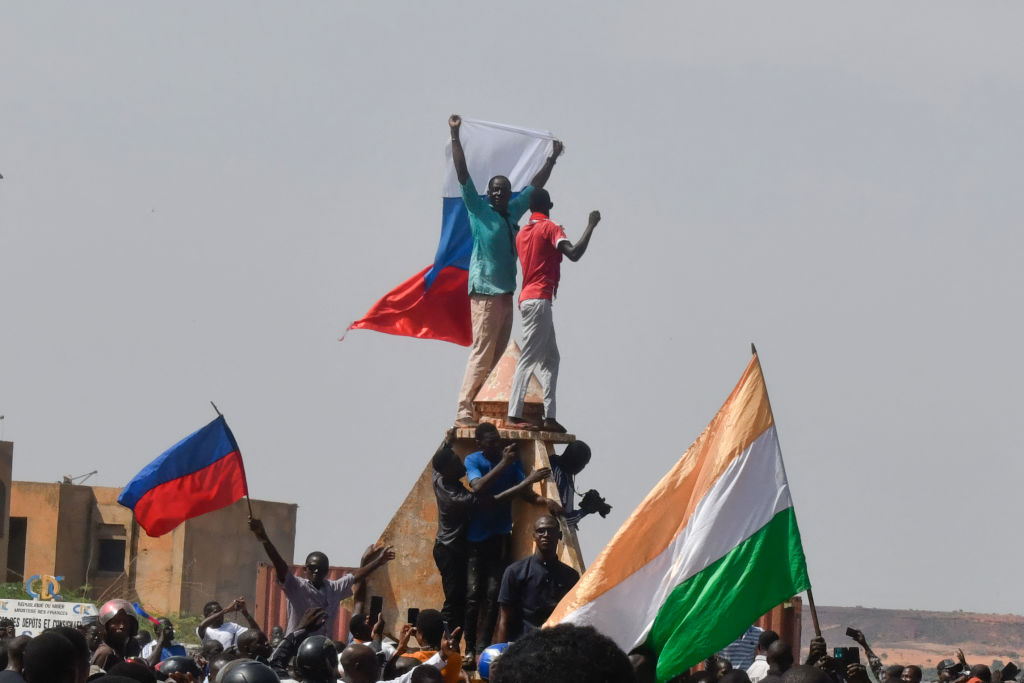
Following Burkina Faso, Niger has now taken up the anti-Western path of its neighbors. General Abdourahamane Tchiani came to power and pursued policies similar to those in Mali and Burkina Faso. However, these three nations soon faced substantial threats from foreign powers and the incitement of local militias. These pressures pushed the new leadership to establish the Alliance of Sahel States (AES).
Under this alliance, citizens of the three countries can travel across borders and along routes now secured by joint forces without passports. Since 2011, following the fall of Muamar Gaddafi in Libya and the outbreak of civil war, fertile ground emerged for the expansion of takfiri terrorist groups. They soon spread from Libya into neighboring regions, including these three Sahel nations. After forming the AES, a wave of structural measures against Western influence followed: gold mining companies were nationalized; processing plants for agricultural products and refineries for precious metals were established to curb raw material exports; foreign land ownership was restricted; and the use of the colonial-era CFA franc was abolished.
This shift triggered reactions from the West. From the outset, French and American actors attempted coups and assassinations to destabilize these governments. Simultaneously, Takfiri militant groups have become increasingly active across the region.
For Iran, the AES countries appear to be the most promising avenue for engagement in Africa, a path China and Russia have long been pursuing. Initial steps included financial aid and agricultural support, such as Russian wheat shipments to Burkina Faso, followed by investments in security and economic infrastructure. Today, Tehran also has an opportunity to play a role in this strategic region.
First, it should be taken into account that the West has not forsaken this region. Niger is one of the richest uranium reserves, for years having been supplying French nuclear power plans. The West is seeking to return to this region and in addition to coup, the key way for its return is terrorism. The AES, as said by its leaders, finds terrorism a phenomenon of Western backing. They argue that terrorism has nothing to do with the region’s culture or religion and it is the West that is training and arming radical militias. This is a precise and strategic analysis. The shared security perspective of Iran and the Sahel Alliance (AES) countries on the issue of terrorism, particularly in confronting takfiri groups, forms a solid foundation for cooperation. Iran, with years of practical experience in counter-terrorism along its eastern and western borders, experience encompassing asymmetric warfare, counter-sabotage, and border security operations, can be a valuable partner for these nations. This cooperation can take the form of training security forces, sharing tactics, and potentially even providing defensive equipment, aligning perfectly with the AES’s urgent need to secure their borders and transportation routes.
On the other hand, these countries are undergoing a significant strategic shift from West to East. They have decisively rejected structures like ECOWAS (Economic Community of West African States) and the Francophonie, viewing them as vestiges of colonialism. This stance has resulted in Western sanctions and restrictions, such as the recent US travel ban on their citizens. Consequently, they are actively seeking new allies on the international stage. China and Russia have astutely recognized this and positioned themselves alongside these nations, a move Iran would be wise to emulate swiftly. By enhancing diplomatic channels and pursuing more active public diplomacy towards the region, Iran can solidify its place in this emerging partnership.
Tehran’s activities in providing political, military, and diplomatic support during this sensitive period can rapidly translate into economic and trade cooperation. The AES alliance now spans approximately 2.7 million square kilometers with a population of around 80 million. The withdrawal of Western capital and companies, coupled with the underdevelopment of these nations, presents an exceptional opportunity for investment by Iran and a potential market for its exports, a market these countries are eagerly seeking. Energy and telecommunications infrastructure, supply of raw materials and inputs, and extraction and processing industries like gold all require non-Western investors.
Another important point is that these countries can stand as a base for increasing Iran’s strategic depth in Africa. The AES can simultaneously impact North and South Africa developments. Additionally, should this alliance succeed, soon or late, other countries will sift from West to East. That is why, as sources suggest, Saudi Arabia and Qatar are to soon broaden their investments in this region and embark on more active diplomatic interactions with these countries.
Anyway, regardless of whether the alliance weathers the West’s sweeping threats and pressures or scores successes that help it forge new allies, Iran’s window of opportunity is both limited and fleeting.
If Iran’s regional rivals seriously step in, it cannot be said Tehran can count on these three African countries for cooperation with the current level of confidence since the power dynamic is fast shifting and the priorities and political orientations of these African countries are redefined under influence of new actors. So, Iran’s active presence in this region is not just a choice but a strategic necessity where procrastination can lead to loss of a crucial strategic window and fully give the space to actors whose agenda and interests are not necessary aligned with those of Tehran.