
















Alwaght- In recent weeks, southern Yemen provinces have seen fast-moving and surprising developments, sending a majority of observers to warn about sweeping changes in the future landscape of this part of the country.
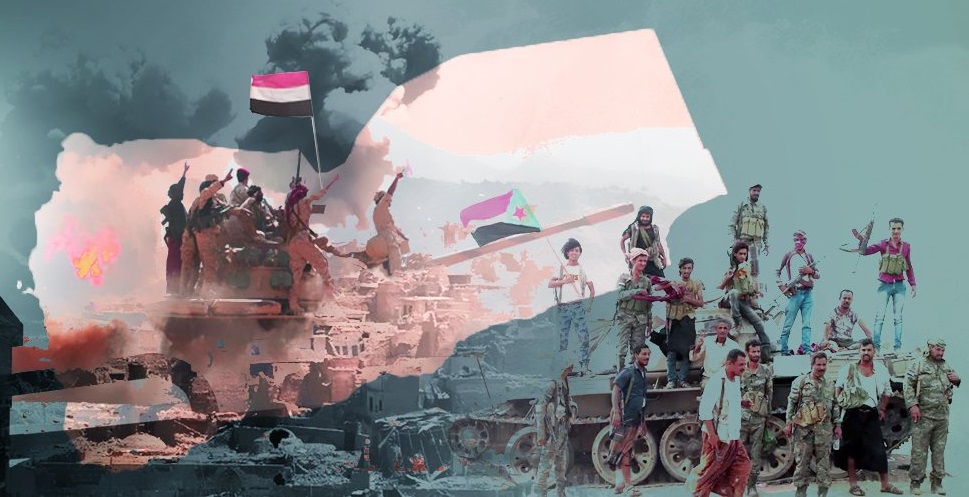
The attacks by the forces loyal to the separatist Southern Transitional Council (STC) on government headquarters in the provinces of Hadhramaut and Al-Mahrah in the east and taking control of these provinces has now elevated the STC to a unrivaled actor in southern Yemen. These forces have already gained security control of the port city of Aden, as the de facto capital of the fugitive government that has the Arab support and is recognized by the UN, as well as Socotra archipelago on the mouth of the Gulf of Aden.
The power equation in southern Yemen has fundamentally shifted since the 2022 Riyadh Agreement that established the Presidential Leadership Council (PLC). Back then, under that April deal, Saudi Arabia and the UAE orchestrated a council-based governance model. Their goal was to parcel out power among their local allies, end military clashes and internal fractures in Aden, and forge a unified front against Ansarullah resistance movement that holds the north and the capital Sana’a.
Now, nearly three years later, the Riyadh Agreement and the very survival of the council it created face a decisive moment. Crippled by deepening internal rifts and contradictory political and military agendas, and eclipsed on the ground by the secessionist Southern Transitional Council (STC), the PLC has become practically defunct. Its authority exists only on paper, with no real control over its nominal territory.
This collapse of functionality raises a critical question: Is the PLC on verge of total disintegration?
Deep-seated disputes in the PLC
As new developments take place, observers give some reasons for them being pessimistic about the survival of the leadership council, including deep-seated fundamental disputes in the body of the council. Since the outset, the inconsistent composition signaled the fragility of the Riyadh Agreement, with many suggesting the deal was actually born dead.
Adel Shejaa, a political affairs professor at the University of Sana’a, told Arabi 21 that since the formation of the council in April 2022, the PLC was built on a foundation that is dispute-ridden in the most basic matters. Some parties, he continues, are on separatism track, while others want Yemen united.
In fact, this duality created a structural contradiction within the council project from the very beginning. It has resulted in each power center pursuing its own on-the-ground agenda, largely ignoring the council’s decisions. Consequently, immediately after the STC’s forces seized Hadhramaut and Al Mahrah, the divisions within the PLC erupted into open confrontation.
PLC Chairman Rashad al-Alimi condemned the move. In a statement last Tuesday, he declared that the STC’s actions across the south “undermine the legitimacy of the internationally recognized government” and violate power-sharing agreements.
The PLC as a whole also issued a statement, firmly rejecting any unilateral actions or military movements outside the framework of national consensus and governing political agreements. It labeled the recent developments in the eastern provinces “a clear violation of constitutional legitimacy and the authority of the Presidential Leadership Council.”
Even the Saudi-aligned ceremonial parliament in Aden condemned the STC’s unilateral actions and military push into the eastern provinces.
However, this wave of condemnations failed, even for the sake of appearances, to stop PLC members aligned with the STC from voicing open support. Aidarous al-Zubaidi, President of the STC and a PLC member, welcomed the STC’s takeover of Hadhramaut and Al-Mahrah. He stated: “The south today stands at a critical and fateful juncture imposed by the realities of the political and military situation. The people of the south have made immense sacrifices to reach this decisive moment.”
He noted that the next step would be building the institutions of what he called the “Southern Arab State.”
These positions have driven the final nail into the coffin of future cooperation within the PLC and any possibility of its survival. They have made it clear that the council has failed even in its basic tactical objective of unifying the anti-Sanaa factions in the south.
Meanwhile, some are optimistically talking about disruption of the balance in favor of the separatists in the PLC and despite the brain death of this council, they insist on maintaining its façade by Saudi Arabia. Fuad al-Alawi, a Yemeni author and journalist, believes that change in the coalitions inside the PLC have taken place, with three members of the council supporting the separation of the south despite their membership in the council that insists on unity. Recently, Tareq Saleh, the son of the slain former President Ali Abdullah Saleh, has openly joined this separatist project, making the number of the PLC members backing the STC’s measures in Hadhramaut and Al-Mahrah four.
According to the Yemeni journalist, the STC’s actions are allowing pre-2014 alliance maps to continue shaping today’s alignments. As a result, Rashad al-Alimi, alongside Islah Party, Saudi Arabia, and several figures within the Aden-based puppet government, is moving toward closer coordination against the council and the UAE. With al-Zubaidi increasingly bent on consolidating power in the south, the situation could slide toward a renewed military escalation in Hadhramaut.
Recent developments in the south have not only reshuffled the internal balance of power within the PLC, but have also raised fundamental questions about territorial integrity, the legitimacy of governing institutions, and the role of regional actors. The Council, once established to unify the anti-Ansarallah front and manage a political transition, now appears to have become a major source of instability and division in its own right. A deep rift between separatist and pro-unity members has effectively paralyzed the body, turning it into a conduit for the continuation of Saudi-Emirati intra-factional rivalries.
Decline of PLC and intensification of sectarian rivalry
Field developments show that the PLC is literally on the verge of collapse. Its authority over the armed groups and security institutions in the south is minimum and its members are more mouthpieces of conflicting factions than leaders of an efficient institution. The open backing by al-Zubaidi and his allies for the STC’s advances has torn away the final curtain of the body’s façade of unity. This development reinforces the scenario of the Council’s “brain death”: a condition in which its outward shell may be preserved, largely to serve Saudi Arabia’s interest in maintaining a minimal anti-Ansarallah framework, while its substance, coherence, and effective function have all but vanished.
Danger of Yemen split and structural chaos
Adel Shejaa in a interview with Arabi 24 warned that the immediate impact of this process is not necessarily rapid independence declaration by the south, but practical split and sustained security-political chaos. In this scenario, the STC, backed by the UAE, will seize control of the territory, strategic ports, and economic resources in the south, while the PLC and the Saudi-supported government had a minor legitimacy only on the paper. This gave rise to two parallel power centers and conflicting laws and institutions in the south that make stability and reconstruction impossible.
Saudis and Emiratis and conflicting interests
Recent developments have exposed a latent rift between the two main backers of the anti-Ansarallah front. Abu Dhabi, through its decisive logistical and material support for the STC, is actively advancing the southern secessionist project. This stands in direct contradiction to Riyadh’s official stance of supporting a unified Yemen.
It appears the Saudis prefer to maintain the ineffective PLC as the sole internationally recognized representative of Yemen. This serves a dual purpose: to retain a lever of pressure against the UAE and the STC on one hand, and to ensure it is not left empty-handed in future negotiations with the Ansarullah on the other. This contradiction of interests deepens the current stalemate and undermines the potential for any comprehensive political solution.
South’s outlook: Possible scenarios
1. Continuation of structural instability: The most likely scenario in the short and mid-term is continuation of the current situation. The PLC will continue its vegetative state, the STC will establish its control on the country and expand it, and the behind-the-scenes Saudi-Emirati competition will continue. This means perpetuation of fighting within the anti-Ansarallah camp and deeper south-north gap.
2. De facto formation of a southern state: Backed by the UAE and buoyed by oil revenues from the seizure of the oil-rich Hadhramaut province, the STC could gradually build the administrative, financial, and security institutions of an independent state, without formally declaring independence. This form of “practical partition” could lay the groundwork for a future, official bid for secession.
3. Direct military confrontation: Should pro-unity factions within the PLC or Saudi Arabia perceive an acute threat, limited or large-scale clashes could erupt between Aden-aligned forces under Saudi influence and STC forces in provinces such as Hadhramaut. Such a scenario would push instability to its breaking point.
4. Ansarallah’s return as a decisive player: The deepening weakness and fragmentation of the southern front could open new strategic opportunities for Ansarallah, not only to consolidate its hold over the north, but also to exploit internal rifts to expand its influence into central regions and even parts of the south.
Conclusion
Southern Yemen is on the verge of entry into a new and potentially darker stage of instability. Brain death of the PLC is not just a metaphor; it is an accurate description of a reality of field developments. Riyadh Agreement not only failed to bring stability to the country, but also by legitimizing the coexistence of rival actors within a fragile framework, created the conditions for deepening divisions and accelerating secessionist dynamics. Now the future of the south is less than any other time in the hand of the Yemenis and more shaped by competitive equations between Riyadh and Abu Dhabi and also strategic response of Ansarallah to these developments. The main danger is normalization and establishment of a systematic chaos that would sink Yemenis in suffering for decades to come and change the map of the region forever.










