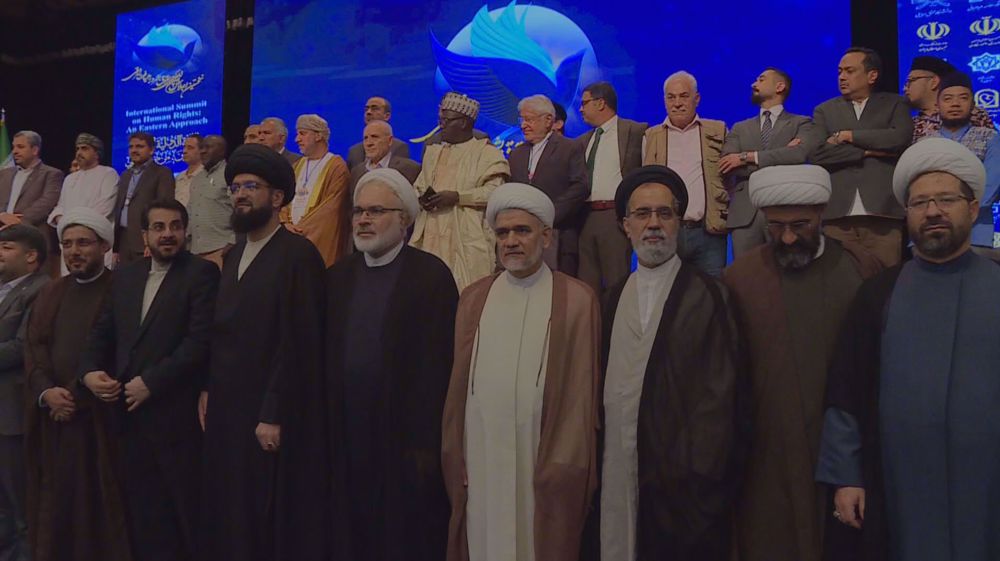




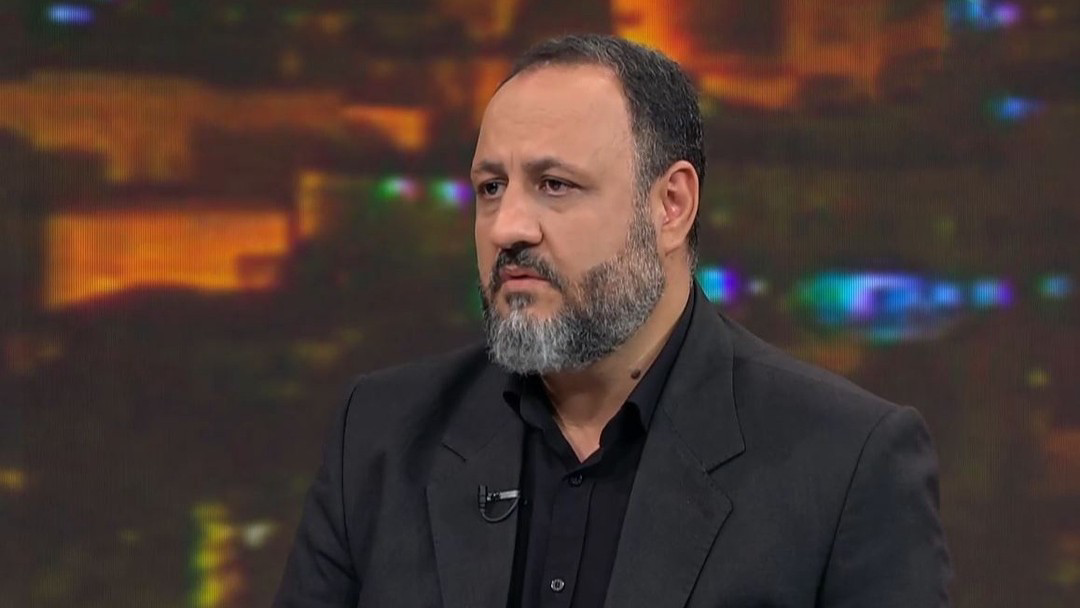


Alwaght- Tehran-based Andisheh Sazan-e-Nour Institute for Strategic Studies hosted a meeting discussing Lebanon's political and military developments.
At the meeting, Ahmad Zarean, the think tank's head and a regional affairs expert, elaborated on military developments in Lebanon, the Israeli occupation's strategy in the south, and role of Iran in supporting the Lebanese resistance.
Mr Zarean started by pointing to military dynamics in that country, saying that in the military sphere, we have a process that begins with the support war. This war started the day after Hamas’s Operation Al-Aqsa Storm , and Hezbollah, with the aim of supporting Gaza and reducing the Israeli regime's military pressure on the Palestinians, began its military operations against the north of the occupied territories.
Unity of fronts and start of support war
Pointing to the philosophy of Hezbollah’s involvement in the war, Mr Zarean held that according to war rules, when the enemy force has to distribute its capabilities to various fronts, its loss possibility rises. By entering the support war in favor of Hamas, Hezbollah translates the unity of fronts on the ground.
As a result of this involvement, northern Israel grew insecure and over 100,000 settlers were displaced. This put a heavy cost on the Israeli regime, especially when it came to public opinion, and finally Tel Aviv decided to launch a massive operation to check Hezbollah’s firing capability.
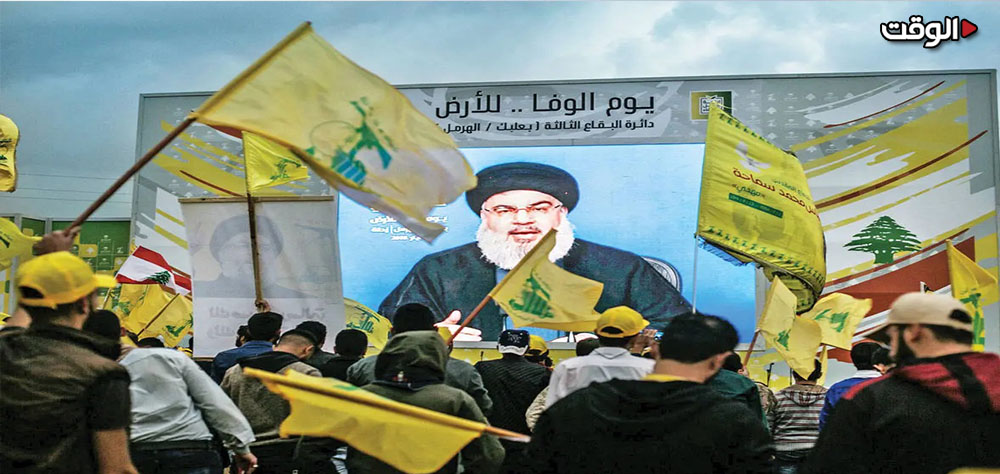
Pointing to the Israeli escalation against Hezbollah, the political expert said that the assassination of Ibrahim Aqil was the starting point. Then, he added, came the pagers operation, assassination of Hezbollah chief Sayyed Hassan Nasrallah, and his successor Sayyed Hashem Safieddine, and a number of military commanders. These attacks upped the tone of war, lasting 66 days.
66 day war and constant truce violations
The Israeli regime, said Mr Zarean, launched a ground war in southern Lebanon with the operational capacity of five fully equipped divisions, managing to occupy areas of the south and establish positions at five points. Ultimately, the war ended in a ceasefire brokered by external actors, with UN Security Council Resolution 1701 serving as the primary basis for the truce.
Turning to post-ceasefire developments, he stressed that Tel Aviv adhered to neither the spirit nor the content of the ceasefire. The truce was violated more than 10,000 times, and over 500 Lebanese citizens, including a number of Hezbollah officials, were martyred.
Mr Zarean described this pattern as part of the Israeli regime's so-called "freedom of action" strategy, saying: "The Zionists have a strategy called freedom of action, under which they claim the right to strike targets they deem threatening at any time and in any place. On that basis, hundreds of attacks against Lebanon continued after the ceasefire.
Hezbollah’s return to battleground
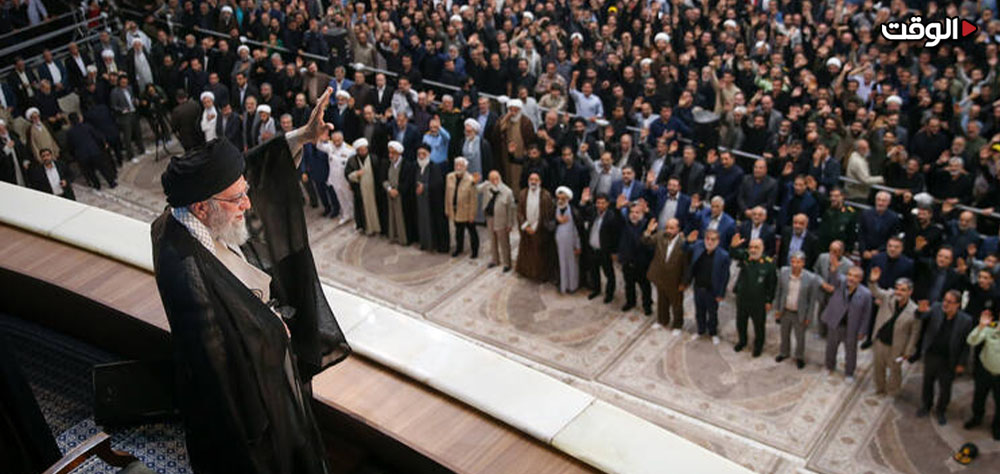
The political expert referred to the rejuvenated clashes and Hezbollah's re-entry to the battle following Iran war, adding that this state of unilateral ceasefire that was constantly breached by the Israelis continued until February 28. With the beginning of Israeli-American war on Iran and announcement of martyrdom of Supreme Leader Ayatollah Sayyed Ali Khamenei, Hezbollah launched its retaliatory operations.
Zarean stressed that the Lebanese society holds a deep-rooted religious commitment to velayat-e faqih, and when the US and the Israeli regime crossed one of the biggest red lines, Hezbollah entered the war. The martyrdom of a figure who held a leadership and religious authority for Shia worldwide, including Lebanon's Shia, was one of Hezbollah's key motives for going to war.
Hezbollah had other objectives as well, one of the most important being to respond to the Israeli regime's repeated ceasefire violations over the 15 months preceding the war against Iran, according to Mr Zarean.
20 percent of Israeli air power tied up to war with Hezbollah
Zarean described Hezbollah's entry into the war as having operational consequences for the Israeli regime's front, stating that Hezbollah's presence in this war was effective and impacted the Israeli regime's air power. According to assessments, roughly 20 percent of Israel's air capability was diverted toward Hezbollah, and the regime was unable to use its full air capacity against Iran.
He went on to reference the ceasefire of April 8, saying: "On the very day the ceasefire was announced, the Israeli regime, just a few hours later, within a short window of about 10 minutes, bombarded Lebanon hundreds of times, leaving hundreds martyred and around a thousand wounded.
Dahieh, Iran's red line
The head of the Iranian think tank turned in another part of his remarks to the Islamic Republic of Iran's stance on Lebanon, saying: "One of Iran's conditions for a ceasefire was an end to fighting on all fronts, including Lebanon, but Netanyahu rejected this and continued his aggression against Lebanon.
He added that the Islamic Republic of Iran had also set a red line for the war, which was the Israeli regime's attack on Dahieh . Tehran had emphasized that any strike on Beirut's Dahieh would meet with a reciprocal response.
Mr Zarean continued that when the Israeli regime struck southern Beirut and the Dahieh area, the Islamic Republic of Iran carried out Operation Nasr against the occupied territories, targeting Israeli positions with missile strikes. This missile operation created deterrence, and that deterrence has held to this day.
He added that since June 7, the Israeli regime has not carried out a single attack on the southern Dahieh.
Scorched earth strategy in southern Lebanon
Zarean went on to outline the Israeli regime's objectives in southern Lebanon, saying that under the June 18 deal between Iran and the US, a halt to operations and fighting on all fronts, including Lebanon, was supposed to be observed, but the Israeli regime refused to accept this agreement and continued its operations in southern Lebanon.
According to him, the Israeli regime's main goal is "to degrade Hezbollah's military capability in southern Lebanon, silence its operational fire, and depopulate southern Lebanon.
The Israeli regime is systematically destroying infrastructure and people's homes in southern Lebanon. They are seeking to demolish villages, wipe out farms, and render the land uncultivable so that southern Lebanon becomes an uninhabitable zone.
The regional affairs expert described the aim of this policy as weakening the social bond between the people and Hezbollah, saying that the Israelis know that Hezbollah has a popular structure, and as long as popular support for it exists, this movement cannot be defeated.
They first tried to create a rift between the people and Hezbollah, but this policy failed. Now they are trying, through killing and forced displacement, to empty southern Lebanon of its population so that Hezbollah loses its popular backing.
He put the number of displaced persons resulting from this process at around one million, saying the Israeli regime continues to block a large number of displaced people from returning home.
Hezbollah’s response to pressures
Mr Zarean held that despite the military and political pressures on Hezbollah, the status of the resistance movement is different from how it is painted by the Israeli media.
He said that despite all these measures, Hezbollah is standing firm and resisting. Despite the assassination of its top leadership and first- and second-tier commanders, as well as the pressures brought to bear on Hezbollah's social base, the movement has managed to redesign its structure, repair it in line with current conditions, and preserve its operational firepower.
Mr Zarean also pointed to Hezbollah's social activities, saying that in the field of social services, particularly in managing the displaced, Hezbollah has performed remarkably, though managing the displaced has imposed a heavy cost on the movement, and US sanctions are also working to erode its capabilities.
Propaganda over Ali al-Taher heights
Mr Zarean also commented on recent developments at Ali al-Taher heights in the south, challenging the Israeli media's narrative of the operation.
Israeli media are trying to portray the capture of Ali al-Taher hill as a major achievement for Tel Aviv, while according to some reports, these hill was not Hezbollah's main weapons depot and was mainly used for troop deployment and defensive measures.
He went, saying that Hezbollah had not stationed all its assets and capabilities on this hill either. When the Zionist regime launched its operation, these heights had been almost emptied of military forces.
Referring to the number of forces present in the tunnels, Zarean stated that the time of the capture and bombardment of the hills, fewer than 50 Hezbollah fighters were present in the tunnels, and these forces gradually withdrew from the area. During the evacuation of the tunnels, 8 fighters were martyred. Therefore, the narrative that a very large number of forces were present in these tunnels does not match the reality on the ground.
Feigning gains for Netanyahu
Having his say on why the Israeli media have created a hyperbole regarding the operation in Ali al-Taher, Mr Zarean maintained that the propaganda significance of the hill outweighs its strategic importance since Netanyahu is facing a crisis of gains as general elections draw closer.
Zarean stressed that Netanyahu's projects in Iran and Gaza have failed. In Gaza, despite widespread destruction and massacre of a large number of civilians by Israeli military, Hamas has still preserved its power and political presence and is participating in foreign negotiations.
In the West Bank and Lebanon, too, resistance continues, and in the war with Iran, the Israeli regime has been unable to achieve all its objectives. So, Tel Aviv is trying to feign achievements for itself through psychological warfare and security shocks.
Zarean continued that the massive explosion of the Ali al-Taher tunnels within the same framework, saying that the detonation of 1,100 tons of explosives was carried out more for media propaganda, so that Netanyahu could sell the capture of the heights to the Israeli public as a military gain.
Israeli retreats from front lines
After blowing off the hill, the Israeli regime withdrew from Ali al-Taher, showing that it is neither determined nor capable of entering a broader war.
He added that Hezbollah has also announced that if the Israeli regime pushes its lines beyond Ali al-Taher, it will face a severe response.
Summing up this section, Zarean said that Hezbollah is capable of entering a war and has preserved its operational and firepower capabilities. If the Israeli regime wants to enter an all-out war, Hezbollah will be able to defend itself and will be able to strike the enemy.
Iran's support to Lebanon to continue firmly
Pointing to the policy of Iran regarding Lebanon, Mr Zarean said that the Islamic Republic's policies concerning Hezbollah and Lebanon have not changed. Some sides try to insunate that Tehran's policy of backing Lebanon has changed, but the reality is that supporting the oppressed is always on top of agenda of the Islamic Republic of Iran.
Referring to the official stances of Tehran, the political expert held that supporting the oppressed has been highlighted in the foreign policy principles and constitution. Hezbollah has for times confirmed the Iranian backing, thanking the Iranian people for their supports.
Hezbollah’s resistance and sacrifices are enabled partly by these supports that will continue under the framework of the unity of fronts.