
















Alwaght- Three years after the bloody Gaza war and the substantial crime the Israeli regime committed with the Western support against people of this Palestinian enclave, signs of failure of the plot they hatched against Hamas in Gaza are emerging day by day. The latest sign of this reality can be seen in the welcome of the Palestinian groups to designing the roadmap to Palestinian future in a meeting with Hamas leader in Cairo.
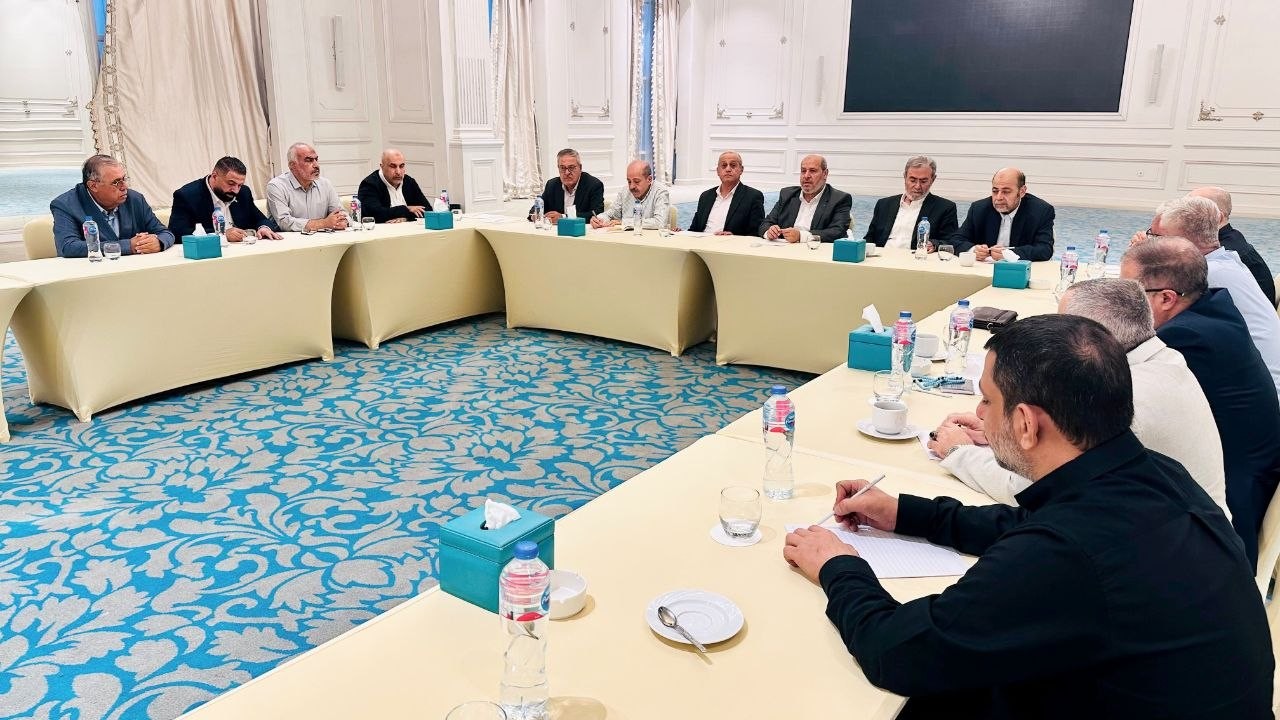
Khalid al-Hayya, the newly-appointed Hamas leader met with leaders and representatives of other Palestinian groups on Monday. A statement by the office of Hamas chief said that Palestinian leaders were briefed on the latest field and political developments and also the outcomes of the meetings with Egyptian officials, mediators, and the guarantors of the Sharm el-Sheikh ceasefire. Al-Hayya presented a detailed report on the course of negotiations, postures of various sides, and reactions after announcing approval of the roadmap to implementation of the second stage of the agreement.
Participants at the meeting squarely blamed the Israeli regime for obstructing the cease-fire deal, charging that it has upended implementation by rejecting the roadmap, brushing aside agreements reached in the first phase, and persisting in daily violations and breaches.
The session also took up the expansion of settlements, the regime's Judaization policies, and settler attacks on Palestinians in the West Bank, along with the dire conditions in Gaza, ways to halt escalating aggression, and how to keep the Palestinian people from becoming pawns in the Israeli regime's electoral rivalries.
Palestinian sides stressed the need to marshal all efforts to deliver aid to Palestinians, bolster their capacity for resistance and resilience, secure decent living conditions, and accelerate recovery and reconstruction, so that the Palestinian people's goals in their own land can be fully realized.
They also underscored the urgency of taking serious steps to organize the Palestinian internal situation on a basis of national and democratic partnership, craft a comprehensive national strategy to confront current challenges, and establish mechanisms to achieve the legitimate aims and aspirations of the Palestinian people, including securing their right to self-determination and the establishment of an independent Palestinian state with Al-Quds (Jerusalem) as its capital.
Hamas still alive and standing
The meeting of Palestinian factions with Hamas's leadership sends an unmistakable message to the Israeli regime's leaders: just as it is trying every possible means to destroy the movement and remove the largest Palestinian resistance group from its path: the dream of wiping out Hamas and resistance from Palestine's political landscape has failed. Despite three years of political pressure, massive military campaigns, and a crippling siege on Gaza, Palestinians refuse to bend to the Israeli regime's demand to sideline Hamas from governing the Strip.
These talks make clear that Palestinian factions, and nearly the entire Palestinian public, regard Hamas as a deeply rooted, enduring force in the arena of resistance.
Though the movement has lost a number of its leaders and appears weakened on the surface, it has emerged from a major and lopsided war with its head high, once again establishing itself as a key player in Palestinian affairs, a force capable of shaping the future of Palestinians, from securing their rights to liberating Al-Quds and building a Palestinian state.
To be sure, Hamas recently dissolved its administrative government and signaled readiness to hand over its arms to a technocratic government composed of Palestinian factions. Yet most Palestinian political currents still view Hamas as an influential actor in Gaza's political and security governance, and insist on the movement's role in the region's future.
Two decades of experience, along with the Gaza public's backing for Hamas, have shown that sidelining the Islamic Resistance Movement from Palestine's equations is simply not feasible, even as the US and the Israeli regime have bent their political and military might toward its annihilation.
Hamas consolidated its place in new regional order
The Palestinian factions welcoming a meeting with Hamas leader is not solely limited to Palestine. Rather, it has its roots in a promising outlook caused by Iranian victory over the American-Israeli front.
The war showed that even direct American involvement in the conflict cannot change the resistance-leaning face of the region and that the new order shaped by the Axis of Resistance is forming and shaping the future of the region.
As Netanyahu nurtures his dream of a "Greater Israel", reshaping the region's security and geopolitical landscape by seizing more Islamic lands and driving Palestinians out of Gaza and the West Bank, the Ramadan War and the routing of US aggression, backed by the Israeli regime and even NATO, have led global observers and analysts to see the outcome of this conflict as highly consequential in tilting the future regional order in favor of the Iran-led Axis of Resistance.
Determining role of Hamas in future of Gaza
Hamas leaders have repeatedly stressed that liberating occupied lands and restoring them to Palestinians runs through armed struggle—and the Zionists have grasped this reality all too well. That is precisely why they are trying every means possible to strip the resistance of its weapons. Without those arms, Tel Aviv's leadership would face no serious obstacle to advancing its territorial expansionist plans, a trajectory already becoming visible, step by step, in the West Bank.
Despite the massive onslaught and the staggering devastation the occupation army has unleashed on the Gaza Strip with the stated aim of destroying Hamas, the movement remains standing on the eve of the third anniversary of the war. The direct engagement of U.S. representatives with Hamas leaders at the negotiating table is itself an acknowledgment of this reality: the movement is still the dominant power in Gaza, and neither political pressure nor military might has managed to push it out of the equation or out of governance over the territory.
Given the positive regard that many Palestinian political currents hold for Hamas, the movement must have a seat at any table where Gaza's political and security future is decided. Hamas brings extensive experience in running Gaza and confronting the Israeli regime, and without its cooperation, any alternative government would face crippling obstacles.
After 38 years of occupation, it was Hamas that drove the Israeli army out of Gaza. And when Palestinians voted for the movement, they refused to let a compromising, surrender-minded faction, cloaked in Palestinian garb but beholden to the Israelis, rule over the Strip. The Israelis' relentless pursuit of occupation, forced displacement, siege, and the perpetuation of refugee policies will only strengthen and re-energize the resistance currents against occupation in the territory.
So, if the US and Israeli regime want to impose a government outside the Palestinian national framework through international pressures, such a government will not enjoy public and political support and will not last long.
Given Hamas's entrenched position in Gaza's political and security landscape, excluding the movement from future arrangements would not only be unrealistic, it would be a recipe for instability. Any viable plan for the territory's future must be built on the ground realities and designed with the participation of Palestine's main, deep-rooted political factions.










