















Alwaght- The scheduled October 27 election of the Israeli regime is approaching as the political race inside this regime is not just over who will be the next prime minister or how the combination of the ruling coalition will look like. Rather, the multi-front wars, economic crisis, heightened international pressures, and the dispute over the future of political structure make the elections a sensitive point for determining the future path.
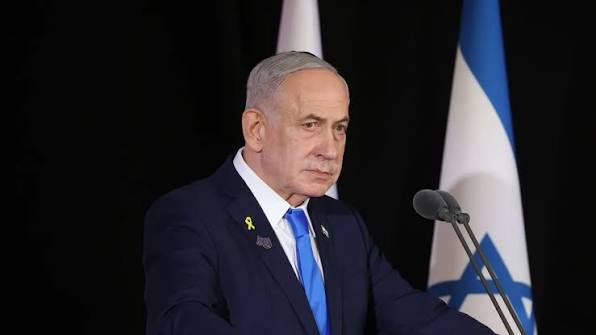
On one side, Benjamin Netanyahu and his allies are leaning on a security-first message and the continuity of right-wing policies to hold their camp together. On the other, his opponents see the election as a chance to change the country's political direction.
Yet, one defining feature of the current campaign is the absence of a decisive advantage for either camp. Competing polls paint conflicting pictures, and in some cases the gap between Netanyahu's bloc and his opponents is too narrow to say with any confidence who will form the next government.
Latest polls on the formation of the power of parties
38 parties in an election with massively shattered prospect, especially among the right-wing parties and factions, are set to race for 120 Knesset seats.
Recent polls show that the balance of power is shifting and two leading parties, Likud led by Netanyahu and Yesh Atid led by Gadi Eisenkot, have so far failed to secure 61-seat majority to form a government.
A poll was conducted by Lazar on August 19 and 20 and its results were published by Ma'ariv newspaper. With 501 respondents, the poll said that Yesh Atid can secure 26 seats, three seats more than the week before. On the other side, Likud seats decreased to 20.
The Jerusalem Post published the poll's results on August 21, projecting Netanyahu's bloc at 49 seats, against 60 for the opposition and 11 for Arab parties. By that estimate, the opposition fell just one seat short of the 61-seat threshold needed to form a government.
A Channel 12 poll released on August 25 put Yesh Atid in first place with 24 seats, followed by Likud with 22. Naftali Bennett's Together party came third with 15 seats, trailed by the Democratic Union at 11, Israel Beiteinu and Atzmaut Yehudit at 9 each, and United Torah Judaism at 8. The Joint List and Shas each won 7 seats, while the Religious Zionist Party took 4.
The same poll predicted that three other parties would fail to clear the electoral threshold, a scenario that, if borne out, could redistribute seats and visibly redraw the Knesset's political map. Under those conditions, securing a parliamentary majority would require bringing in new coalition partners or striking legislative deals with parties outside the main blocs.
The contest, however, does not turn on Knesset seat counts alone: voters' preferences for prime minister have become a central battleground. Some polls show Eisenkot leading Netanyahu 48 percent to 39 percent. Naftali Bennett, too, edges ahead of Netanyahu in some surveys, 43 percent to 39 percent.
According to a Maariv poll, meanwhile, 52 percent of voters opposed to Netanyahu back greater unity among opposition parties before the election, while 27 percent would rather they run separately. That suggests the shape of the electoral field, and how cohesive the lists prove to be, could matter considerably in a race where dozens of parties are competing for the Knesset's 120 seats.
All these polls show that Netanyahu's opponents in some periods have managed to make progress, but still face difficulty gaining majority.
On the other side, the pro-Netanyahu bloc has saved part of its power, but it faces shattering of the votes and losing part of its smaller allies.
In such conditions, security can be one of the determining cases in behavior of the voters, especially the possibility of war with Iran, Hamas disarming case in Gaza, and the developments related to the Israeli presence and influence in Syria and Lebanon.
Israeli society is split. Part of it faults Netanyahu's policies and the fallout from wars and security crises, while another part still sees him as the figure capable of managing military fronts and delivering security for the occupied territories. That very divide has turned security issues, alongside the political and economic crisis, into one of the most decisive variables in the coming election.
A Ma'ariv poll found 55 percent of respondents worried that a new war with Iran will break out in the near future, while 39 percent voiced no such concern.
It bears noting, of course, that polls do not necessarily offer a full picture of Israel's political and social mood. Differences in sampling methods, timing and even the leanings of a given media outlet or polling firm can produce divergent results. In that light, the gaps between the surveys are themselves a sign of how fluid the campaign is, and how hard it is to draw a definitive map of the political landscape to come.
Netanyahu, leading or stuck in deadlock?
As Israel draws closer to announcing the election lists, Netanyahu has upped his push to reorganize the right-wing camp and prevent fall of the votes. This effort comes as there is uncertainty around the ultimate coalitions and the fate of the smaller parties, whose crossing or not crossing the electoral threshold can directly affects the distribution of seats.
One of the Netanyahu camp's chief worries is the fragmentation of the right-wing vote. Several right-wing parties are weighing independent runs, and if they fail to clear the electoral threshold, part of that camp's ballots simply will not convert into seats. That is why drawing those factions in and preventing their dispersal has become one of Netanyahu's campaign priorities.
Along those lines, the lack of unity between Finance Minister Bezalel Smotrich and National Security Minister Itamar Ben-Gvir stands out as a notable problem in the right-wing camp. At the same time, Smotrich is in talks with Moshe Feiglin, head of the Zehut party. Their negotiations, analysts say, could pave the way for a new coalition on the right.
Against that backdrop, statements and positions from some right-wing figures about joining a coalition backing Netanyahu's government also signal that the prime minister is seeking new links among right-wing parties and factions to hold his camp together and stop the bleeding of votes.
Under such conditions, security cases and developments on the three fronts, Lebanon, Syria and the Palestinian territories, can also become part of the political contest within the right, especially as some right-wing factions try to cast themselves as defenders of the regime's interests and security by stressing military power, settlement expansion and the growth of territory under Israeli control.
From this angle, some of Netanyahu's moves on security and regional policy can be read as an effort to retain right-wing support and shore up his political position in the election. The sustained emphasis on security threats, military presence and developments tied to Lebanon, Syria and the Palestinian territories, alongside the jockeying inside his own camp, shows that the security file remains one of the primary instruments of political competition in Israel.
Finally, the upcoming elections are not merely a rivalry between Netanyahu and his opponents, but a test to check the scale of cohesion of the two main camps and their capability to weather partisan fragmentation. If the smaller parties fail to pass the electoral threshold or the right-wing fail to agree joint lists, the ultimate outcome can have a considerable difference from what is coming out of the current polls.
That is why, until the final lists and electoral alliances take shape, no single poll, or even several, can offer a definitive picture of the next Knesset's composition or the government that follows.
But behind the statistical discrepancies lies one certainty: a deeper rift running through Israeli society. Part of the public is angry over Netanyahu's policies and the consequences of the wars, while another part still sees him as the figure capable of managing security threats. That rift is precisely what makes the election's outcome so hard to call.
Right-wing: Difference over course not destination
More important still, disagreements among right-wing political forces do not necessarily mean disagreement over the core of their political project. A large part of the dispute is over how to carry it out, from how to handle Gaza and Lebanon to the question of the West Bank, settlement expansion and the future of the Palestinian question.
A substantial share of these political forces still oppose the establishment of an independent Palestinian state and do not support withdrawing from Gaza or halting settlement construction. So even if the prime minister changes, a shift in political power alone does not mean Israel's broad policy toward the Palestinians will necessarily undergo fundamental change.
Put another way, an election may bring a change at the top of the political pyramid, but the question remains whether such a change can also alter the course of Israel's security and territorial policies.
Elections and crisis in political institutions
Alongside security and the Palestinian question, one of the most important axes of the coming election is the dispute over the political structure and the standing of the oversight and judicial institutions. Jonathan Freedland, a Guardian columnist, after a trip to Israel, described the coming election as one of historic importance in the eyes of some Israelis and raised concerns about the weakening of democratic institutions.
That worry is in fact a continuation of a dispute that predated the war and peaked in 2023 with the Netanyahu government's push to overhaul the judiciary.
The Supreme Court and other oversight bodies are among the most important institutional constraints on government power in Israel's political system, and Netanyahu's critics fear that if the ruling coalition wins again, efforts to weaken those constraints will resume. In its report on the timing of the election, the Guardian also noted the government's attempts to change some of the attorney general's powers and to pass contentious laws before the vote.
Supporters of the government, for their part, frame such changes as part of reforming the political structure and redefining the relationship between elected institutions and the judiciary. So one of the election's central disputes will be whether the executive should have greater room to maneuver, or whether existing institutional constraints should be preserved and strengthened.
West Bank, where the vote result is not internal
But the outcome of the Israeli elections are not limited to this regime. One of the areas where the October elections can influence is the occupied West Bank that in recent years has seen increase in the Israeli settlement projects and growing settler violence against Palestinians.
In his report, Freeland, referring to the trip to the West Bank where he saw expansion of settlements and establishment of new military bases, saying that these actions are a factor that undermine the geographical contiguity of the Palestinian regions. He also highlighted the role of Smotrich and right-wing hardline parties in advancing the settlement projects.
In this relation, recent reports have talked about growing international pressures against settlements. For example, the British government earlier this month took punitive measures against trade of Israeli settlements, a move that drew various political reactions inside Israeli regime.
So, the October 27 elections are to be held while the elections no longer an Israeli internal issue, but rise to become one of the main clash points between Tel Aviv and the international community.
A society between security and change
The election competition cannot be reduced to a simple "Netanyahu or his opponents" framing. The more fundamental question is which path Israeli regime will choose for its future after years of war and crisis: continuity in security and settlement policies, a redefinition of the relationship between the government and the judiciary, or an attempt to bring about changes in domestic and regional policy.
Given that none of the main camps has reached 61 seats in current polls, even the election result may not end the political dispute and coalition negotiations could shape the next decisive phase.
From this dimension, the October 27 election should be seen not merely as a vote to determine a prime minister, but as a point for gauging several simultaneous trends, like how durable the right-wing camp's power proves, Netanyahu's standing within that camp, the weight of Arab parties and forces outside the two main blocs, the future of the dispute over democratic institutions and, most importantly, the direction of Israel's policy toward the Palestinians and the West Bank. Whatever the outcome, its consequences will reach beyond the borders of the occupied territories, because the decision made at the ballot box is directly bound up with the future of the war, settlement, the Palestinian question and Tel Aviv's relations with the world.










