















Alwaght- While the Israeli regime is still grappling with the consequences of Gaza war and is haunted by its political, security, economic, and international fallout, it has recently ignited a new crisis, this time in the West Bank. This crisis is drawing less attention of the world media, but for the Palestinians of this region, it is no less than Gaza war in terms of its threat, insecurity, and impact on their future.
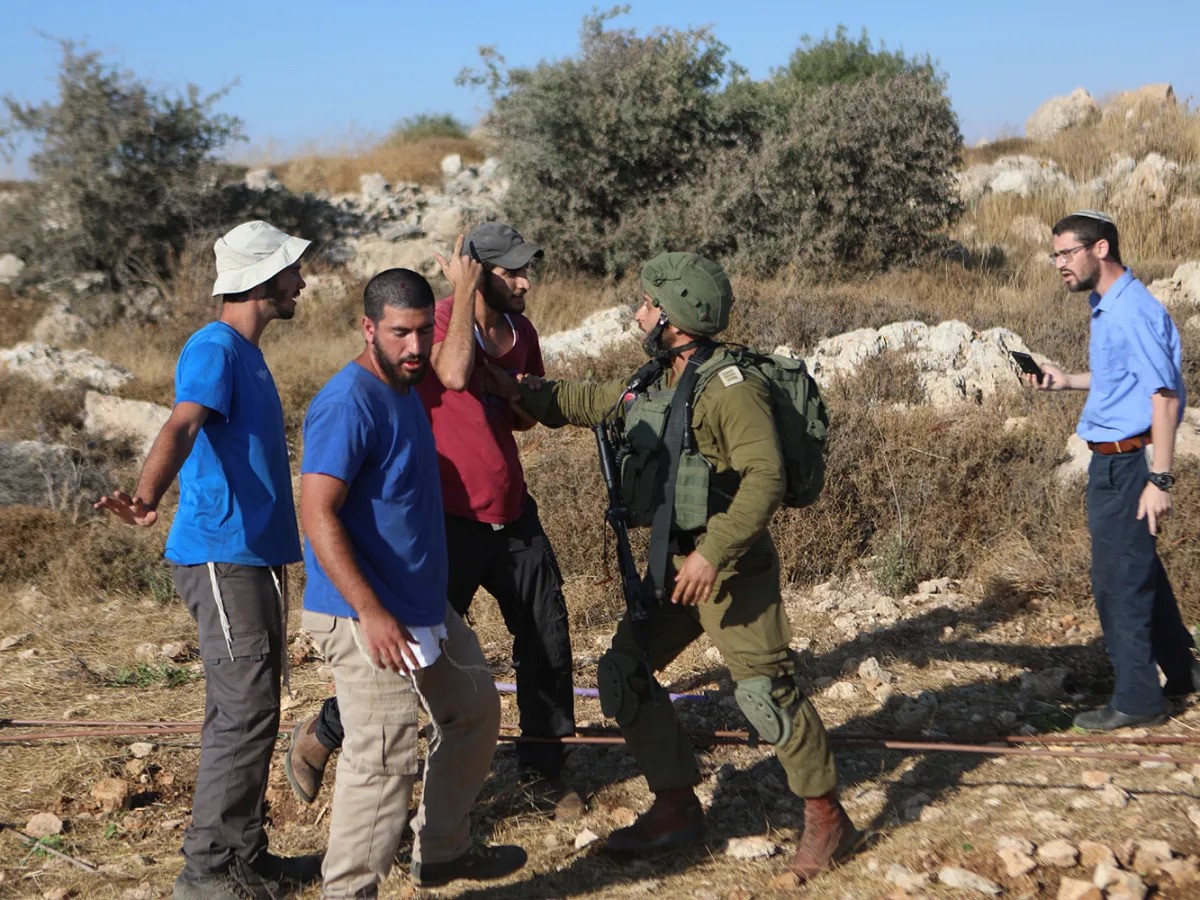
If in the Gaza Strip the Israeli war machine was directly responsible for destruction and massacre, in the West Bank the key actors are the radical settlers who have practically turned into infantry of a quiet occupation project.
In the latest developments, the Palestinian Red Crescent Society said Friday that two Palestinians were wounded by settler gunfire in an attack on the Al-Adisa area of the Sa'ir town, north of Hebron. In Nablus, settlers redeployed and pitched tents around the homes of Palestinian families who remain besieged for a fifth straight day in the Ras al-Ain area of the Qusra town, south of Nablus. Meanwhile, the village of Al-Mughayyir, northeast of Ramallah, saw clashes erupt after residents confronted yet another settler assault.
But what is unfolding in the West Bank today is no longer a series of sporadic flare-ups. With settler violence intensifying, it amounts to a grinding, silent war against Palestinians. Many are no longer facing an adversary on a conventional battlefield, but rather groups that descend on villages at night, systematically targeting everything that symbolizes Palestinian life and resilience.
Shocking reports of the scale of settler crimes
The numbers paint a stark picture. International agencies report that settler attacks have escalated to unprecedented levels in recent months. The UN Office for the Coordination of Humanitarian Affairs said Friday that more than 1,330 settler attacks against Palestinians have been recorded across the West Bank since the start of the year through late July 2026, an average of more than six assaults per day. These incidents have upended hundreds of Palestinian families and left dozens of villages and towns in a state of perpetual insecurity.
According to the same report, at least 18 Palestinians have been killed in settler attacks since January, and nearly 900 others wounded.
OCHA said that in just one week, it documented 38 settler attacks that resulted in Palestinian injuries and property damage. The agency also reported that settlers demolished three Palestinian homes in the Tuba area of Masafer Yatta, displacing 23 people, including 14 children.
Data released Friday by the Palestinian Authority's commission against the separation wall and settlements shows that Israeli forces and extremist settlers carried out 2,256 attacks against Palestinians, their land and property in July alone, 1,458 by military forces and 798 by settlers. The Ramallah and Al-Bireh governorates, along with Nablus, top the list of hardest-hit areas, according to Palestinian figures.
The AP, reporting from the Qusra area, described Palestinian families trapped in their homes for fear of settler seizure, with human rights workers facing obstruction in their efforts to deliver food and aid. In a related development, the UN warned Friday that relief operations across the West Bank are being severely delayed and restricted by a sprawling network of more than 900 physical obstacles, including checkpoints, gates and roadblocks.
The Wall Street Journal reported on the blockade on the Palestinian homes and the push by the settlers to seize them. It added that water and power are cut off from these homes and tens of Palestinians are in critical conditions.
A primary target of these attacks is Palestinian agriculture, which is the lifeblood of thousands of families. In the hills south of Hebron and around Nablus, settlers have repeatedly stormed farmlands, uprooting hundreds of olive trees, some decades old, standing as living symbols of Palestinian attachment to the land. Alongside these assaults, the destruction of water tanks, solar panels, fencing and irrigation equipment has become a near-daily occurrence.
Reuters reported Friday that settlers in the Fasayil area of the Jordan Valley seized and diverted a major water source used by Palestinian farmers. As a result, water that once irrigated eggplant, squash and watermelon fields has been cut off, leaving large swaths of farmland parched and unplanted.
The human toll is captured in the voice of Saad Nimr, a Palestinian farmer. "They closed the water line and took it over," he told the Palestinian news agency Maan. "Three months have passed, and not a single drop has reached us to cultivate our land."
The damage goes far beyond crops, threatening the livelihood of entire families. Workers and farmers who try to approach the spring have been physically attacked and threatened. Rather than compensate the farmers, settlers have rebranded the site as an “Israeli tourist attraction” called “Herod’s Pools,” backed by significant funding from Finance Minister Bezalel Smotrich, who allocated 3 million shekels, roughly $1 million, for what he called its “restoration and development.”
In late May, Reuters reported that settlers in the Masafer Yatta area stole about 45 sheep from a Palestinian family. According to Palestinian officials, more than 4,000 head of livestock have been stolen or rustled by settlers in 2026 alone, inflicting over $5 million in losses on Palestinian herders.
The cumulative effect is a rising tide of displacement. The UN has warned that more than 1,800 Palestinians have been forced to leave their homes in the first months of 2026 as a direct result of settler violence and the restrictions imposed on daily life. In a report on the village of Tal, south of Nablus, Reuters correspondents observed the scars of uprooted olive and fig trees, an act that residents attributed to settler campaigns aimed at driving Palestinians off their land.
UN aid agencies and ReliefWeb have warned in recent days that the encroachment on Palestinian homes in Qusra and similar areas has surpassed a boiling point, becoming an integral part of a process of forced displacement.
Settler attacks backed by Netanyahu government
The surge in settler attacks across the West Bank points to a deeper reality: the perpetrators act with near-total impunity. Many analysts argue that without the political backing and cover provided by Benjamin Netanyahu's government, sustaining this level of violence and aggression against Palestinians would be all but impossible.
Netanyahu's hard-right coalition, which maintains close ties with settler leaders, has never been more reliant on far-right parties and pro-settlement factions that draw a substantial share of their political and electoral support from the settler population.
Over the past four years, with extremists at the helm, settlement expansion has not only continued unabated, but also Netanyahu's cabinet has also taken multiple steps to legitimize illegal outposts and settler strongholds. Figures like National Security Minister Itamar Ben-Gvir and his hardline colleague Smotrich have repeatedly and publicly championed settlement growth and even called for accelerating the annexation of parts of the West Bank.
In a related development, Israeli media revealed Friday that Defense Minister Israel Katz is transferring authority over law enforcement in the West Bank from the military to a special police unit, a move that critics view as yet another step toward cementing Tel Aviv's control over the territory, easing oversight of settler activity and laying the groundwork for practical annexation.
In this climate, few Israeli politicians are willing to pay the political cost of confronting settler violence, and with parliamentary elections approaching, that calculus has only grown more pronounced. Even many opposition leaders, who are vocal critics of the Netanyahu cabinet, have shown little appetite for taking a firm stance against settler actions, wary of alienating right-wing constituencies and pro-settlement voters. The result is a near-total failure of accountability, allowing the attacks to continue.
International community turning a blind eye
Alongside the political cover within Israel, the international community's weak reaction has become another key enabler of persistent settler violence. Over recent months, the UN and human rights bodies have repeatedly sounded alarms over the surge in attacks against Palestinians, but those warnings have yet to translate into meaningful, deterrent action. The latest case in point is last week's Security Council session on West Bank developments. Though it featured stark warnings that the situation was reaching a "breaking point" and expressions of deep concern over escalating violence, the meeting ultimately ended without a resolution or any operational mechanism to rein in settler attacks.
In Europe, while some countries, Spain and Belgium among them, have called for tougher pressure on extremist settlers and even sanctions, the lack of consensus among EU member states has blocked any unified or effective policy. As a result, much of the international condemnation and alarm remains confined to political statements, with little tangible impact on the ground in the West Bank.
Finally, the unchecked continuation of settler violence and settlement expansion risks turning the West Bank into a new flashpoint, one that would not only deepen insecurity and instability but also erode whatever slender chances remain for reviving a peace process and reaching a political solution.