

















Alwaght- For the Iranians, June is packed with major bitter and sweet events that have left deep mark on the nation's developments. June 5, 1963 uprising, which many historians and analysts regard as the very cradle of the glorious Islamic Revolution that toppled the pro-Western monarchy of Pahlavi, to the epic liberation of Khorramshahr during the eight-year war with Saddam's Ba'athist regime.
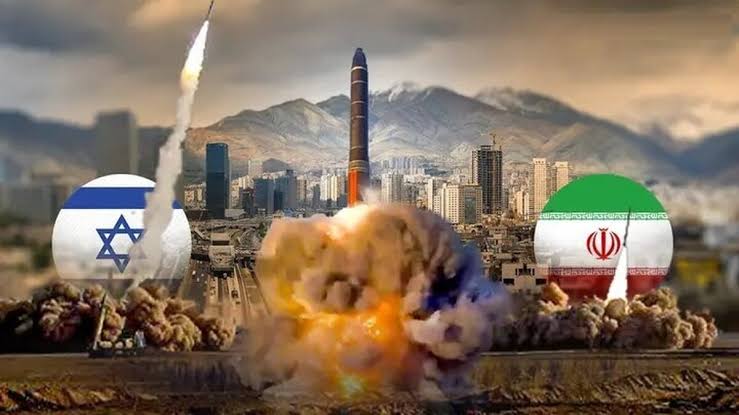
This month became even more memorable for Iranians with the US-aided Israeli aggression in Iran last year that led to 12-day war.
The oppressed yet heroic Iranian nation emerged, much like the eight-year imposed war and the recent 40-day conflict, victorious and proud, having passed a great and fateful test. They put on display for the world scenes of epic resilience unmatched in their brilliance, and the power, dignity, independence, and prestige of the Islamic Republic stood more proven than ever before to the nations of the world.
Yet amid all this, one of the most critical dimensions and takeaways from the 12-day war, and one well worth revisiting on its first anniversary, lies in the strategic, military, and security lessons etched into the fabric of that battle. These were lessons that not only played a decisive role in sharpening the country's defensive and security preparedness but also became a priceless asset for commanders and political-military decision-makers in the recent 40-day war.
In fact, a significant part of Iran's success in managing one of its most complex and sweeping confrontations with the US and the Israeli regime owes directly to the application of those very teachings and experiences drawn from the 12-day war, experiences that paved the way for thwarting the enemy's objectives and imposing defeat upon them.
The overall picture of future wars
The first and possibly the most important outcome of the 12-day war was emergence to the Iranian commanders and managers of an overall picture of the future war with the US and Israeli regime. Before this war, there constantly was military threat by the enemies, but a precise and operational picture of how they would start the war, their weapons of use, targets of attacks, and the tactics were not fully clear to Tehran.
The 12-day war removed this ambiguity to a large degree, showing that the main strategy of the enemies focuses on bombing the economic and military infrastructures, pushing to destroy the integrated air defense network, striking the entries and support centers of the missile forces, attacking nuclear and uranium enrichment centers, assassinating senior military commanders and political officials, launching cyber attacks on banks and vital service institutions, using mercenary networks to operate drones and carry out sabotage operations, and also targeting media and public information centers in the country.
The true value of that foresight became clear when the recent 40-day war broke out with the martyrdom of the Supreme Leader Ayatollah Sayyed Ali Khamenei and a host of senior commanders and state officials. Despite the crushing weight of that initial blow, the experience of the 12-day war had already primed the country's military, security, and administrative structures for precisely such a scenario, ensuring that even in the face of sudden shock, the nation would not descend into paralysis or confusion.
And so it proved that the armed forces and political leadership shook off the initial jolt in record time, and the response to enemy aggression began within mere minutes of the first strikes.
Nor was this readiness confined to managing the opening hours of the war. Across every sector, contingency plans had been laid in advance. As a result, the enemy's massive barrages on missile and drone cities failed to knock those hubs out of the operational loop, and the heavy bombing of nuclear facilities never brought the enemy within reach of its primary goal, namely the destruction of the country's strategic reserves and capabilities.
Even state television, officially called Islamic Republic of Iran Broadcasting (IRIB), standing on the front lines of the battle against enemy psychological warfare, kept broadcasting despite having its buildings and centers struck. The Islamic Republic's voice never went silent, and its narrative continued to reach the nation.
Weak and strong points of war
The second important lesson of the 12-day war was a more precise knowledge of the enemy’s vulnerabilities to Iranian missile and drone strikes. This war showed what weapons with what tactics and in what models of use bear the biggest chance of smashing through the complex air defense layers of the enemies.
In the opening days of the war, Iran's focus was largely on launching massive waves of missile and drone strikes. But gradually, drawing on battlefield experience, more effective patterns took shape. By the war's final days, particularly in the strike on the Be'er Sheva facilities, using fewer missiles in successive, meticulously choreographed waves yielded far better results in terms of precision hits on intended targets.
Those same lessons were put to much wider use in the recent 40-day war. Drones, built on the hard-earned knowledge from the 12-day conflict, played a far more prominent role on the battlefield, from sustaining relentless pressure on enemy air-defense systems and grinding them down, to imposing a heavy psychological toll on the enemy's home front and civilian populace.
These capabilities also proved critical in executing the strategic project of closing the Strait of Hormuz, a project that, even after part of Iran's naval fleet and several large vessels came under fire, remained intact as one of the most effective levers of strategic pressure against the enemy.
Another lesson was understanding this reality that the future war will not be limited to classic military operations and will massively impact the infrastructures.
This understanding motivated Iran to, between the two wars, collect a precise target bank of the enemy and its allies' vital infrastructures and use them in strikes by its armed forces.
Planning to maintain pressure on the infrastructures of enemy and also designing various scenarios to keep Strait of Hormuz closed and also using it as a strategic trump card in war were driven by this knowledge.
Enemy's Achilles heel
Perhaps the single most important strategic takeaway from the 12-day war was Iran's hard-won, realistic grasp of the enemy's true endurance in a war of attrition.
That conflict laid bare a truth that shattered the prevailing narratives: neither the Israeli regime nor its backers possess infinite capacity to absorb the costs of a protracted war. The longer the war dragged on, the heavier the military, economic, social, and psychological toll on them became.
That lesson, in turn, elevated attrition warfare into a cornerstone of Iran's defensive and offensive strategy in all subsequent confrontations, a strategy that proved its worth again in the recent 40-day war, and played a pivotal role in tilting the balance of power in favor of the Islamic Republic.










