
















Alwaght- In Trump's second term, the gap between the US and Europe has grown deeper than any other time. Now the differences are not simply about geopolitical issues, but mechanisms that for several decades have saved European-American alliance are collapsing.
Though the idea of self-reliance and cutting the dependence on the US was raised several years ago by European leaders, it was just theoretical. But now their approach to separating ways from the US is practical and noticeable, with European officials asserting that they have to take a fresh path.
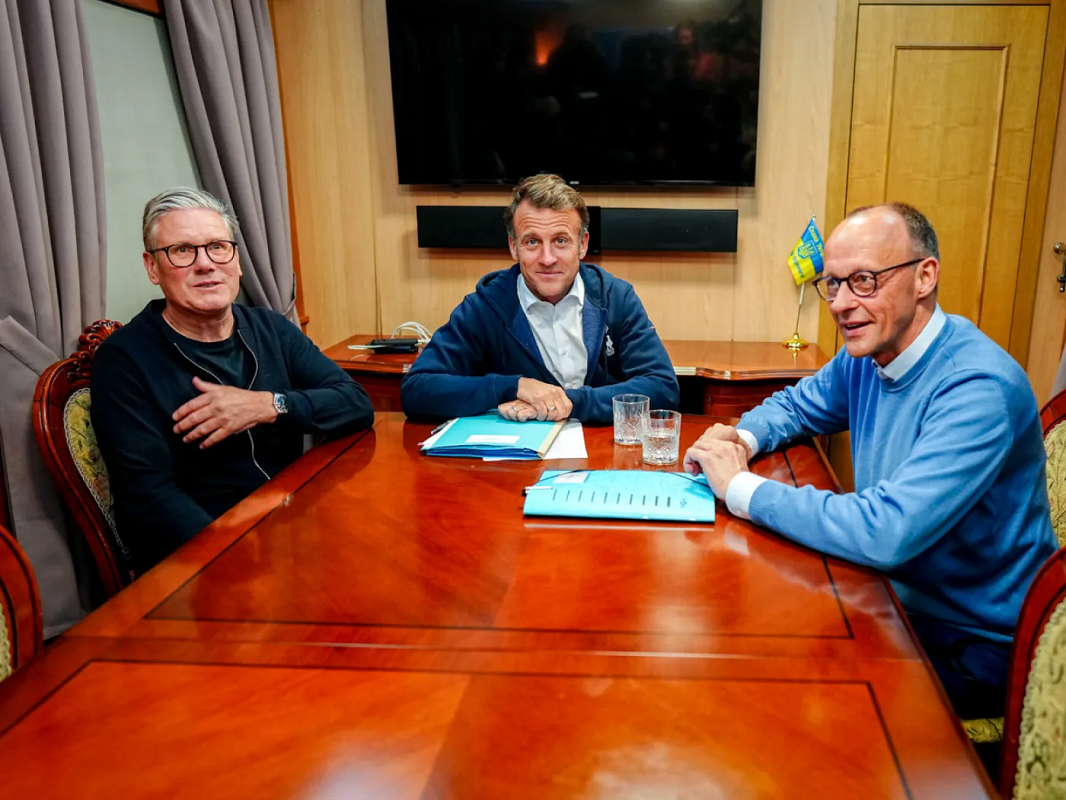
Amid the Munich Security Conference, British Prime Minister Keir Starmer urged European nations to end their reliance on the US military support, calling for stronger intra-European cooperation instead.
"I’m talking about a vision of European security and greater European autonomy, that does not herald US withdrawal but answers the call for more burden sharing in full, and remakes the ties that have served us so well," Starmer asserted.
European Commission President Ursula von der Leyen also addressed the gathering, pushing back against Washington's recent criticisms of Brussels. "A stronger Europe must take responsibility for its own defense," she declared. "Europe must activate its common defense clause; that is what Europe truly means. But this commitment only holds weight if it it's built on trust and capability. That's why we must stand ready, collectively."
German Chancellor Friedrich Merz delivered sharp criticism of the US's declining leadership, warning that the rules-based international order "no longer exists as it once did." Europe, he said, must prepare for an era where American security guarantees can no longer be taken for granted. "Europe's freedom and security are no longer guaranteed," Merz stated. "The continent must prepare to shoulder greater responsibility."
In this connection, Merz said that he discussed Europe's nuclear deterrence with the French President Emmanuel Macron, something that can transform the European security structure. The German leader talked about the "deep division" with the US, adding that it is not limited to defense issues and includes economic and values-based issues.
In addition to European leaders, the public opinion of the continent are growing further pessimistic about Washington’s policies. Recent polls reveal that a considerable number of the Germans, the French, and the British do not see the US a trustworthy partner.
Divergence in US-Europe relations
For decades, Europe has heavily relied on the US for its security and economic stability. From the NATO alliance to broad economic partnerships, the trans-Atlantic tie-up has been a cornerstone of the continent's safety and prosperity. However, policies championed by President Donald Trump, including the imposition of heavy tariffs on Western allies and unilateral moves like the suggestion of seizing Greenland, have jolted European leaders into a stark realization. They began to have a common idea: We must fundamentally rethink our strategic posture.
These developments have exposed a critical vulnerability and it is that absolute reliance on Washington can leave Europe exposed at crucial moments. Consequently, in recent years, European nations have increasingly focused on forging a genuine "strategic autonomy" capable of shielding the continent from political and economic pressure from the US.
On the security front, the most prominent initiative is the push for an independent European NATO. While NATO remains the primary pillar of European defense, leaders are now seeking frameworks that allow for a swift and effective response in a crisis without total dependence on the Americans. A renewed focus on developing domestic defense industries, boosting military budgets, and establishing joint military capabilities within the EU signals a serious commitment to decoupling from Washington.
Ukraine crisis has thrown this drive for reduced security dependence into sharp relief. In the view of many European leaders, Trump's approach, pressuring Kiev into a deal with Russia that would cede territorial gains to Moscow, Europeans think, would not stop Russia, but rather encourage further wars against other European countries in the future.
This serious view division between Europe and the US has given rise serious concerns about the degree of the US commitment to protection of security of its allies. European leaders are afraid that in critical moments, like what happened in Ukraine, they will be surprised by unilateral decisions of Washington and will be left alone in the face of the foes. Additionally, Greenland case and Trump's interest to seize the Danish island has intensified these concerns.
Another factor pushing European leaders toward greater internal cohesion is the shifting US posture toward its long-standing allies. This realignment was even reflected in the latest US National Security Strategy, in which the Trump administration warned that European civilization could face a serious decline over the next two decades. Such a stance signaled that Washington no longer views Europe as a strategic partner worth preserving, but rather as a rival whose structures it seeks to weaken.
Furthermore, as top US officials speak of a new international order taking shape, Washington's overarching approach is pushing global players toward greater self-reliance across multiple domains. In this unfolding landscape, European nations are working harder than most to forge a more independent position for themselves by strengthening their internal cohesion.
Struggling to set free from under American economic yoke
In the economic area, too, Europe is working to redefine its position and depart from excessive reliance on the American financial supports. Recently working to expand trade ties with China serves as one of the most important pillars of the continent's new strategy.
Signing new trade deals with China as a key rival to the US bears clear witness to the shifting European strategic formation. These deals are not only no simple ones, but also carry a political message about the European willingness to upgrade its position in the transitioning world order.
This strategy serves a dual purpose: diversifying trade and investment routes to shield Europe from sudden Washington policy shifts, while simultaneously tapping into major global markets to sustain economic growth and competitiveness.
Separately, European officials recently announced they are exploring alternatives to Visa and Mastercard, aiming to reduce reliance on Washington and limit its leverage over the continent's financial infrastructure. The initiative seeks to establish a common European payment solution capable of replacing offerings from the American giants.
These moves suggest that Washington's policies are acting as a repellent force, rather than keeping Western allies in orbit and sustaining its waning hegemony, they are pushing partners away. The result is an unintended assist to emerging rivals like China, enabling them to strengthen their position in the new global order as Washington's standing becomes increasingly precarious.
In general, reducing economic and military reliance on the US is not a short-term reaction by Europe but a sign of fundamental review of the European security and economy strategy. These changes prepare the continent for future crises, trans-Atlantic political gaps, and global challenges, signaling that Europe wants to depart from the position of a mere onlooker or follower to an independent, powerful actor.










