









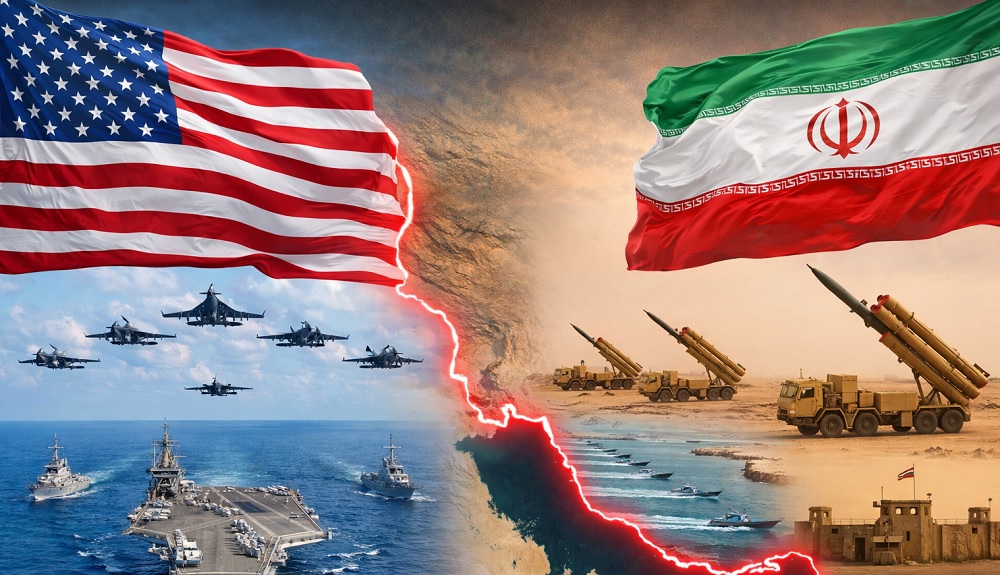


Alwaght- Despite holding a new round of talks between the US and Iran in Oman, some reports suggest the American military buildup in the region continues. According to flight data, on Monday, several American transform and fuel supply airplanes flew into the region. At the same time, the US Air Force’s military mission formation continues. In a related development, according to a report from an observer of military activities, a military tanker aircraft bearing the call sign BLUE 72 has been transferred from Morón to Qatar’s Al Udeid airbase to provide aerial refueling support for fighter jets. Additionally, three C-17 aircraft have arrived at Jordan’s Muwaffaq Salti Air Base. It has also been reported that a fourth Lockheed C-5 Galaxy military transport aircraft has arrived in Saudi Arabia’s Prince Sultan Air Base, having flown from Robert Gray Army Airfield.
Reports of such military movements are typically issued by observers familiar with military affairs. However, none of these reports are officially confirmed or denied by authoritative sources, meaning they cannot be accepted with absolute certainty. That said, the possibility of U.S. military movements in the region cannot be dismissed outright.
At the same time, it is no secret that Washington has consistently pursued a dual-track approach in its negotiations with various parties, including Iran. In fact, duality has been a recurring feature of US foreign policy across different administrations. Many foreign policy experts argue that American foreign policy has always been marked by fluctuations. The fact that the Trump administration continues its military activities even while engaging in talks with Iran reflects this same pattern of inconsistent foreign policy, a factor that has made even the US’s closer allies, including European partners, hesitant to fully rely on their alliance with Washington.
Is anti-Iranian military action possible?
Even if we deem the reports about the US military deployment credible, a question presents itself: Can the US reach its goal against Iran using military force? The answer can be found in the comments of observers and media reports:
Prominent Russia media outlet warns the White House: Russia’s RT network reports that any attempt to test Iran would end in regret: neither war nor alternative pressure scenarios can bring about change in Iran’s political system. The risks of an attack on Iran are significant. Airstrikes would not alter the structure of the Iranian political system, and Iran’s armed forces retain the capability to carry out retaliatory attacks.
US pullback: Alastair Crooke, a former British diplomat and ex–MI6 officer, said in an interview that the Oman talks were originally intended to focus exclusively on nuclear issues. However, during meetings in Istanbul, efforts were made to impose Israel’s agenda, which is halting uranium enrichment, addressing missile capabilities, and disarming Hezbollah and Hamas. Iran rejected these demands, insisting that negotiations be limited strictly to the nuclear file in Oman or not take place at all. This stance ultimately forced Washington to back down, as the Washington is well aware of the costs of a military confrontation with Iran.
A Military option against Iran is futile: American analyst Scott Ritter argues that Iran today is far stronger than it was a decade ago. Its missile program has become far more advanced, with dramatically improved accuracy. Iran also possesses precision cruise missiles, loitering munitions, and a powerful asymmetric naval force. Despite severe sanctions, Iran’s economy has grown more resilient, while its regional and international alliances, with China, Russia, and the Axis of Resistance, have solidified. As a result, Ritter concludes, a military strike on Iran would fail to achieve its objectives.
Iranian missiles brought Trump to the negotiating Table: The Israeli newspaper Ma’ariv has also dismissed the military option against Iran, reporting that Iran’s threats to launch large-scale missile attacks across the Middle East in response to a US strike were the primary factor pushing Washington to choose negotiations over military action. Iran is now pursuing a strategy of ambiguity and uncertainty regarding its missile capabilities to deter any new conflict. During the 12-day war in June and the expansion of hostilities, Iran gained additional experience in penetrating and bypassing Israeli and US air defense systems.
Why cannot military action yield a result?
If we summarize the foreign analyses about futile of a military action, we can consider a few points:
1. Geography and size: Iran is a vast country with highly diverse terrain including mountain ranges, deserts, and widely dispersed urban centers. This geography makes any rapid, lightning-style military campaign extremely difficult. Occupying or controlling Iran would be prohibitively costly and would almost certainly turn into a prolonged war of attrition.
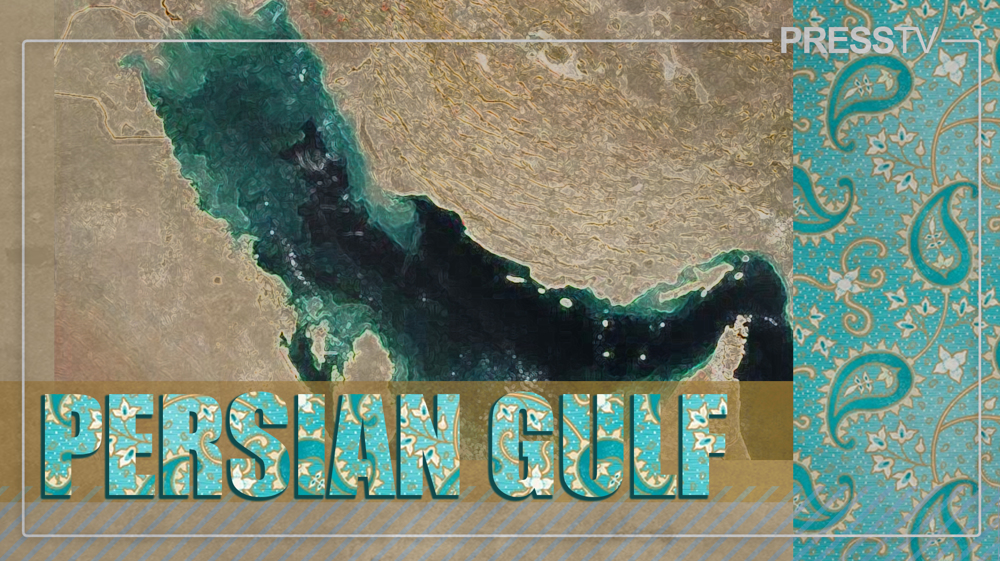
2. Asymmetric deterrence capabilities: Iran does not rely primarily on conventional, head-to-head warfare. Instead, it has built a deterrence strategy centered on ballistic and cruise missiles, creating an asymmetric balance against the US. Iran’s drone capabilities and its asymmetric naval power in the Persian Gulf ensure that any attack would impose high and unpredictable costs on an aggressor.
3. Regional network: Iran is not merely a nation-state confined within its borders; it is a regional actor with influence across multiple geopolitical arenas. Any military operation against Iran could quickly expand into several simultaneous fronts, drawing regional interests and forces of the attacking states into the conflict. This dynamic sharply raises the political and security risks of military action.
4. Limits of military targets: Even if a precision strike were carried out against Iran, much of its infrastructure is re-buildable. Technical know-how and human capital cannot be destroyed by airstrikes. A military blow, therefore, does not necessarily translate into the elimination of Iran’s military or nuclear capabilities.
5. Political and international costs: A war with Iran could disrupt global energy markets, provoke reactions from China and Russia, and undermine the international legitimacy of the attacking party. Any military action against Iran would thus carry a heavy political price for the aggressor.
6. Historical experience: The US experiences in Iraq, Afghanistan, and Libya show that starting a war is far easier than managing its consequences. Regime change or political engineering from the outside has consistently failed, as demonstrated by the wars in Vietnam, Afghanistan, and Iraq. American decision-makers and policymakers, drawing on this historical record understand that military action is unlikely to achieve Washington’s objectives in Iran.