









Alwaght- After Taliban's takeover of power in Afghanistan in August 2021, a large number of previous government's security and military officials fled the country fearing prosecution and having doubt about Taliban's declaration of general amnesty. Though the Taliban's approach was on the surface in favor of issuing amnesty to the previous government officials, in practice the group launched campaigns of targeted prosecutions and arrests against former officials especially military officials and anti-Taliban forces.
Fate of previous officials after Taliban takeover
The fate of Afghanistan's former military personnel after the Taliban takeover was broadly split. Some Pashtun soldiers and technocrats were able to continue their work by adapting to, or cooperating with, the new structure. Another segment of the forces, however, especially those known as staunch Taliban opponents, were either forced to flee or became targets of violence.
This process of eliminating opposition was visible even before Kabul's fall. One example is General Abdul Raziq Achakzai, the police chief of Kandahar and a well-known opponent of the Taliban and Pakistan, who was assassinated on October 18, 2018, by a Taliban infiltrator within his own guards. This assassination demonstrated that the Taliban had long been engaged in targeted planning to weaken the previous government's security structure and remove influential figures.
After the Taliban's seized the power from pro-Western government, some former commanders, such as General Yasin Zia and General Abdul Ghani Alipur (commonly known as Qumandan Shamshir), took up armed struggle against the Taliban. In contrast, reports indicate that Ashraf Ghani's government, in its final months, not only failed to mount organized resistance against the Taliban advance, but also in some cases even conducted military operations against some of these same Taliban opponents.
Overall, a combination of factors, including the Taliban's prior planning to eliminate opponents, weak central government leadership, insufficient support for local resistance forces, and the cooperation of some former soldiers with the Taliban, enabled the Taliban to gain control over most Afghan provinces in a short period of roughly 11 days.
Wave of assassinations outside Afghanistan
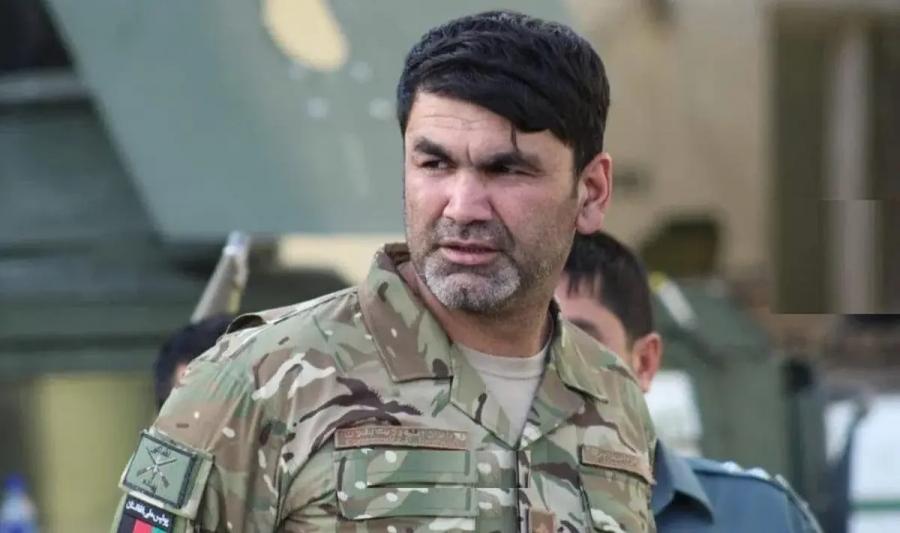
Since July 2021, Taliban stepped up arrests and attacks on opponent security and military officials. This has become an intermittent process after purge of opponents and establishment of Taliban government. According to reports, over the past three months, three anti-Taliban figures have been assassinated in Iran. The assassinations of prominent Afghan military figures abroad, including former Takhar and Baghlan police commander General Ekramuddin Saree, former army unit commander Mohammad Amin Almas, and a commander close to Ismail Khan, have intensified concerns within the Afghan diaspora.
In the case of the killing of the commander linked to Ismail Khan in the Iranian city of Mashhad, the assailant entered the Afghan political activist's office with premeditation, used a handgun equipped with a silencer, reportedly a pillow to muffle the sound, fired two shots, and fled the scene. However, on Monday, September 15, Iranian security forces identified and arrested the suspected killer at the Dogharun border crossing.
While no group has claimed responsibility for these attacks, opponents of the Taliban link them to Taliban security operations. Taliban officials have previously threatened they could target opponents outside Afghanistan. Nabi Omari, deputy of the Taliban's interior ministry, once claimed he could "carry out an assassination in neighboring countries for 500 Pakistani rupees," and former Sirajuddin Haqqani spokesman Saeed Khosti stated the Taliban has "hundreds of volunteers for assassinations beyond Afghanistan’s borders." Recently, the deputy director for combating criminal offenses at Tehran's Criminal Investigation Department confirmed that a case file has been opened regarding the murders of General Ekramuddin Saree and Mohammad Amin Almas.
Ekramuddin Saree was reported to have been shot dead after leaving his office in Valiasr Street in downtown Tehran. His companion Mohammad Amin Almas died hours later after suffering injuries. While the full scope and details of these assassinations remain unclear, what is evident is that the Taliban is actively working from a list to eliminate former Tajik, Uzbek, and Hazara generals and officials it deems problematic. The strategy appears twofold: pressure these opponents to return to Afghanistan or face assassination abroad. These assassinations serve as a stark warning from the Taliban to opposition groups and regional countries, including Iran. They directly contradict Taliban assurances that Afghan soil will not be used to harm neighboring states. The message is clear: the Taliban's reach extends beyond its borders. Although the Taliban currently maintains silence, it would be naive to disregard its hand in these operations. The primary beneficiary of this campaign of fear and elimination is unquestionably the Taliban itself.
The hands behind assassinations
Indeed, there are other scenarios about the factors behind assassinations. For example, some point to beyond Afghanistan, arguing that Pakistan's intelligence may has hand in them to cause a shift to Iran's view of the Taliban and consequently force changes in their relationship. Others say that these assassinations are carried out by anti-Taliban factions to turn Iranian attention to anti-Taliban front. Or these assassinations, some suggest, may be led by pro-Taliban factions to direct Iran's attention to activities of anti-Taliban groups. Still, all these are theories and no group has ever claimed their responsibility and so the aspects remain hidden as the Taliban choose silence. However, they very likely have been planned by the Taliban and its agents.
Warning to Iran
These assassinations seriously cloud the prospects for relations between Iran and the Taliban. Tehran, after obtaining precise information about the circumstances of such assassinations and with superior intelligence and a deeper understanding, must issue the necessary warnings to the Taliban if their government is involved. Iran should emphasize that its territory is not the arena for the Taliban's ethnic-political score-settling, and this issue will have consequences the Taliban government. Indeed, the Taliban's logic is one of brutality and force. They yield only when met with decisive counter-force. Appeasement could allow these assassinations to continue.
Iran must conduct a precise and comprehensive assessment of the nature of the Taliban government, its internal structure, and the potential extent of its influence within Iranian borders. It is also essential to gain a deep picture of the Afghan diaspora in Iran to determine which segments might be involved in counter-security activities and what their affiliations or collaborations with internal, regional, or international actors might be. Both the presence of Taliban infiltrators and the activities of Taliban opponents among Afghan nationals, whether documented or undocumented, become a security challenge for Iran when they turn Iran into a battleground for group vendettas and foreign conflicts. Iran must firmly prevent its territory from becoming such an arena.
Unfortunately, the Iran's multiplicity of approaches and lack of a cohesive and united look at Afghanistan diaspora and the Taliban government overshadow the Iranian national security, something posing a serious foreign threat to Iran, which invites for a response. This is while Tehran has always wished security, stability, and development for Afghanistan and has stressed on forming a comprehensive government consisting of all religious, ethnic, and political groups. In Iran's view, monopolization of power or elimination of influential ethnic-sectarian groups from participation in a democratic structure are not favorable options. Also, Iran is against any foreign intervention in Afghanistan’s home affairs which only fuels instability in this country.