













ALWAGHT- An examination of how Yemen’s asymmetric operations in the Red Sea interfered with Israeli-bound commerce, challenged conventional naval supremacy, and recalibrated international security calculations in 2025.
For decades, the Red Sea was viewed as a predictable artery of global trade. Between 2023 and 2025, that perception collapsed as Yemen moved from the margins of geopolitics to a position of maritime influence, revealing how exposed global commerce is to geography, asymmetric power, and political determination.
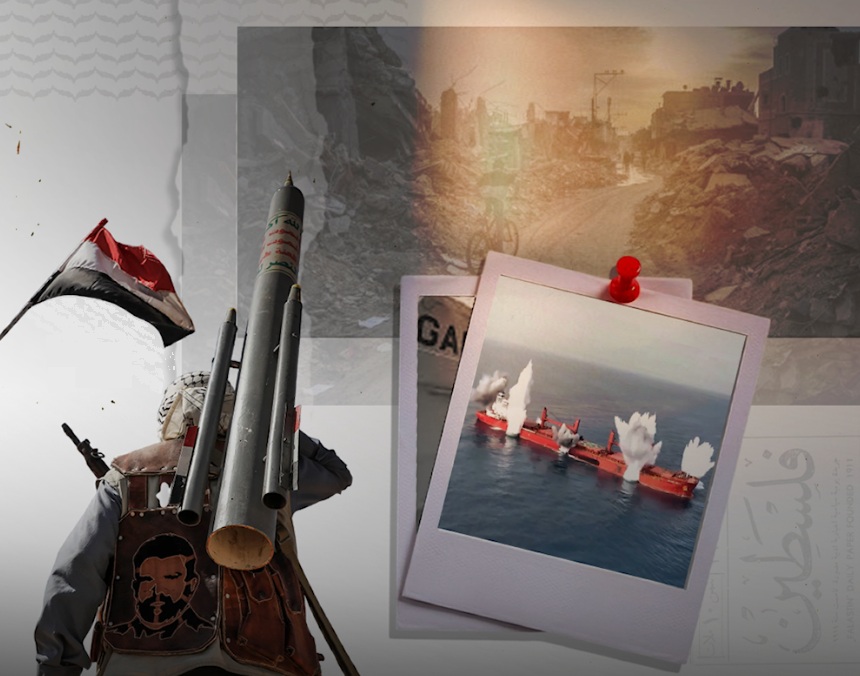
Yemen’s naval campaign, launched in response to the Gaza war, aimed to pressure Israel and lift the blockade on the Strip. While narrowly framed, its impact was global: attacks on commercial and military vessels shattered long-held assumptions about maritime dominance and demonstrated that chokepoint disruption no longer requires conventional naval supremacy.
At the center was the Bab al-Mandab Strait, through which a significant share of global oil and container traffic flows. Using missiles, drones, fast attack boats, and surveillance, Yemeni forces imposed disproportionate costs on shipping. Incident data showed an unprecedented spike in attacks, forcing insurers, navies, and logistics firms to reassess risk across the entire corridor.
By 2024–2025, the campaign evolved into a form of hybrid maritime warfare. Yemen combined kinetic strikes with intelligence, tracking, and informational tactics, compelling shipping companies to reroute traffic around Africa. The result was longer transit times, higher freight rates, rising insurance premiums, and a sharp decline in Suez Canal traffic.
Despite US-led military responses, Yemen retained most of its capabilities and effectively imposed a “strategic veto” over Red Sea transit. The episode signaled a structural shift in maritime power: control of the seas can now be challenged by smaller actors using asymmetric tools. Yemen’s Red Sea intervention was not an anomaly, but an early indicator of a changing global maritime order.