- YAF Targets Riyadh Airport and Saudi Military Positions
- Cargo Vessel Carrying 2,500 Containers Sinks After Hitting Mine South of Strait of Hormuz
- Quds Force Chief Reiterates Iran’s Support for Palestine, Calls al-Aqsa Protection a Priority
- Iranian Parliament Speaker Says US Must Face Punishment and Meet Tehran’s Legitimate Demands
- Iranian, Lebanese Officials Hold Talks on Latest Regional Developments
- Bessent’s Prediction Gone Wrong: Economic Resilience in Iran, Collapse Delusion in the US
- Iran Warns It Will Sink US Vessels Approaching the Strait of Hormuz
- Another Oil Tanker Catches Fire in the Strait of Hormuz
- Yemen Warns Civilians to Leave Saudi Aramco Sites, Threatens Retaliation for Attacks on Sana’a
- IRGC Frees Kidnapped Engineer, Kills Six Terrorists in Southeastern Iran
Editor's Choice
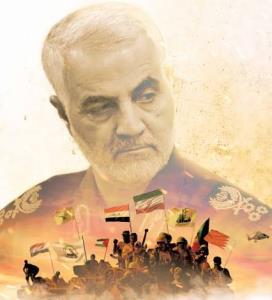
Gen. Solemani, A Living Resistance Legacy General Solemani of Iran caused a transformation to the region that blocked the way of the Israeli and American projects in West Asia.
A Review of Newly Published US National Security Document The US national security document may be an unwanted admission that the US hegemony is diminishing.
US or Venezuela? Who’s the True Oil Thief? Trump says Venezuelan nationalization of its oil was theft of American oil companies’ assets, justifying oil blockade on South American nation.
Why Are Tel Aviv and Washington Stepping Up Pressures against Hezbollah? Israel knows that disarming Hezbollah makes occupation of Lebanon a piece of cake.
Is Yemen on the Verge of Split? The country is sinking in chaos as conflicting forces in the south are going separate ways and Yemenis are less involved in the fate of the south.
News
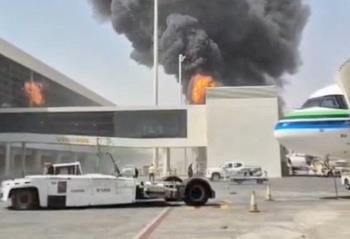
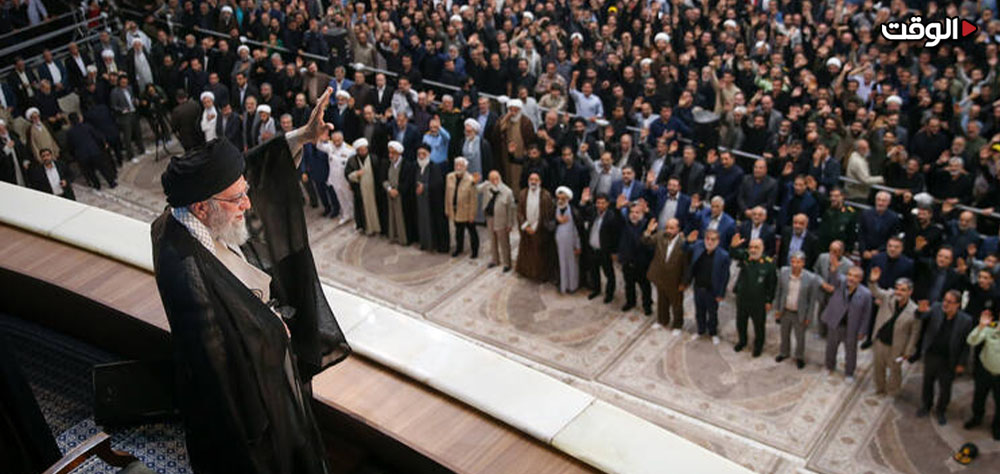
YAF Targets Riyadh Airport and Saudi Military Positions
The Yemeni Armed Forces launched four ballistic missiles on Wednesday, targeting Riyadh’s King Khalid International AirportCargo Vessel Carrying 2,500 Containers Sinks After Hitting Mine South of Strait of Hormuz A container vessel loaded with over 2,500 containers went down south of the Strait of Hormuz after striking a sea mine and subsequently catching fire
Quds Force Chief Reiterates Iran’s Support for Palestine, Calls al-Aqsa Protection a Priority The head of the Islamic Revolution Guards Corps (IRGC) Quds Force has reaffirmed Tehran’s unwavering backing for the Palestinian cause
Iranian Parliament Speaker Says US Must Face Punishment and Meet Tehran’s Legitimate Demands Iranian Parliament Speaker Mohammad Bagher Ghalibaf has called for Washington to be held accountable for its actions against Iran
Iranian, Lebanese Officials Hold Talks on Latest Regional Developments During a meeting in Beirut, Iranian Deputy Foreign Minister Saeed Khatibzadeh and Sheikh Ali al-Khatib exchanged views on recent developments
Iran Warns It Will Sink US Vessels Approaching the Strait of Hormuz IRGC Navy Commander General Ali Ozmaei has cautioned US warships against approaching the Strait of Hormuz, threatening to sink them if they do
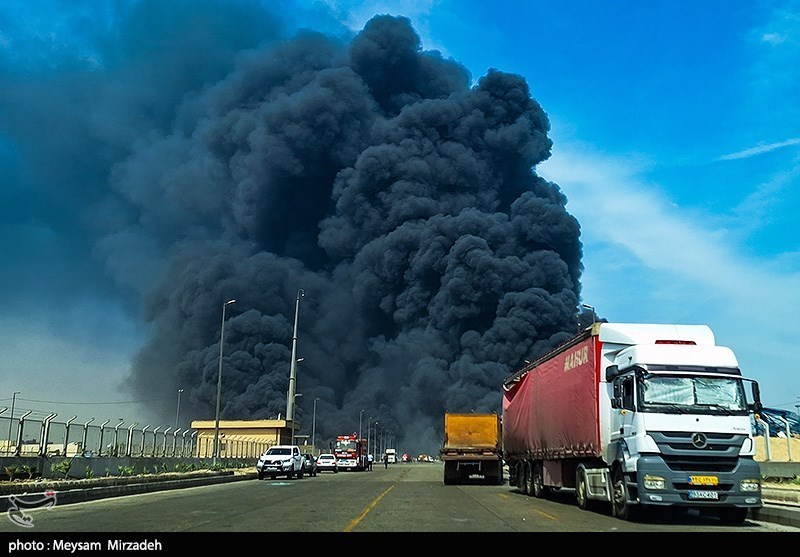
Another Oil Tanker Catches Fire in the Strait of Hormuz Iran’s Army Navy said Tuesday that a tanker attempting to pass through the Strait of Hormuz unlawfully caught fire and suffered damage
Yemen Warns Civilians to Leave Saudi Aramco Sites, Threatens Retaliation for Attacks on Sana’a Yemeni Armed Forces has called on civilians and workers to immediately leave areas near Saudi Aramco’s oil installations
IRGC Frees Kidnapped Engineer, Kills Six Terrorists in Southeastern Iran Iran’s Islamic Revolutionary Guard Corps (IRGC) Ground Force has rescued a kidnapped construction engineer and killed six members of a terrorist group
French Protest Turnout Doubles as Demonstrators Call for Macron’s Government to Resign Violent confrontations, detentions, and tear gas erupted in Paris during nationwide demonstrations supported by student groups and trade unions
Iran’s IRGC Navy Reports Another Tanker Incident in Hormuz, Warns US Cooperators The IRGC Navy has warned that it will take firm action against commercial ships and oil tankers operating in the Strait of Hormuz and the Persian Gulf
Iran: Deployment of 39,000 Troops Thwarted Planned Ground Invasion The deployment of more than 51 combat units and the redeployment of 39,000 military personnel during the Ramadan War prevented an enemy ground invasion of Iran
Iran Says Oil Smuggling and Maritime Operations Will Not Avert US Defeat Iranian Armed Forces spokesperson Brigadier General Abolfazl Shekarchi has dismissed US claims of control over the Strait of Hormuz
Saudi Strikes Across Yemen Kill Civilians Saudi air raids and artillery fire have killed and injured civilians, including children, across Taiz, Saada, al-Jawf and Sanaa
Pezeshkian Accuses US of Complicity in Israel’s Genocide in Gaza Iranian President Masoud Pezeshkian has accused the United States of complicity in what he described as Israel’s ongoing genocide against Palestinians
IRGC Warns Ships Disabling Tracking Systems of Decisive Action in Strait of Hormuz Vessels navigating the Strait of Hormuz with their navigation and identification systems switched off would be considered hostile and face decisive action
Araghchi Urges Global Accountability for Environmental Destruction During Wars Iranian Foreign Minister Abbas Araghchi has called for stronger international action to protect the environment during armed conflicts
Iran Says Washington Must Clarify Response to Seven Conditions for Ending War Tehran considers Washington’s response to its seven conditions for ending the war and reopening the Strait of Hormuz insufficient
YAF Launch Four Major Operations Targeting Saudi Airports, Aramco Facilities Yemen’s armed forces say they have targeted key Saudi infrastructure and military positions
Iran Deploys More Than 50 Military Units Along Its Borders, Army Commander Says More than 50 combat and support units have been stationed along Iran’s borders to safeguard the country’s security
Most Viewed
YAF Targets Riyadh Airport and Saudi Military Positions
Cargo Vessel Carrying 2,500 Containers Sinks After Hitting Mine South of Strait of Hormuz
Bessent’s Prediction Gone Wrong: Economic Resilience in Iran, Collapse Delusion in the US
Iranian, Lebanese Officials Hold Talks on Latest Regional Developments
Quds Force Chief Reiterates Iran’s Support for Palestine, Calls al-Aqsa Protection a Priority
Iranian Parliament Speaker Says US Must Face Punishment and Meet Tehran’s Legitimate Demands
Israeli Navy: From Protecting Coasts to Addressing Threats in Distant Waters
Pezeshkian Urges Iran to Resist Pressure and Advance Scientific and Technological Capabilities
Velayati Condemns Rubio’s Remarks, Says US Has No Moral Authority to Lecture Others
Rezaei Warns Washington of Another Historic Defeat, Citing Iran’s Victory over Rome
Gaza Reports 10 Deaths, 65 Injuries in 24 Hours as Israeli Attacks Continue
Iran Deploys More Than 50 Military Units Along Its Borders, Army Commander Says
Israel’s Fury at Nobel Choice: Pillay and Gaza Genocide Case
Iraq, the Graveyard of American Military Strategy in West Asia
Taliban Investment in Iran’s Chabahar Port: Opportunity or Challenge?
YAF Launch Four Major Operations Targeting Saudi Airports, Aramco Facilities
Iran Says Washington Must Clarify Response to Seven Conditions for Ending War
IRGC Warns Ships Disabling Tracking Systems of Decisive Action in Strait of Hormuz
Claim of Civilizational War With Iran: Why’s Rubio Distorting History?
Pezeshkian Accuses US of Complicity in Israel’s Genocide in Gaza
Saudi Strikes Across Yemen Kill Civilians
Ghalibaf: 200 Days of Public Mobilization Thwarted Enemy Plots
Iran Confronted US, Israel in a Way No Other Country Dared
Iran’s "Self-sacrificers Exercise": A Strong Public Message to the US
Iran Has Not Altered Nuclear Policy, Senior Official Says, Leaving NPT Exit on the Table
Iran Holds Strategic Leverage in Strait of Hormuz, Armed Forces Spokesman Says
Ali Al-Taher Capture Toll a Hyperbole, Hezbollah in Proper Conditions: Analyst
Minab Children’s Paintings Displayed at UN in Geneva
YAF Targets Saudi Aramco, Khamis Mushait Base with Ballistic Missiles, Drones
Atlantic Gap in the Final Stage
Ghalibaf Says Hormuz Won’t Reopen Until US Meets Iran’s Demands
Fifth Fleet: From Safe Base to Story of Loss
Ansarullah and Bab-el-Mandeb: Why’s Israel Rattled by New Geopolitical Reality?
IAEA Resolution Against Iran Draws Criticism Over Its Limited Impact
Pentagon Acknowledges F-35 Was Struck by Iranian Forces During War
IRGC Shoots Down Fourth MQ-1 Drone Over Strait of Hormuz
In Focus
Ansarullah
A Zaidi Shiite movement operating in Yemen. It seeks to establish a democratic government in Yemen.
Shiite
represents the second largest denomination of Islam. Shiites believe Ali (peace be upon him) to be prophet"s successor in the Caliphate.
Resistance
Axis of Resistances refers to countries and movements with common political goal, i.e., resisting against Zionist regime, America and other western powers. Iran, Syria, Hezbollah in Lebanon, and Hamas in Palestine are considered as the Axis of Resistance.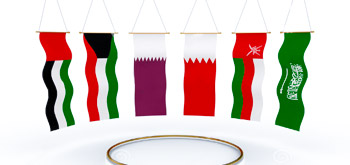
Persian Gulf Cooperation Council
A regional political u n i o n consisting of Arab states of the Persian Gulf, except for Iraq.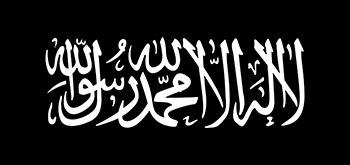
Taliban
Taliban is a Sunni fundamentalist movement in Afghanistan. It was founded by Mohammed Omar in 1994.
Wahhabism & Extremism
Wahhabism is an extremist pseudo-Sunni movement, which labels non-Wahhabi Muslims as apostates thus paving the way for their bloodshed.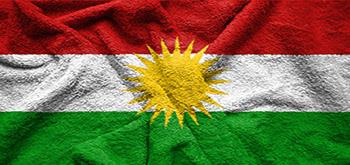
Kurds
Kurds are an ethnic group in the Middle East, mostly inhabiting a region, which spans adjacent parts of Iran, Iraq, Syria, and Turkey. They are an Iranian people and speak the Kurdish languages, which form a subgroup of the Northwestern Iranian branch of Iranian languages.
NATO
The North Atlantic Treaty Organization is an intergovernmental military alliance based on the North Atlantic Treaty which was signed on 4 April 1949.
Islamic Awakening
Refers to a revival of the Islam throughout the world, that began in 1979 by Iranian Revolution that established an Islamic republic.
Al-Qaeda
A militant Sunni organization founded by Osama bin Laden at some point between 1988 and 1989
New node

Turkey's Possible Post-Election Scenarios to Form Government


Alwaght- Parliamentary election in Turkey plays a very important role in the political future of the country, as it was the first parliamentary election after directly electing the Turkish president. The results show that none of the political parties won the majority, and the ruling party, supporting ‘Recep Tayyip Erdogan’ lost the parliamentary majority it had held since 2002. In fact, the results of the election ended Turkey’s 13 year single-party rule, and an unknown era has begun in the Turkish policy, which could be a return to the era of coalition governments.
Erdogan as president of Turkey, according to country’s Constitution, will appoint Ahmet Davutoğlu, the leader of the largest political party in parliament to form a government. However, given that at least 276 seats are needed to form a government, the following three scenarios are possible:
1. The Justice and Development Party (AKP) forms a ‘minority government’. If a minority government is formed, the government virtually cannot easily pass its proposed bills, and will have to constructively interact with the other parties and provide them with a role in government decisions.
2. AKP enters into a coalition with other parties to from a ‘coalition government’. As AKP is unlikely to form a coalition with the Republican People's Party and Nationalist movement party, the only likely option would be the pro-Kurdish Peoples' Democratic Party. Although the Justice and Development Party and the People's Democratic Party run election campaigns against each other, and coined slogans to call the other party into question, but they are now likely to form a coalition. In such a case, the AKP should grant the People's Democratic Party significant concessions, especially about the rights of the Kurdish minority.
3. No government is formed within the next 45 days, and the country would have to enter another round of elections. Given the strong opposition from the other three parties to the policies of the AKP, it seems that forming a minority government or a coalition government is faced with difficulties. Therefore, it is also likely that Turkey enter another round of elections. The constitution gives Erdogan and the parliament the authority to call an early parliamentary election. That election would have to be held three months later.