









Alwaght- In recent days, reports of Iran leasing lands in southern Iran to Afghanistan has ignited reactions online. But the reality is different from from what has been circulated by some media.
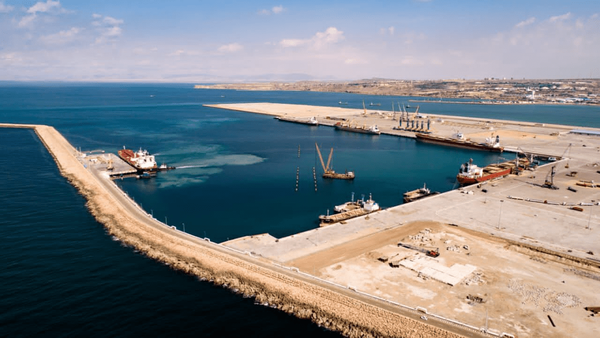
Iranian member of parliament Mohsen Zangeneh in an interview with Sahar TV said that under the initial deal, up to 10,000 meters of land is to be given to the Taliban government in Chabahar Port. This, indeed, does not mean transfer of property. It is for investment to establish trade infrastructures in this region.
Still, some media outlets misread the deal. Iranian officials also made clear that under the country’s constitution, there is no mechanism for handing over a territory or parcel of land to a third country in a way that transfers ownership. Zangeneh, in a follow-up video, clarified his remarks, explaining that the core issue was the Taliban government’s investment in the southern Iranian port, not any transfer of land to them.
The second point concerns the backstory. During Afghanistan’s previous government, and from 2016 onward, we saw repeated border tensions between Afghanistan and Pakistan. During that period, crossing points and customs posts, including Torkham, Chaman, Ghulam Khan and the Khyber Pass, were shut and reopened time and again. That pushed Afghanistan to diversify its trade routes, turning to three corridors through Iran.
The first was investment in and development of the Khaf-Herat railway and the Dogharoun-Islam Qala border customs post; the second, the Milak-Zaranj road; and the third, Iran’s Mahirud border crossing.
Therefore, the question of investment, or land transfers for investment purposes, had been on the table since Afghanistan’s previous government, and the idea resurfaced after the Taliban took power. Steps have been taken since, and the Taliban government has so far invested roughly $30 million there.
The rationale is that Afghanistan’s development and the revival of its trade and economy help bolster regional security and expand Iran’s political and economic ties. We see Afghanistan’s development as our own, and this has always been a focus for Iran.
It is noteworthy that the Chabahar trade agreement among Iran, India and Afghanistan was signed in 2016. But contrary to our expectations, the Indians invested little in the port, bringing in only some transferable equipment, such as tall cranes designed for ports, with no significant investment to speak of.
Advantages of Afghanistan investment in Chabahar
The reason why Tehran welcomes investment of Afghanistan government in Chabahar seems to be driven by a number of factors.
First, the long-term economic development of the Chabahar free zone will benefit Iran. Actually, it draws in investment on the one hand, and on the other fuels trade and transit, creates jobs and expands the number of factories and production units in the region.
It must be taken into account that Chabahar enjoys a distinct edge over many ports on the Sea of Oman and in surrounding areas, not least its oceanic position. It is also virgin territory with vast development potential, which is why Iran is paying it special attention.
The second point is the expansion of Iran-Afghanistan ties. Deeper investment and trade in Chabahar can help strengthen relations between the two countries across other domains as well.
Turning Chabahar into a major transit route and revitalizing the North-South Corridor are among the other upsides. There is also the question of linking Chabahar to Afghanistan and Central Asia, a route that could serve as another branch, or a complementary path, alongside the China-Pakistan Economic Corridor, known as CPEC.
The third point is regional competition. Chabahar’s development benefits not only Iran but also some regional countries, and could set off economic rivalries in the region. It could, for instance, prod China to invest more in Pakistan’s Gwadar port. In effect, a kind of positive competition takes shape, and given the synergies and complementary economic capacities of these countries, it could ultimately serve the economies of Iran, Afghanistan and the wider region.
This positive regional competition is a welcome development. Pakistan is trying to blunt the full exploitation of Chabahar’s potential by investing in border markets, but developing border markets alone cannot strengthen transit corridors and grow the regional economy, especially the Chabahar Port free trade zone. Iran should therefore work to attract not only Afghanistan but other regional countries to invest in this port, particularly landlocked states such as Tajikistan, Uzbekistan and Turkmenistan. Drawing in their capital can also help foster positive competition in the region.
One of the long-term advantages of this plan is development of transit routes to Central Asia, which gives Afghanistan and other landlocked states access to high seas, something that can shore up Iran's position in the regional corridors network and substantially help full activation of North-South Corridor.
Challenges ahead
Alongside these upsides, potential challenges loom, chief among them US sanctions, which have consistently deterred other countries from investing in Iran, as we saw with India.
Another issue is domestic opposition and a lack of transparency over how land is being allocated to India and Afghanistan. A careful examination of this would require reading the texts of the memorandums themselves. Still, it must be made clear exactly how the land is being handed over, for how long and under what terms, along with the details of tax arrangements and other financial conditions.
Another factor that could shape the climate around this investment and land allocation is the Helmand water rights dispute. Some residents and local officials are asking how we can be prepared to hand over land to the Taliban when they are not paying our water rights.
The final issue is the insecurity and security risks in Sistan-Baluchestan, which have intensified somewhat in recent months. The assassination of prominent social activist in Sistan and Baluchestan, Nasrat Eftekhari, on Wednesday, October 7, on the outskirts of Zahedan, attacks on police outposts, indiscriminate attacks and a rise in so-called “team houses” in recent months all feed the security risk in the region.
A current in the region is effectively opposed to any development of Chabahar port or even the Makran coast. Part of this opposition has domestic roots, but some of these domestic currents appear to be swayed by foreign actors who oppose the development, expansion and progress of the area.
As for the lease term, 10 years have been announced, with the option to extend. Reports also suggest that land with leases exceeding 10 years has been given to Afghan traders under an understanding, though this needs to be verified and remains largely speculation for now.
On another front, India’s planned investment in Chabahar was supposed to reach $370 million, but only $120 million has materialized so far, most of it for strategic port equipment, with little investment in land.
Details of the understanding for leasing the land for investment need to be scrutinized, for example these lands are to be leased for how long, with what terms, what form of ownership applies, and what the terms of use will be. These issues need to be clarified.
Dim outlook of investment in Chabahar
In charting the outlook for investment in Chabahar, several considerations demand attention. First is geopolitics: as Iran’s only oceanic port, Chabahar holds enormous investment potential, provided the region is better managed and its promise is tapped through regional diplomacy and capital from other countries.
Cooperation with India has become a key test. The question is how committed India really is to the North-South Corridor: does it genuinely intend to use it, or is it simply buying time, and how far is it swayed by US policy? These factors cloud the region’s development outlook, nowhere more than at Chabahar, where India has signaled it is not merely stalling by activating alternative routes such as the eastern branch of the North-South corridor and expanding trade with Russia, yet on the other has been forced to halt the port’s second-phase development after Washington let Chabahar’s sanctions waiver expire in May 2026, and is now weighing temporarily transferring its stake to an Iranian entity to dodge secondary sanctions. Iran sees this as a test of India’s true will, a survival tactic caught between geoeconomic imperatives and the geopolitical constraints imposed by Washington. This is a dilemma that, as long as US-Iran tensions persist, will keep the future of investment in Chabahar and India’s share of the North-South Corridor shrouded in uncertainty.
Despite these ambiguities, Iran is serious about ramping up investment in the region and paving the way for more capital. Developing the area requires conditions that let investor countries operate in Chabahar with greater confidence. To that end, leasing land, roughly 50 to 100 hectares, to investors may be necessary so they can operate there with more certainty. Finally, such a move can help develop the region over the long term and deepen cooperation between Afghanistan and Pakistan.