







Alwaght- While President Recep Tayyip Erdogan of Turkey nurtures his neo-Ottoman dream leadership, complete with potentially performing prayers at Damascus’s Umayyad Mosque, Israeli regime has turned that dream into a jumbled nightmare, upending Turkey’s calculus for the new Syria.
The competition between Turkey and Israeli regime that was ongoing over Palestine for years since the fall of Bashar al-Assad in December 2024 spread to Syria. When the armed militias seized the rule in Damascus, the disputes of Ankara and Tel Aviv over Syria future, regional influence, and the Turkish military role have elevated to new heights. So, the Israeli attack on Abu al-Duhur military base of Syria on Tuesday should be read as the latest development in this confrontation.
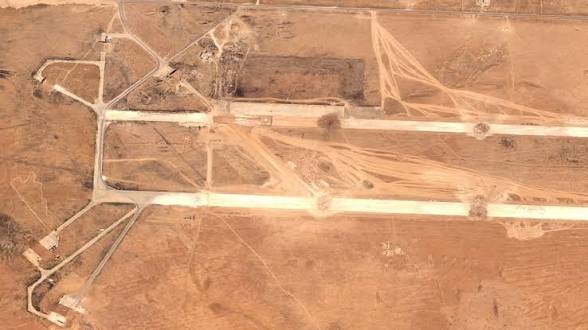
At least eight strikes hit the airstrip and base facilities, damaging key infrastructure, according to reports. What makes this episode a potential turning point in Syria's new power equation is Tel Aviv’s claim that Turkish forces were present and taking up positions there. Syria's foreign minister acknowledged that Turkish military officials had visited days before the attack, but insisted the visit did not amount to establishing a permanent Turkish base at Abu al-Duhur. The base, he said, remains under Syrian sovereignty, and there is no plan for a standing Turkish deployment.
Syrian officials said a Turkish technical team, there to repair the runway and control tower, was on site when the strikes hit, and that no military personnel were present.
Yet, Israeli regime's prime minister's office, in its justification for the assault, charged that while Tel Aviv and Damascus had agreed to preserve the existing security arrangement, Syria was on the verge of violating it by planning to let Turkish forces set up at an airbase near Aleppo. This regime had repeatedly warned Syria that such a move would threaten its security, the office said, but Syria chose to brush off those warnings.
"Israel will not tolerate any threat to its security, and would welcome a return to the status quo." Netanyahu's office declared.
Defense Minister Israel Katz went further, directly addressing Recep Tayyip Erdogan with a blunt warning, saying :"Do not drag Turkey into dangerous adventures in Syria, and do not test Israel's resolve to defend itself.
Turkey reacted in a strong-toned statement, saying that by striking the Syrian infrastructure and military capabilities, Israeli regime actually violates this country's sovereignty and territorial integrity. The press office of Erdogan described Netanyahu’s claims regarding Turkish presence in Syria "baseless", adding that these remarks fall under Netanyahu’s expansionist and destabilizing policies, especially on the eve of the Israeli parliamentary elections. Ankara further held that cooperation with Syrian government for peace, wellbeing, and stability in the Arab country will continue.
Turkish officials said Israel did not use the direct communications channel established last year between the two countries to prevent military incidents, a lapse that heightens the risk of escalation. Separately, Thomas Barrack, the US envoy for Turkey and Syria, told an Israeli media outlet that the strikes carried "a real danger of rapid escalation into a direct military confrontation between Israel and Turkey, and Syria as well."
It is noteworthy, Turkey, one of the main backers of the ruling armed Syrian factions, is maneuvering to extract maximum advantage from the country's new dynamics and expand its political and military foothold in Syria.
Strategic significance of Abu al-Duhur
To grasp the significance of Israel's latest strike, one must first look at Abu al-Duhur's geography and strategic heft. The base sits east of Idlib province, roughly 45 kilometers south of Aleppo, positioned in northern Syria, close to the Turkish border.
During Syria's civil war, Abu al-Duhur was a major military hub, but heavy fighting left it badly damaged and out of operation for years. Now, its reconstruction has taken on new urgency. That location means reviving the base is not merely a construction project, it is part of the new Syrian government's broader effort to rebuild its military capacity.
The base also lies near the main routes for moving troops and equipment between eastern and western Syria, making it a potential linchpin for controlling and supporting military operations across much of the north.
Its setting in Idlib's fertile plain adds another layer: the area matters for monitoring transport corridors and security dynamics. With regional powers jockeying for greater influence in Syria, rebuilding and reactivating this base could reshape the military and security balance in the country's north.
Why is Tel Aviv worried?
The reason behind concern of Israeli regime about Turkish military establishment in Syria should be sought in the shifting Syrian dymdmics.
Ankara has become the leading backer of post-Assad Syria and in addition to participating in rebuilding the devastated infrastructure, it upped its security and military cooperation with Damascus.
In August last year, defense ministers of the two neighbors signed a military training and consultation agreement according to which Turkey will provide military equipment, weapons systems, logistics support, training, and expertise and experience transfer to the newly-established Syrian military.
Turkish military cooperation at a base like Abu al-Duhur could elevate Ankara's influence from the political realm into the operational and security sphere. Such a presence would also give Turkey a stronger link to northern Syria and a bigger say in shaping the new Syrian army.
So, from Israel's vantage point, Abu al-Duhur is not just an airstrip, it is a piece of a larger contest over who gets to shape Syria's future. If Turkey can build a network of military, training, and logistical cooperation inside Syria, Ankara's influence would harden from a political footprint into a durable security presence. That, in Tel Aviv's view, could constrain the military freedom of action it has worked to preserve in Syria.
For the Israelis, then, the issue is not a few advisers or a military delegation. The deeper fear is that Turkey is gradually positioning itself as the dominant military power in Syria, laying down long-term infrastructure for its presence. All of this comes as Netanyahu's hard-line government has spent recent years trying to weaken the military capacities of Syria and Lebanon, and to tighten security around the occupied territories. In that context, any rebuilding of Syrian military infrastructure, and any boost to Syrian defensive capability, looks to Israeli leaders like a direct and serious threat.
Message of attack to Erdogan and al-Sharaa
The political weight of this strike grows even heavier when placed alongside Erdogan's parallel push to deepen ties with Damascus. Erdogan recently announced his intention to travel to Damascus by the end of this year, a trip that, if it happens, would mark his first visit since al-Assad's fall.
Seen through that lens, the Abu al-Duhur attack reads as far more than a limited aerial operation. In the view of Turkish observers, by striking a site where increased Turkish involvement had been floated, Israeli regime effectively sent Erdogan a message, telling him that any expansion of Turkey's military footprint in Syria will be met with resistance, and Tel Aviv will not allow him to grow comfortable on Syrian soil.
At the same time, the strike carried an unmistakable message for the new Syrian government under Ahmed al-Sharaa: Damascus cannot rely solely on Turkish support to rebuild its army and military infrastructure. From Tel Aviv's perspective, any shift in Syria's military balance will be scrutinized, and Israel effectively warned Damascus that drawing closer to Ankara and accepting Turkish military aid will not deter Israeli action.
Tel Aviv does not want post-Assad Syria to transform from a weakened state into one with a rebuilt military, backed by a regional power like Turkey. Some analysts therefore see the Abu al-Duhur strike as a preemptive warning to al-Sharaa's government that Israel intends to impose its own security rules on Damascus before Syria's new army gains real strength and before Turkey deepens its role in organizing it.
That reading gains added force given that just days before the strike, on August 14, the Mossad chief and Syria's foreign minister held a phone conversation about Turkish military presence in Syria. Reuters sources described that call as one of the highest-level direct contacts yet between Tel Aviv and Syria's new leadership.
Mecca Pact and shift in regional equations
The strike on Abu al-Duhur cannot be understood in isolation from the wider tectonic shifts across West Asia. In recent months, Turkey has worked to expand its security cooperation with regional states, and the signing of a defense pact with Saudi Arabia and Pakistan, dubbed the "Mecca Pact," stands as one of the clearest signs that new security arrangements are taking shape.
If that trend continues, Turkey could position itself alongside Saudi Arabia and Pakistan as a cornerstone of a new regional security architecture. Though not formally billed as anti-Israel, that emerging framework could, in Tel Aviv's view, become a game-changer, one that may eventually constrain Israel's room for maneuver even further.
Two Turkish observers close to the government told Middle East Eye that "the Mecca Pact with Pakistan and Saudi Arabia, which Israel has framed as a new Sunni axis, has put Netanyahu in a difficult spot ahead of elections. Because Israel's basic message is Tel Aviv does not care about the new security architecture Turkey is building; it will keep striking whenever and wherever it wants.
Therefore, the Turkey-Israel rivalry in Syria appears to be moving beyond political disagreements and into a full-fledged security contest, with each side pursuing fundamentally different goals. Turkey wants a stable, unified Syria with a strong central government that can rebuild its military and security structures with Ankara's backing. Israel, by contrast, wants to ensure that process does not produce a new military power on its doorstep.
From that angle, the Israeli strike could prove a turning point. By hitting the base, Israel signaled that it takes even the possibility of a Turkish military presence in Syria with dead seriousness. And Turkey, by condemning the attack and vowing to keep backing Damascus, signaled it has no intention of backing down.
If this trend continues with boosted Turkish-Syrian military cooperation, cementing the rule of the new Syrian government, and rise of a new security bloc in the region, Syria can become the main competition ground of Turkey and Syria for the years to come.