










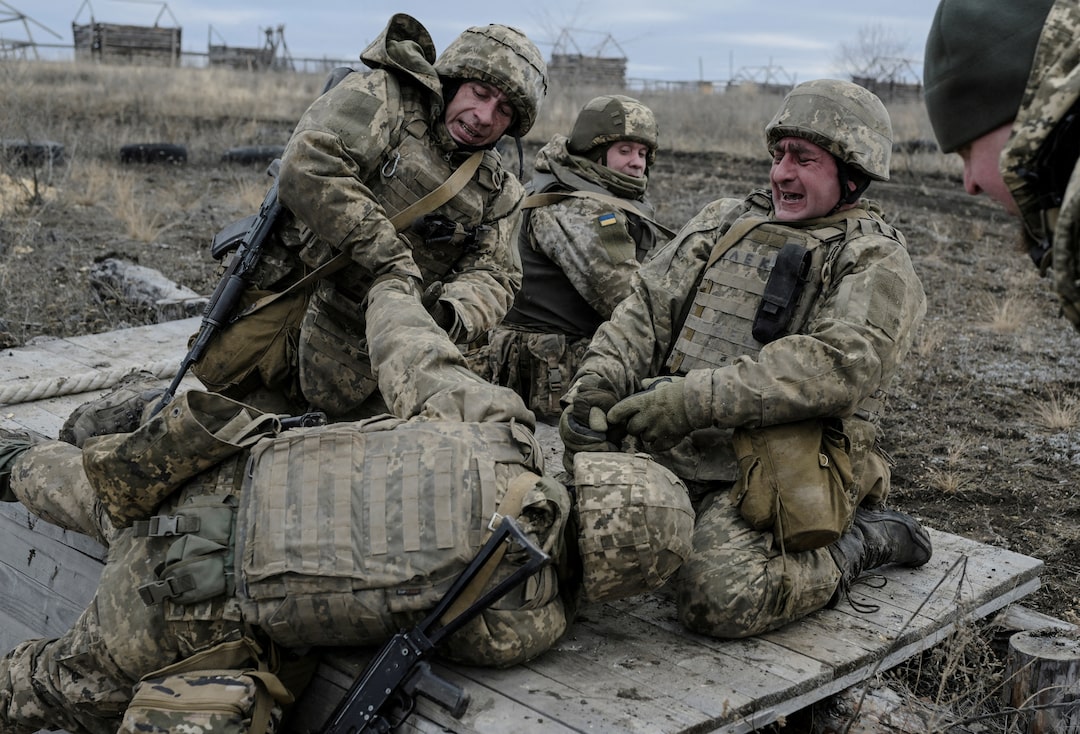


Alwaght- The protracted war of Ukraine has given rise to one of the country's most important challenges which is the shortage of manpower in the army. This crisis is showing itself in army personnel desertions, resistance to recruitment, and even fleeing the army training courses ouside Ukraine. While Kiev desperately needs fresh forces to meet the cuts in numbers caused by casualties and to maintain the strength on the front lines, the exhaustion of the older forces and the difficulty of recruiting new ones have presented themselves as structural problems in the army.
Fleeing the front lines: Alam ringing in the Ukrainian army
Desertion has become a recurring crisis across the Ukrainian army these days. One of the most explosive cases involves the 155th Mechanized Brigade, known as the "Anne of Kiev", a unit that was supposed to serve as the showcase for Ukraine's Nato-standard military overhaul, backed by Western training and equipment. Instead, the brigade was hit by a wave of unauthorized absences and outright desertion. A report by Poland's Centre for Eastern Studies noted that in this brigade alone, cases of AWOL were recorded even during overseas training in France and Poland.
A Financial Times investigation in December 2024, citing a Polish security official, found that, on average, roughly 12 Ukrainian soldiers went missing or fled each month during military drills in Poland. That data, covering 2024, underscores a grim reality: even training far from the front lines has not been spared from the manpower desertions in the Ukrainian army.
A controversial brigade that exposed crisis
The 155th's troubles were not confined to Poland. During the brigade's training in France, several soldiers also bolted, and French officials confirmed the incidents, though they stressed that the numbers were tiny relative to the total force being drilled. Around the same time, Ukrainian investigators began looking into the unit's organizational breakdowns, with reports surfacing about staggering rates of absenteeism throughout its formation and training phases.
But the problem now gripping Ukraine's military runs far deeper than any single brigade or training site. In an April 2026 report, Poland's Centre for Eastern Studies found that more than 80 percent of desertion cases occur during basic training. The think tank traced the root causes to a brutal pipeline that funnels raw recruits straight into assault units on the most punishing sectors of the front, compounded by overcrowded training camps, squalid conditions, chaotic organization, and a chronic shortage of seasoned instructors.
War of attrition: Ukraine army facing manpower shortage
The Wall Street Journal has described a vicious cycle gripping the Ukrainian military: manpower shortages pile ever more pressure on the troops who remain; that pressure deepens exhaustion and resentment; and the resulting burnout, in turn, drives more desertions and chokes off the inflow of fresh recruits. The absence of regular troop rotations has only added to the physical and psychological toll, eroding combat effectiveness across the board.
At its core, the war's grinding longevity means that vast numbers of Ukrainian soldiers have now spent years in continuous operational status. In that climate, even simply finding replacements for worn-out units has become a crippling challenge.
Forced recruitment: gap between government and society
But the crisis is not playing out solely inside barracks and trenches; it has spilled deep into Ukrainian society. In July 2026, a violent clash erupted in Lviv between a group of civilians and military recruitment officers, with protesters overturning an enlistment vehicle. Incidents like these signal a sharp rise in social friction over how conscription is being enforced.
And not all those now entering the military are volunteers driven by military fervor. Mobilization law at the time of war gives the government broad powers to call up eligible men, but mounting media reports and grassroots pushback suggest that resistance to deployment has hardened into a serious societal fault line. Ukrainian officials argue the country is in a fight for survival and needs every available soldier. Yet the rising tide of protests, desertions, and draft-dodging efforts points to a growing chasm between the state's military imperatives and a war-weary public's willingness to keep fighting.
From street protests to desertions
In August, Ukraine's security service said it had broken up several networks that were systematically smuggling men out of the draft, for a price. That revelation underscored that draft evasion has evolved well beyond individual acts of defiance into organized, for-profit schemes designed to bypass the mobilization system.
Meanwhile, the defense ministry has rolled out an official amnesty-style program to coax AWOL soldiers back into the ranks, offering them the chance to return under specified conditions, and even to choose new units. The very existence of such a program speaks volumes about the sheer scale of the desertion crisis in the army's structure.
Manpower: Achilles heel of Kiev
All of this is unfolding as Ukraine's military grapples not just with a crippling manpower shortage, but also with equipment gaps and unrelenting operational pressure. Military officials have repeatedly sounded the alarm over troop deficits and the urgent need for fresh conscripts, while Kiev has tried to revamp mobilization laws and dangle financial incentives to boost enlistment.
But what we are seeing in the Ukrainian army can no longer be written off as a handful of isolated desertion cases. The compounding toll of attritional warfare, the manpower squeeze, endlessly extended deployments, relentless front-line stress, the absence of meaningful rotations, and the sheer difficulty of bringing in new blood, has created a tangle of problems that are directly impacting morale and combat power.
Desertions during training in Poland and France, protests over conscription tactics on the streets of Ukrainian cities, and the military's own desperate pleas for more troops are three faces of the same underlying crisis, suggesting that Ukraine's army needs more soldiers to sustain a long war, but finding people willing to pay that price is becoming harder by the day.