







Alwaght- Since Yesterday, the news of detention of one of the most prominent leaders of the Taliban in Kandahar has sent a great shock to the supporters of this ruling group in Afghanistan, triggering rumors about the internal gaps and power struggle within the helm of rule in Kabul.
Now the question is who is Motasim Agha Jan and what is behind the recent day's developments in Kandahar? Essentially, what does this detention disclose from the labyrinthine structure of power of the Taliban?
To answer these questions and more, Tehran-based Afghanistan affairs expert Ismail Bagheri has sent Alwaght a note shedding light on the issue:
Motasim Agha Jan is one of the old and effective members of the Taliban who was finance minister in the first rule of the Taliban, and after the group fell following the US invasion of Afghanistan in 2001, he worked as the head of the Political Committee of the Quetta Council. Seen as a moderate figure, he has had close ties with the family of Mullah Omar, the founder of the Taliban. His gap with the Taliban leader rose when peace talks with Hamid Karzai, the first post-Taliban president, were raised.
In 2011, Agha Jan survived an assassination attempt in Pakistan, an attack some linked directly to the Taliban leadership.
Yet the reason for his current detention is not that past violence, but rather allegations that he sought to build an independent framework for cooperation between Afghan and Pakistani religious scholars. A statement calling for an extension of the ceasefire between the Taliban and Pakistan recently circulated, and Agha Jan's name reportedly appeared among the signatories. This is what spread on Facebook and WhatsApp groups rather than verified news outlets, a direct consequence of the severe media restrictions imposed by the Taliban that force observers to rely heavily on speculation and hearsay.
Agha Jan is also said to have invested roughly $10 million in Afghanistan and operates a private religious school, something running counter to the edicts of Taliban Supreme Leader Hibatullah Akhundzada. Perhaps one of the main drivers behind this detention is the strong sensitivity of the Taliban leadership, especially Akhundzada, to any political and religious activities off the circle of the official rule in the Taliban. Akhundzada and the Taliban leadership find this a threat to home cohesion.
The choice of Kandahar for the arrest is no coincidence. The city remains the unassailable nerve center and power base of Akhundzada and his inner circle. By detaining a veteran figure like Agha Jan in the very heart of the Taliban's command, the leadership sends an unmistakable signal to any would-be dissidents: independent maneuvering, no matter how senior the player, will not be tolerated within his domain. The message is clear: The leader of the Taliban retains absolute control, and the formulation of policy toward Pakistan, the Tehreek-e-Taliban Pakistan, Iran, the US, China, and the wider world rests solely in the hands of Akhundzada and his council.
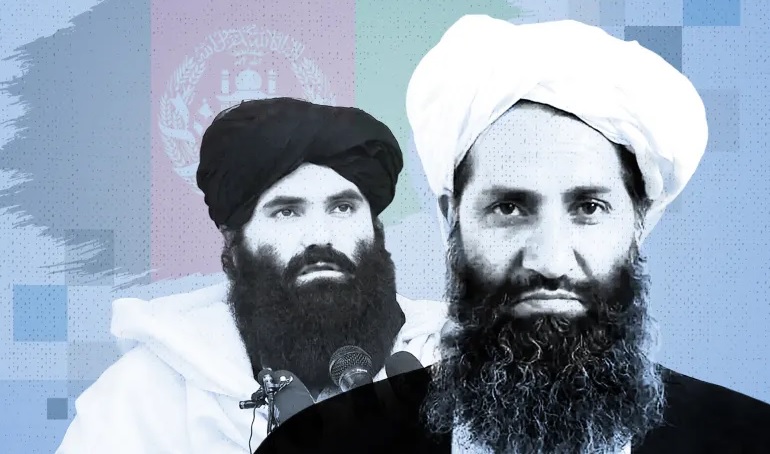
Regardless of any analysis, the arrest of Agha Jan in Kandahar somehow showed that inside the old and new Taliban bodies, there is a degree of division that is mainly political rather than ideological, especially that among Taliban figures in Kandahar and Kabul political gaps over how to deal with many issues is obvious. These cleavages are between Akhundzada-led hardline current in Kandahar and the pragmatic faction led by Interior Minister Sirajuddin Haqqani, Defense Minister Mullah Yaqub, and even Deputy Prime Minister Mullah Ghani Baradar in Kabul.
Crucially, Aghajan had returned to Afghanistan under a guarantee of safety provided by Mullah Yaqoob and through the efforts of the "Return Commission", the body tasked with luring exiled Afghan figures back to the country. This arrest now serves as a stark demonstration that Akhundzada does not care about the position and post of the Mullah Yaqub or Mullah Baradar.
The detention of Aghajan has effectively undermined Mullah Yaqub's standing within the Taliban's core leadership and rank-and-file. This humiliation could push Mullah Yaqub further into the orbit of the Kabul-based faction and closer to Sirajuddin Haqqani, potentially sharpening the internal fault lines within the Taliban rule.
Finally, it should be noted that what is circulating on the social media is that the detention came at the order of Akhundzada, but no documents and evidence have been presented. This theory is finding its way to unofficial and social media as the official media outlets and press are under strict censorship of the government.
Meanwhile, the issue of power monopolization by Akhundzada is being stoked by multiple Taliban figures, particularly from the Sirajuddin Haqqani wing and the Kabul Council, including Deputy Foreign Ministry Sher Mohammed Abbas including Stanikzai. They claim that in a recent audio recording, Akhundzada warned that internal divisions could destroy the Taliban’s system, insisting that no commander should take a stance independent of the leadership. The opposite faction, however, regards this as a blatant power monopoly.