













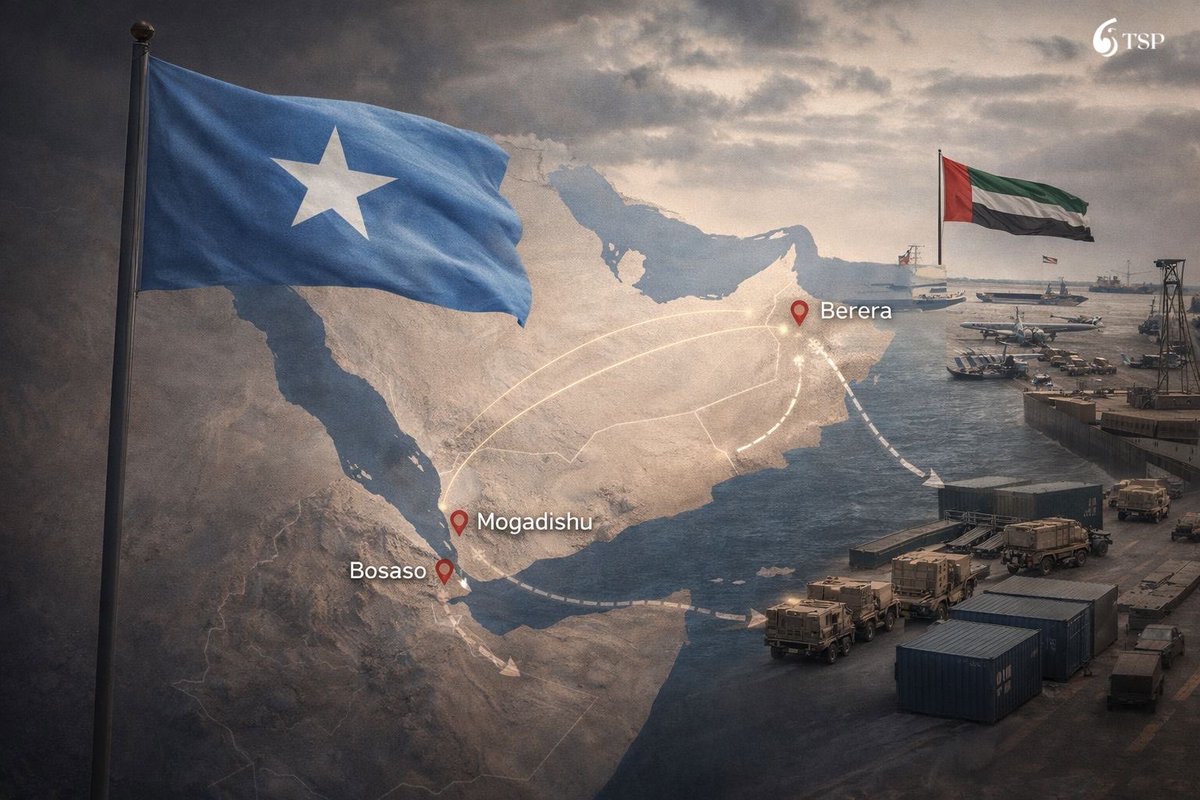


Alwaght- Signing a military cooperation agreement between Saudi Arabia and Somalia in Riyadh only a few weeks after a similar Somalian agreement with Qatar is not a simple bilateral development in defense relations. Rather, it is a sign of entry of Somalian case into a fresh phase of geopolitical competitions in Horn of Africa and the Red Sea. These developments are coming as the Israeli regime recently recognized Somaliland breakaway region as an independence state from Somalia, a move in the eyes of Mogadishu marking an open support to split of this African country and paving the way for Israeli military presence in one of the most geopolitically significant parts of Africa.
In such climate, the Saudi and Qatari moves cannot be read as mere support to central Somalian government, but should be seen as a reaction to a brewing danger of rise of a new axis in the Horn of Africa comprised of the UAE and Israeli regime, one that can turn the tide in the Red Sea and Bab-el-Mandeb against the Saudi and Qatari interests.
New defense agreements, a new Mogadishu shield
The military agreement between Somali Defense Minister Ahmed Moallim Fiqi and Saudi Defense Minister Prince Khalid bin Salman was signed as President Hassan Sheikh Mohamud’s government seeks to rally regional support against Israel’s recognition of Somaliland. Somalia’s Defense Ministry said the agreement aims to “strengthen frameworks for defense and military cooperation” across multiple areas of shared interest, though no details have been disclosed.
Earlier, Mogadishu had also signed a defense pact with Qatar, focusing specifically on military training, expertise exchange, the development of defense capabilities, and advanced security cooperation. The two agreements, concluded within a short span, indicate that Somalia is building a new Arab security umbrella to counter the prospect of secession and the possible establishment of an Israeli base in Somaliland.
Somalian president’s explicit warning that Mogadishu would “never allow” the creation of an Israeli base and would “fight with full force” if necessary underscores the high level of perceived threat in the Somali capital. Remarks by a Somaliland official that the construction of an Israeli base is “on the table” have further heightened these concerns.
Israeli strategic aims in Horn of Africa
Recognition of Somaliland by Israeli regime seeks several aims:
1. Expanding maritime depth in the Red Sea and Bab-el-Mandeb: Given the maritime threats to Israel's interests, particularly from Yemen, establishing a direct or indirect presence on Somalia’s northern coast could give Tel Aviv the ability to monitor and respond more quickly in that vital corridor.
2. Setting up cross-border military bases in Arab vicinity: Such a presence would shift the security balance in the Red Sea and turn Israel into a direct player in the Horn of Africa’s strategic equations.
3. Pressing ahead with strategy of partitioning the big Muslim countries: Supporting separatist movements in crisis-hit countries is a pattern already seen elsewhere in the region, and is now being reproduced in Somalia.
4. Seeking alternative geopolitical choices to Gaza case: Some analyses suggest Israel is exploring scenarios for transferring Palestinian populations to areas outside historic Palestine. This has been discussed in media circles for months, well before the ceasefire. What continues to fuel this scenario is the regime’s persistent obstruction of fully reopening the Gaza crossings and allowing in humanitarian aid for reconstruction and the return of displaced people, despite commitments made in the ceasefire deal.
5. Making regional allies to break regional isolation: Ending its regional isolation is a core strategic goal for the Israeli regime. With the normalization drive stalled, it has more aggressively pursued closer ties with separatist movements in Arab and Muslim countries by leveraging military, security, political, and economic support.
UAE role: The linking ring between Tel Aviv and Horn of Africa
What fuels Doha and Riyadh sensitivity is the role of the Emirates in this equation. Having normalized its ties with the Israeli regime in 2020 under so-called Abraham Accords, Emirates has built deep economic and security presence in Somaliland. The 30-year contract of DP World to operate Berbera Port has made Abu Dhabi a key actor in the region's economy and infrastructure.
Last month, Somalia revoked all of its agreements with the UAE, including security and port cooperation, justifying the move by saying it is against "detrimental measures" to the Somalian national unity and political independence. The moves were taken amid reports of the Emiratis facilitating Israeli recognition of Somaliland.
The UAE’s refusal to sign the joint Arab-Islamic statement condemning Israel’s move, even though it issued a separate statement affirming support for Somalia’s territorial integrity, did little to dispel doubts about Abu Dhabi’s strategic alignment with Tel Aviv.
Somalian case tied to Yemen and Sudan: Broader competition of Riyadh and Abu Dhabi
These developments in Somalia need to be understood within the wider context of Saudi-Emirati competition in Yemen and Sudan. In Yemen, tensions spiked when Riyadh targeted a shipment it described as Emirati weapons bound for the Southern Transitional Council (STC). Saudi Arabia has also backed the official Yemeni government’s call for Emirati forces to withdraw.
In Sudan, Abu Dhabi has been accused of backing the Rapid Support Forces (RSF), a key faction in the country’s civil war. Saudi Arabia has condemned RSF attacks and criticized foreign interference in Sudan. Sudan’s filing of a suit against the UAE at the International Court of Justice has only deepened the rift.
Within this broader rivalry, the Somalia case has become the latest arena for Saudi-Emirati strategic competition, this time with Israel entering directly as a player.
Security order of the Red Sea: Two rivaling camps
Recent developments have shown that the security order of the Red Sea and Horn of Africa is becoming an emerging scene of competition of two camps.
Saudi camp: Saudi Arabia, Qatar, and central Somalian government insist on maintaining territorial integrity, preventing establishment of foreign military bases, and managing security of the Red Sea within an Arab framework.
UAE camp: The alliance of the UAE and Israeli regime relies on a network of economic, ports, and security relations and is seeking to consolidate its foothold in the strategic ports and regions of the Horn of Africa.
This rivalry not only is not limited to Somalia, but also is expected to lead to recalibration of the balance of power in the region stretching from the Red Sea and Bab-el-Mandeb to the Suez Canal.
Conclusion: Somalian crisis going securitized
Somalia’s defense agreements with Qatar and Saudi Arabia should be seen as part of the broader securitization of the country's partition crisis. The more credible Israel's potential presence in Somaliland becomes, the more the rivalry between Riyadh and Abu Dhabi will surface, turning Mogadishu into a theater for proxy confrontation.
What appears on the surface to be a dispute over recognition of a breakaway region is, at its core, a battle over the future of the Red Sea’s security architecture and control over one of the world’s most vital trade corridors.
Somalia now faces not only the threat of split but also the risk of becoming a strategic flashpoint between Persian Gulf Arab powers and Israeli regime, a confrontation whose consequences could ripple far beyond the Horn of Africa and reshape the wider security landscape of West Asia and North Africa.










