







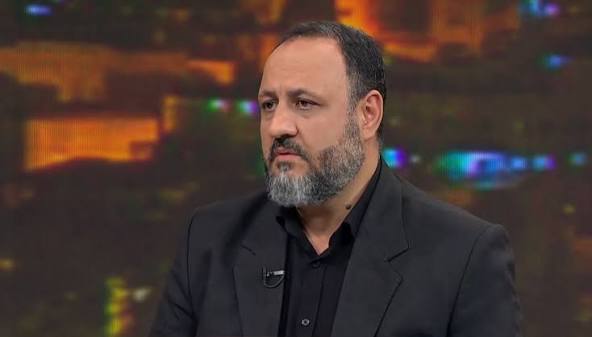


Alwaght- After long hemming and hawing, indirect nuclear talks between the US and Iran were held in the Omani capital Muscat. Then, senior negotiators left the Persian Gulf state to home for further consultations without leaking details of the negotiations or the possible proposals. The talks finished as the US has unprecedentedly amassed its military assets, mainly naval ships, in the region amid threats for military action against Iran and amid warnings by experts that failure of the talks could bring massive instability to the region. Alwaght has discussed the Muscat talks with Ahmad Zarean, a Tehran-based West Asia affairs expert and head of Andisheh Sazan-e-Nour Institute for Strategic Studies on Sunday.
Alwaght: In what climate did the negotiations take place?
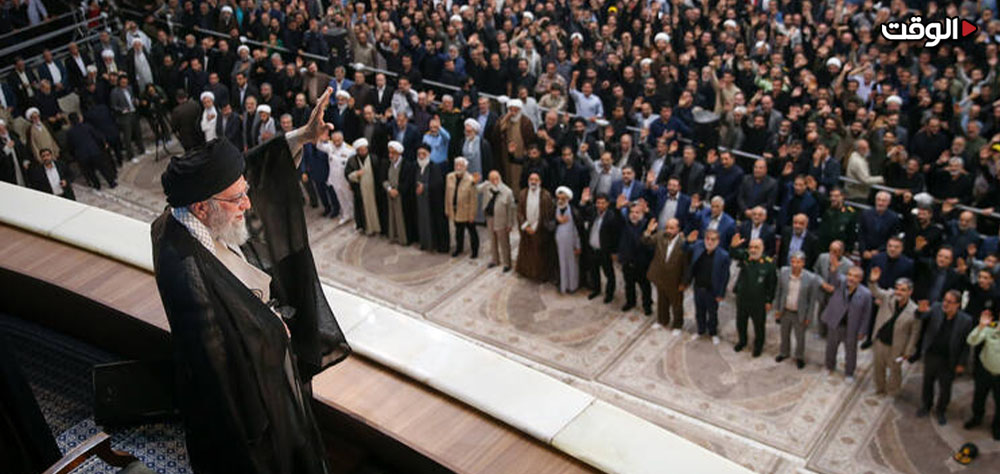
Zarean: Given the American military buildup in the region and the threats posed by the US against Iran, including the stated readiness to pursue military options, along with the clear position expressed by the Supreme Leader Sayyed Ali Khamenei that any outbreak of war would spread to the whole region, regional countries have come to recognize the need to establish a negotiating framework to prevent a conflict between Iran and the United States.
On one hand, these regional states lack both the capacity and the courage to refuse American demands; should the United States decides to take action against Iran, it would likely utilize the airspace and territories of certain countries in the region. On the other hand, these countries are acutely aware that they would be highly vulnerable in such a war, with their economies and security suffering significant damage.
While Iran does not seek to violate the sovereignty of other nations in a regional conflict, it is understood that, as a matter of principle, Iran would respond within the same theater from which it is attacked, should war occur. Consequently, in any potential regional confrontation, neighboring countries would inevitably find their territories and airspace leveraged by the United States.
It Is for this reason that, in recent weeks, regional actors have actively pursued avenues to facilitate dialogue between the Washington and Tehran.
Alwaght: How has the Iran-US negotiation framework changed?
Zarean: Initially, Turkey was announced as the host country to the talks and representatives of some countries were to participate in the negotiations. It is natural that Iran as a party to the talks has some reservations about the venue as it manages the climate ruling the negotiations. So Oman was picked as a host country as it in the past hosted the talks and holds close and friendly ties with Iran.
A further point was the proposal to include representatives from Turkey, Egypt, and Saudi Arabia. Iran’s assessment was that their presence would not contribute to advancing the talks. Increasing the number of negotiating teams would naturally dilute the Iranian delegation’s focus on its core priorities and carried the risk of third parties introducing extraneous issues into the discussion framework. Therefore, Iran’s second condition was that the negotiations be strictly limited to bilateral talks between Iran and the United States, with Oman acting as the mediator.
The third and final condition set by Iran was to limit the agenda exclusively to nuclear issues. Topics such as missile program, regional affairs, or internal matters of Iran were not to be included. Initially, the American side insisted on broadening the discussion to include these other matters. However, they ultimately backed down, and the negotiation format was established according to Iran’s terms: a tripartite framework with Oman mediating, focused solely on the nuclear Issue.
Alwaght: Why did the Americans talk about a need for a comprehensive deal only a few hours before talks kicked off? Did this serve internal aims or they pursued other goals?
Zarean: For the Americans, the ideal form of negotiations is one that is broad in scope, where Iran makes significant concessions across various issues. This objective has been repeatedly stated by American officials in the media. However, what has transpired in practice, and as confirmed by Iran’s Supreme National Security Council, is that the talks have remained purely nuclear. The reasoning is clear: any exchange of concessions requires, first and foremost, that the United States formally recognize Iran’s right to uranium enrichment. Only then could Iran consider demonstrating flexibility on other issues and take confidence-building measures under the supervision of the International Atomic Energy Agency.
Over the past few weeks, the United States has launched a media propaganda against Iran, insisting on the need to negotiate on non-nuclear issues. Yet when Iran’s negotiators refuse to discuss anything beyond the nuclear case, those other topics naturally never enter the negotiation or bargaining process. This pattern has held in the past and will continue to do so in the future. At the same time, the emphasis on broadening the agenda is part of an American narrative intended to influence the atmosphere of the talks. It goes without saying that the Islamic Republic will not compromise on matters related to its security and vital interests, and the missile issue is inseparable from its national security.
Regarding regional matters, Tehran has repeatedly clarified that resistance groups operate based on their free will and that the Islamic Republic has never directed them. While Iran will assist these groups if they request help, it is the groups themselves who decide how to act on regional issues.
As for internal matters, these are simply not open for negotiation.
Therefore, the negotiations remain exclusively focused on the nuclear Issue, even as the United States, through its media efforts, attempts to portray the talks as covering more than just the nuclear program.
We also observe a fundamental difference between the expectations of the United States and the Zionist regime regarding negotiations with Iran. For the United States, the nuclear issue is central in talks with Iran, while for the Zionist regime, the missile issue is paramount. Tel Aviv seeks to exploit Iran’s internal developments to pressure Tehran, and under these conditions, the United States uses media channels to claim that negotiations extend beyond nuclear matters.
Alwaght: Given the treachery of the US in the June negotiations, do you think the US has a true will for a fair deal and forsaking the hostility against the Iranian nation?
Zarean: The Americans have a long wish regarding Iran, and they will not end their hostility before they realize this wish. They hope to return Iran to the pre-1979 Islamic Revolution situation and all of their efforts over the past 47 years focused on this goal. They want a submissive Iran. But the reality is that there is a deep gap between the hope and the reality. So, Washington uses everything at its disposal, from military threats to negotiations, for its aim to materialize.
Therefore, given the unacceptable conditions put forward by the United States in negotiations, the outcome is predetermined. For instance, in nuclear talks, Washington demands that Iran completely and unilaterally abandon its nuclear technology. Even if Iran, which certainly will not, were to accept such terms, Washington’s next step would be to curb Iran’s missile program, followed by attempts to limit the country’s regional influence. Ultimately, the United States aims to gradually diminish Iran’s power, reduce it to a weak state in the region, and return it to a pre‑Islamic Revolution posture. So, the Americans do not view negotiations as a principled process aimed at finding solutions, but rather as a tactical tool to incrementally weaken Iran and secure its own interests.
Alwaght: What is your outlook for the negotiations?
Zarean: It should be taken into account that we cannot be optimistic about talks with the Americans? There are several reasons for that: First, the Americans in these talks have demands and expect concessions Iran cannot make. They want Iran to quit its nuclear program and follow the path they set for it. So, due to the gap between the Iranian and American expectations, the talks do not sound upbeat.
Second, the Americans are not the independent side in these negotiations. If they were, they could enter a give and take process with Iran. But they are representing the Zionist regime. In other words, the Israeli regime has taken the American government and nation hostage and steers them in line with its interests. So, because the Americans have no independent role and they listen to Tel Aviv in the talks, as we know the chief negotiator Witkoff visited the occupied territories before Oman talks and took his negotiation agenda from the Israelis, we should not be optimistic about talks.
Indeed, war would be far more risky for the United States than for Iran, and the American credibility would inflict damage. A nation whose very existence at stake has nothing to lose and will defend itself with unwavering resolve. If the United States were to act rationally, it would not gamble with its own prestige and standing. However, under the pressure of the Zionist lobby, Washington’s warmongering maneuvers in the region risk plunging the United States into another Vietnam-like quagmire.