









Alwaght- After western and southern Syria, this time it is Aleppo in the center of the country that has become a scene to street armed clashes and insecurity; a development that is on the surface has been a short exchange of fire between the government forces and the Kurdish-majority Syrian Democratic Forces (SDF) but in its depth carried structural dead ends, competition of foreign actors in this war-ravaged country, and an unsettled crisis hitting political and security order. The bloody clashes of Monday not only took lives of several innocent civilians and triggered a new wave of displacement, but also showed that Aleppo is no longer a calm city but a meeting site of conflicting regional and international security projects.
Conflicting narratives about eruption of clashes
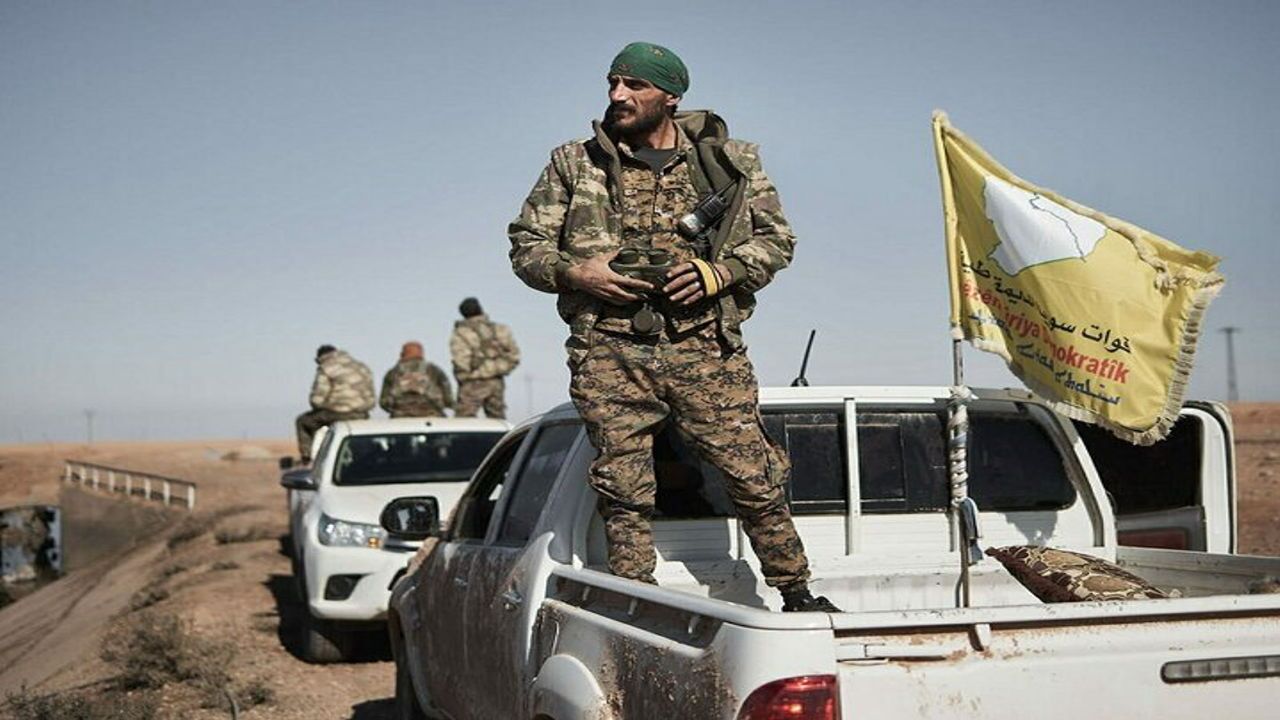
Recent clashes in Aleppo erupted with heavy exchanges of fire between Syrian government forces and SDF in the Sheikh Maqsoud and Ashrafieh neighborhoods.
Syria’s state news agency SANA reported that SDF forces “suddenly” shelled several districts of Aleppo, including al-Jamilieh and al-Suryan, using mortars and rocket launchers, wounding civilians and sparking fires.
The Syrian Civil Defense also said two children were injured by SDF gunfire in al-Sheehan Square in Aleppo. Civil defense teams, in coordination with the Ministry of Emergency and Crisis Management, transferred the children to hospital for treatment.
Meanwhile, local media in Aleppo reported that a mortar round landed near Al-Razi Hospital, where casualties from the fighting had been taken. The state-run Syrian al-Ikhbariya channel said calm had returned to the area around the hospital following the attack, with residents awaiting developments in the coming hours.
In a statement, interior ministry said it was continuing to act with “caution and responsibility” to ensure the safety of residents in Sheikh Maqsoud and Ashrafieh, urging citizens to cooperate with security services to preserve security and stability in the area.
The statement said security forces had been deployed extensively to safeguard stability in the city and protect residents and their property. It said a clear warning was issued “anyone attempting to undermine Aleppo’s security or threaten the safety of its residents will be dealt with decisively in accordance with the law and deterrent regulations.”
SANA also reported that a number of residents of the Al-Maydan neighborhood in Aleppo were displaced after residential areas were targeted with machine guns and artillery fire by SDF forces.
The SDF, for its part, denied what it described as “claims by Damascus’ security and military apparatus that our forces targeted Aleppo neighborhoods.”
In a statement, the SDF Media Center said responsibility lay with “splinter factions affiliated with the Damascus government,” accusing them of having, for four months, besieged Sheikh Maqsoud and Ashrafieh and repeatedly incited and carried out attacks against civilians in full view of state institutions, despite an April 10 agreement.
“These groups have gone so far as to use tanks and artillery to bombard the Sheikh Maqsoud and Ashrafieh neighborhoods,” the statement said, calling it a dangerous escalation that threatens civilian lives and regional stability.
The SDF also accused the Damascus government of “fabricating news” about the shelling of Al-Razi Hospital, stressing that the facility was not directly targeted.
By contrast, Syrian state media reported mortar impacts in the vicinity of the hospital, denied attacking SDF positions, and said SDF forces had “suddenly attacked deployment points” belonging to security forces and the army.
City shutdown and new wave of displacement
The intensity of the clashes forced the Governor of Aleppo to announce the temporary suspension of education in all public and private schools and universities, as well as the closure of government offices in the city center. Simultaneously, reports indicated the displacement of residents from the neighborhoods of Al-Maydan, Ashrafiyah, and Sheikh Maqsoud, areas that, despite declared ceasefires, remain in a state of security instability.
The Kurdish-majority neighborhoods of Aleppo, which have been under a severe siege for nearly five months, are facing acute shortages of food and fuel, along with a sharp increase in prices. Following the displacement of residents from the Shahba region, the population in these two neighborhoods has exceeded 200,000, bringing humanitarian and livelihood pressures to their peak. These neighborhoods are located north of Aleppo, west of the Euphrates River, and are under the control of Syria’s interim government.
The nearest military post of new Syrian government’s forces located approximately 45 kilometers away in the Dayr Hafir area.
Previously, there was a corridor connecting the SDF forces near Manbij to northern Aleppo, but after the fall of the Assad regime, this corridor was closed.
Damascus warning: Warning and military formation
In a statement, interior ministry announced the wide deployment of security forces to maintain stability in Aleppo, warning that any attempt to undermine the city’s security would be met “firmly and in accordance with the law.” The Syrian Defense Ministry said it had ordered a halt to targeting after neutralizing several SDF firing positions.
As relative calm returned, the Defense Ministry also convened a large-scale military meeting in the “Naba’ al-Salam” area in northern Syria to review military preparedness in light of the ongoing developments.
The Defense Ministry of the al-Jolani government said the meeting examined the latest battlefield developments, as well as the readiness and deployment of military units in the area. In a message posted on its Telegram channel, the ministry reiterated that discussions focused on recent field developments and the preparedness and force posture of military units in the region.
On August 22, Brig. Gen. Fahim Issa visited the headquarters of the 60th Division to review its operational performance and military and administrative readiness. Earlier, on May 13, he also toured defense ministry forces deployed in areas east of the Euphrates.
These meetings and visits are part of ongoing field inspections aimed at assessing combat readiness and administrative preparedness across units of the Syrian army.
Meaningful coincidence: Aleppo war and Turkish diplomacy
The escalation in Aleppo did not occur in a vacuum. It coincided in a striking way with a high-level Turkish delegation’s visit to Damascus, which included Foreign Minister Hakan Fidan, Defense Minister Yasar Guler, and intelligence chief İIbrahim Kalin. Talks during the visit focused primarily on implementing the March 10, 2025 agreement to integrate the SDF into Syria’s new army and state civilian institutions.
Months after the initial agreement between Mazloum Kobane and al-Jolani, however, no tangible steps have been taken to implement the deal, and the two sides remain deeply divided over its interpretation. Still, SDF representatives and Damascus officials are expected to resume negotiations in the coming days, before the end of the year, under US supervision, suggesting that Turkey is seeking to insert itself into the negotiating process.
When Kurdish neighborhoods in Aleppo come under attack, the apparent aim is to pressure the SDF. These two districts lie outside SDF control and are considered easy targets, whether struck by Turkish-backed armed groups or by factions operating out of Idlib that are not fully under al-Jolani’s control.
In this context, Fidan is said to have delivered unusually sharp remarks following the meetings. He accused the SDF of lacking a “serious will” to integrate, saying the group was instead stalling and pursuing “separatist rhetoric.” Pointing to Israel’s actions in southern Syria, Fidan suggested a “link” or coordination between the SDF and Israel, arguing that Israeli moves were closely tied to the SDF’s hesitation in implementing the agreement. He warned that the situation in the north was “no longer tolerable,” said Ankara’s patience was wearing thin, and openly alluded to the military option if the deadlock persists.
At the same time, the Julani government is trying to project that it is not acting under Turkish pressure. The spokesperson for Syria’s interim Interior Ministry, Nour al-Din Baba, said late Monday that “the Syrian leadership is determined to make the March agreement succeed,” adding that “the Syrian state prefers any agreement that shields civilians from chaos.”
In media comments, Baba accused the SDF of trying to “render the March 10 agreement ineffective,” saying the group was seeking to derail the deal before it expires at the end of the year. He denied that the government would fall into provocations that could halt the declared agreement with the SDF, stressing that Damascus’ position prioritizes a negotiated option that protects civilians from turmoil, while responding to any provocation.
Trans-regional actors; the US and Israel in the background
At a broader level, Aleppo developments cannot be understood without taking into consideration the role of the US and Israeli regime. The SDF is a key ally on the ground in eastern Syria to Washington. It is also a guard of oilfields and a pressure leverage against Damascus and Ankara. The US Congress’s direct financial backing is an indication of Washington’s willingness to maintain this actor in Syria equations. After an attack on the SDF two months ago, the Congress approved $136 million in direct aid to the Kurdish-majority militias in a clear stance on the confrontation between the new Syrian government and the SDF, suggesting that the SDF is a partner that should be maintained as influence is growing at the expense of weakening of other sides.
At this stage, the US does not want the SDF to be integrated into the Syrian army or other Syrian military institutions, or, at the very least, is not yet prepared to accept such an integration. Washington does not trust al-Jolani, and he in turn does not trust it. As a result, the US is seeking to preserve a state of neither war nor instability until it is confident that its interests are secured and its demands met.
From Israel’s perspective, the SDF serves as a geopolitical buffer against the expanding influence of Turkey in Syria and as a partner in advancing a project aimed at fragmenting the country. Any weakening of the SDF could therefore shift the regional balance to Israel’s detriment. Against this backdrop, any escalation in Aleppo may carry messages that extend well beyond the city’s geography.
Aleppo hostage to new Syrian equations
What happened in Aleppo was not merely a localized clash, but a sign of Syria entry into a newer and more dangerous stage, one in which the idea of central government is obsolete and “small armed governments” under foreign powers have made the language of force the main language of negotiations. In this equation, Aleppo is no longer a historical city, but a hostage in the hand of opposing forces each seeing their survival in imposing field realties on the rivals.
The security and political dynamic ahead does not promise stability. Ceasefires are fragile, political negotiations are under pressure of foreign actors, and risk of expansion of clashes to other fronts is still standing. Aleppo, the heart of Syria’s architecture and history, is more than any other time a symbol of political and security impasse of a country still struggling to find its way to sustainable peace.