







Alwaght- At a time the Iranian-American confrontation has developed to economic area from battleground, Tehran more than any other time is aspiring to activate its peripheral capacity to push back against the American pressure, and so Central Asia is growing more important than ever.
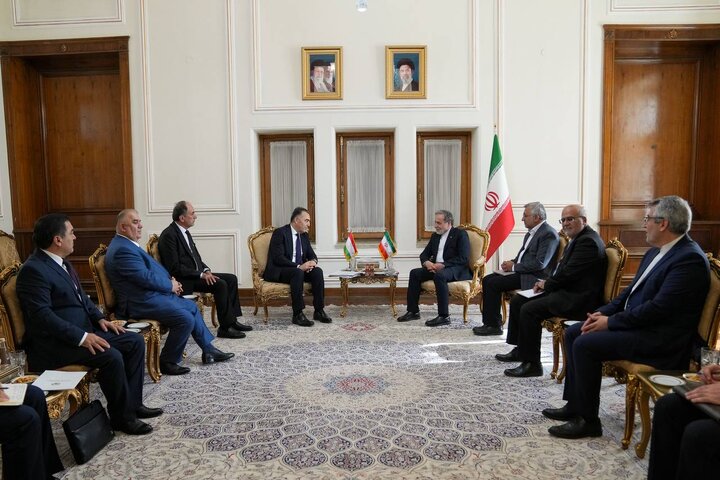
In this connection, Tajikistan's Minister of Energy and Water Resources Dalir Juma and Transportation Minister Azim Ibrahim visited Tehran and met with the Iranian Foreign Minister Abbas Araghchi.
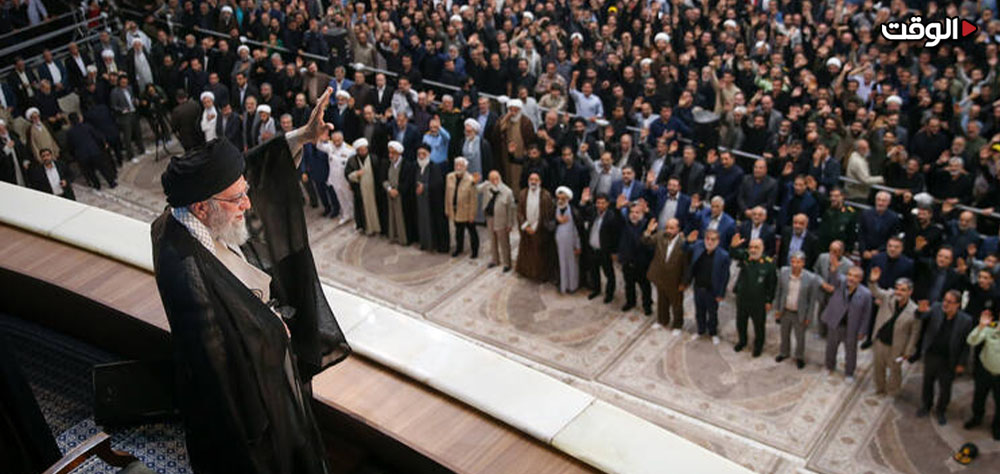
The Iranian FM thanked Tajikistan's government and nation for their support to Iran during the US-Israeli military aggression and also the Tajik president's attendance of the funeral of the martyred Iranian Supreme Leader Sayyed Ali Khamenei.
"As the heirs to the ancient Persian civilization, Iran and Tajikistan have always been beside each other in hard and happy days," said Araghchi.
Araghchi, cited the reciprocal presidential visits between Tehran and Dushanbe and the agreements reached during those trips, stressing the need to tap into the two countries’ diverse capacities to broaden and elevate ties, particularly in trade and the economy.
Tajikistan’s ministers of energy, water resources, and transport expressed satisfaction with the privileged level of relations between the two friendly nations and underscored their senior leadership’s firm resolve to deepen cooperation further, including in the energy and transport sectors. They also voiced hope that the establishment of a joint working group and agreed mechanisms would translate the memorandums of understanding into action, especially in energy and transportation.
Over recent years, Iran and Tajikistan have signed a raft of economic, trade, and energy deals. During President Emomali Rahmon’s 2022 visit to Tehran, the two sides inked a long-term economic and trade cooperation program through 2030, alongside an oil-and-gas cooperation MOU.
In 2023, they signed an implementation plan for that accord, plus MOUs on transit transport via the Chabahar port, free-trade zones, and rail links. In 2025, four new cooperation documents were added, while the 17th Joint Commission pushed forward on energy, investment, transport, and trade.
As a result, bilateral trade volumes have been on an upward trajectory, reaching roughly $484 million in 2025. Yet that figure still falls well short of the two economies’ true potential. The new agreements, then, could serve as a springboard for expanding commerce and economic collaboration, and help drive those trade numbers higher in the years ahead.
Central Asia, Iran's alternative route against American sea blockade
Expanding ties with countries like Tajikistan matters for a simple reason: The Americans think they can choke Iran’s oil revenue, and by extension its economy, through a naval blockade. But Tehran has multiple overland and rail routes at its disposal, leveraging its neighbors’ capacities to circumvent maritime pressure.
Central Asia, in particular, offers a strong alternative transit network, given its geographic proximity, rail and road connectivity, and the region's access to the Russian and Chinese markets.
Turkmenistan plays an especially critical role here, sharing a direct border with Iran and offering rail links that can channel Central Asian freight into Iran’s broader transport grid. When sea routes are constrained, this overland network can meaningfully reduce the strain on Iran's foreign trade.
Tajikistan, for its part, can serve as a complementary piece of the puzzle. Situated in the heart of Central Asia, with connections to Uzbekistan, China, and Afghanistan, it can reinforce the eastern flank of Iran's transport network. Closer rail, road, and customs cooperation with Tajikistan and other regional republics could open fresh corridors for moving goods.
Central Asian countries can also function as a backup and supplementary route for energy.
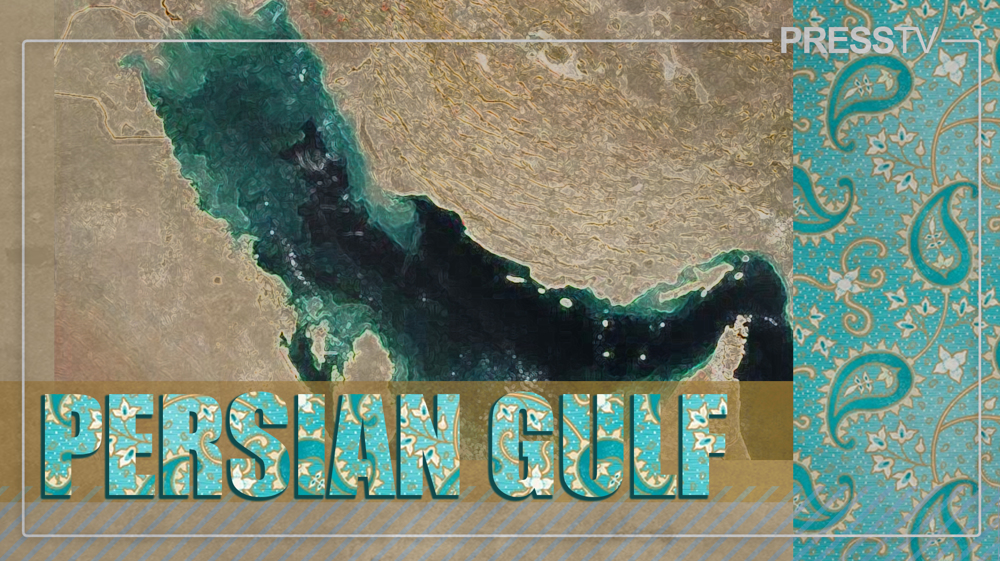
Turkmen gas, swapped or transited through Iranian territory, can flow onward to other markets while simultaneously covering part of Iran's own domestic energy needs. The revenue from such energy cooperation could also help offset some of the financial losses piling up in the Persian Gulf. On top of that, deepening the integration of Iran's energy grid with Central Asia would reduce the country's dependence on any single market or transit corridor, and lay the groundwork for a genuine regional energy market.
Alongside rail corridors, the Caspian Sea offers another strategic outlet—linking Iran's northern ports to Russia and Central Asia while sitting squarely on the North-South Transport Corridor. That means a meaningful share of the country's trade could be rerouted through northern overland and maritime routes. Expanding Caspian ports, upgrading rail lines, and streamlining customs agreements would not only reduce reliance on southern chokepoints but also help sustain Iran's exports and imports under pressure, and open up a fresh revenue stream in the process. In effect, the Caspian could evolve from a purely commercial waterway into a critical economic lifeline, one that diversifies trade and transit pathways and helps blunt the impact of sanctions and maritime pressure.
Extending gas supply deal with Turkey
In the energy sector, which remains critical to sustaining Iran's exports and revenue, other neighbors can also play a complementary role. Extending the natural gas export deal with Turkey, particularly under the current economic strain, offers Tehran a chance to boost foreign currency earnings, hold onto a key export market, and deepen bilateral trade ties.
The existing contract, which allows for annual exports of 9.6 billion cubic meters of Iranian gas to Turkey, expires after 25 years in December 2026, right as winter sets in and Turkish gas demand peaks. That makes renewal a high-stakes decision for both Ankara and Tehran.
Turkey's energy minister, Alparslan Bayraktar, has already signaled his country's intent, saying Ankara wants the flow of Iranian gas to continue without interruption and that renewal talks are underway. He added that the current situation in the Strait of Hormuz is yet another reminder of why diversifying energy sources is vital for any nation's security.
Given both sides' appetite for continued energy cooperation, locking in a new gas deal with Turkey amid economic pressure and maritime restrictions could be a significant win for Tehran. Pipeline gas exports provide a steady revenue stream that, unlike oil shipments, doesn't depend directly on sea routes or tanker traffic. In that sense, Iran can secure at least part of its energy income outside the reach of a naval chokehold. The deal would also preserve Iran's foothold in the Turkish market, bolster economic ties with Ankara, and help offset some of the sanctions pressure.
Oil exports through Pakistan
Pakistan, too, could play a pivotal role for Iran in building alternative routes and blunting the impact of a naval siege. Under this scenario, oil could move through Iran's rail network into Pakistan and then onward to the ports of Karachi, Gwadar, or other coastal terminals on the Indian Ocean, bound for China and other East Asian markets. Such a corridor would reduce Iran's dependence on the Strait of Hormuz while keeping its most important crude customers within reach.
That calculus grows more compelling given the serious maritime constraints Iran's oil exports have faced in recent months. As the naval blockade took hold, some reports indicated that Iran had started using a rail line inaugurated last year to ship LPG through Pakistan to China, and that the number of Iranian freight trains heading for China had tripled. Pakistan itself, immediately after the blockade began, launched a new trade route via Iran. Available reports point to a clear uptick in rail traffic between the two countries and mutual efforts to expand the corridor; in July, Pakistan announced upgrades to its ML-3 rail line and steps to ease cross-border transport.
In the short term, this route can not replace millions of barrels of seaborne exports. But it could serve as an emergency backup and complement to Iran's oil trade, and with long-term investment in Pakistani rail and port infrastructure, its capacity could grow. Some studies have indeed framed overland oil shipments to China as a potential "limited lifeline" for Iran, even if their scale remains far below what maritime trade can deliver.