






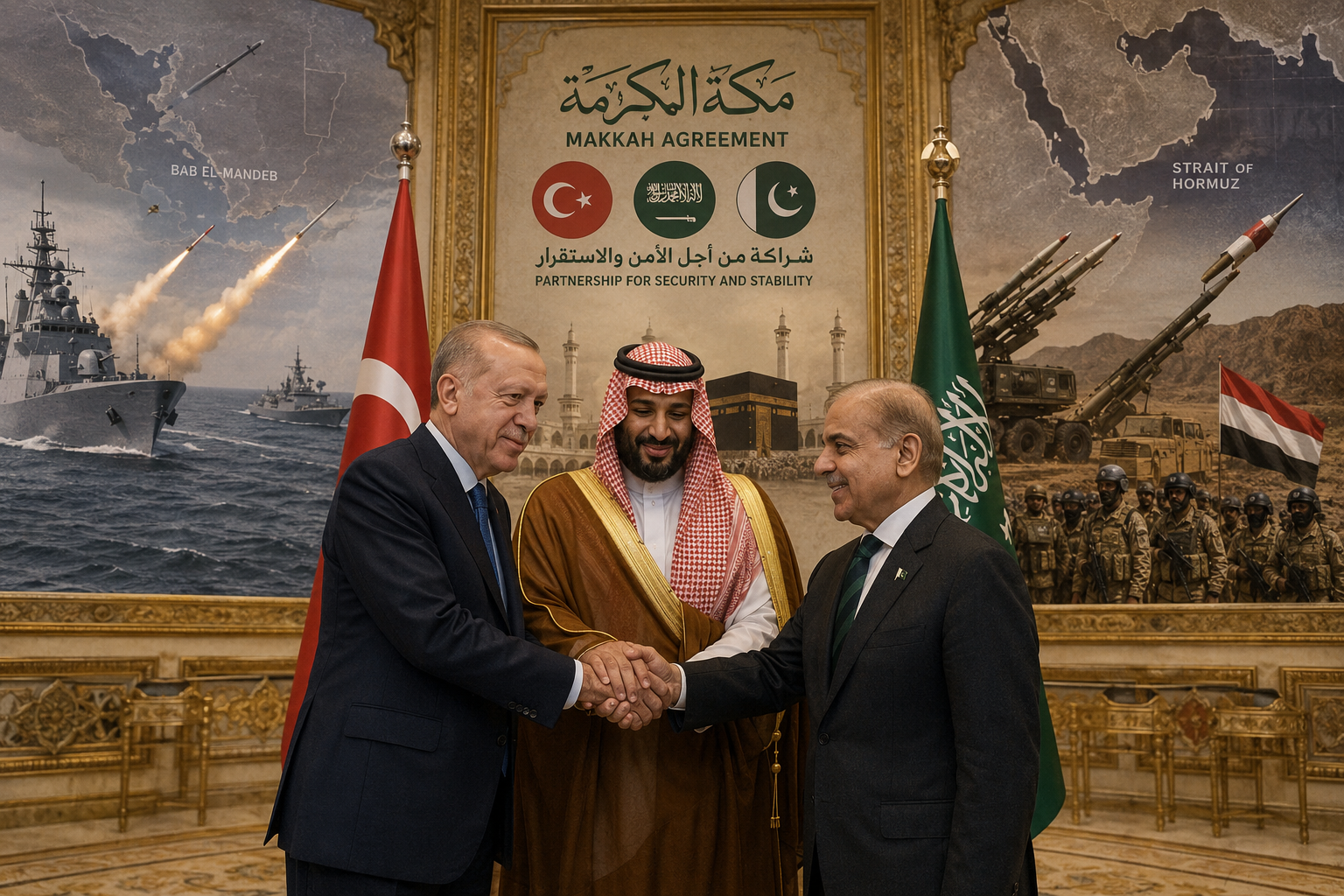


Alwaght- While Yemeni Ansarullah's drone and missile attacks have once again put Saudi Arabia in one of its most sensitive security times, in the holy city of Mecca in a location that was picked targeted and symbolic, Crown Prince Mohammed bin Salman, Turkish President Recep Tayyip Erdogan, and Pakistani Prime Minister Shahbaz Sharif signed "Mecca Joint Defense Agreement."
In a joint statement issued after the three countries signed the agreement, they confirmed that the pact was concluded with the aim of "strengthening collective deterrence against any aggression," explicitly stating that an armed attack on any one of the three nations would be considered an attack on all.
The statement added that the agreement "reflects the three countries' commitment to enhancing mutual security and achieving security, peace, and stability in the region and the world," and pertains to the "development of all aspects of defense cooperation" among them.
The agreement, which instantly made headlines across regional and global media, has been framed by analysts as Riyadh's bid to forge a new security framework with two major powers of the Muslim world. Though official details have yet to be released, the central question remains here: Will Saudi Arabia this time succeed in filling its security vacuum, or will this initiative meet the same fate as its predecessors?
What do reports say about Mecca agreement?
Media outlets suggest that the trilateral agreement is aimed at coordinating in the Red Sea, countering the threats of Yemen's Ansarullah movement, beefing up defense ties, and discussing a framework for trilateral security cooperation.
Some political anslysts suggest that after failure of past military coalitions, Saudi Arabia is eyeing a more limited and more cohesive bloc of three states with various capacities. Saudi Arabia with its financial strength, Pakistani with its military and nuclear capacity, and Turkey with its defense industries and operational capabilities fit this bloc.
Why Mecca?
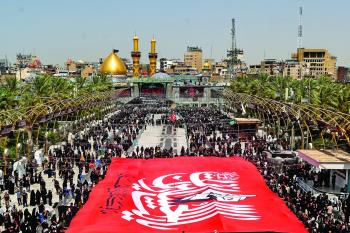
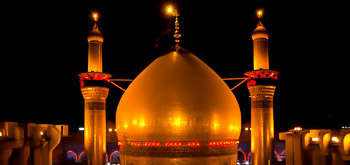
One notable detail is the choice of Mecca as the venue for the talks, and the possible naming of the accord after the holy city. Diplomatically, the selection stands out as unusual; most of Saudi Arabia's major agreements with foreign governments have been signed in Riyadh or Jeddah, from Yemen war-related deals to the 2019 regional accord with the UAE known as the "Riyadh Agreement," and even the 2025 security pact with Pakistan.
So, it seems that picking Mecca as the venue for the deal is not accidental or ceremonial. Riyadh tries to sell this initiative not just as a security deal but a sign of convergence of the most important Sunni powers. In such a narrative, confrontation with Sana'a and Tehran shifts from a geopolitical dispute with regional conflict laced with discursive, identity-based, and even sectarian overtones, a discourse that for years has made part of Saudi security rhetoric. But field realities of the region have always proven more complicated than such binary framings.
Erdogan's motivation behind coalition making with Saudi Arabia
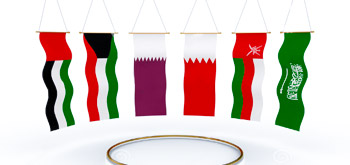
Turkey's entry into such a project cannot be reduced to security calculations alone. Its economy remains hobbled by double-digit inflation, a crumbling lira, and a desperate need for foreign capital, and the Persian Gulf monarchies, particularly Saudi Arabia, are among Ankara's most critical sources of funding.
But Erdogan has a broader ambition, which is anchoring Turkey as a decisive force in shaping the region's emerging order. By positioning Ankara as a security patron to Riyadh, a capital that already casts itself as the big brother of the Arab world, Turkey could bolster its standing across Arab political dynamics. This is especially timely given the fundamental shift in Syria after Bashar al-Assad's fall, which has revived Ankara's influence in Arab geography and ushered in a new phase of competition for leadership of the Muslim world.
Beyond politics, the Red Sea and the Bab-el-Mandeb strait hold serious economic and geopolitical weight for Turkey. A significant portion of its trade with Africa, and its access to areas of influence in the Horn of Africa, flows through this maritime corridor. Continued insecurity along that waterway directly threatens Ankara's economic and strategic interests.
Nor can Turkey's unease over its future trajectory with Israeli regime be overlooked. In recent years, Israeli security circles have repeatedly flagged Turkey as the region's most formidable rival after Iran, with Israeli officials steadily expanding their anti-Turkish network of influence and coalition-building in neighboring regions, from Central Asia and the Caucasus to the Eastern Mediterranean. Seen through that lens, tightening ties with Saudi Arabia may be part of Ankara's broader strategy to deepen its strategic depth as it braces for future dynamics.
Is Pakistan a linking ring?
Pakistan may be the most important corner of this triangle. Over decades, Islamabad has maintained its strategic ties with Riyadh and at the same time established close ties with Turkey. This position gives some political analysts a reason to label Pakistan the likely linking ring between Riyadh and Ankara.
But last year's experience raises uncomfortable questions. The defense and nuclear cooperation pact signed between Riyadh and Islamabad was supposed to boost Saudi deterrence and send a clear message that any threat to the Arab kingdom would draw a response from its allies.
Yet neither during the Strait of Hormuz crisis nor in the current wave of Houthi naval attacks on Saudi targets did Pakistan deliver the security role Riyadh had counted on. Islamabad, weighed down by domestic pressures, its own ties with Iran, economic constraints, and a deep reluctance to wade directly into regional conflicts, chose to sit out any active military role.
Can Turkey fill Pakistan's place?
This is the question now looming in the front of Riyadh. Just contrary to Pakistan, Turkey has substantial operational experience and the capability to export military equipment, but is it ready to make Saudi security part of its strategic responsibilities?
The reality is twofold. First, for all of Saudi Arabia's staggering $80 billion annual defense budget, which is unmatched in the region, and its unrestricted access to Western arsenals (including THAAD and Patriot systems, advanced fourth- and fourth-generation-plus American and European fighter jets, interceptor missiles, and more), Turkey simply does not offer the kind of military capability that would fundamentally alter the battlefield equation for Riyadh. Even Ankara, with its own defense industry, cannot match that level of Western firepower.
Second, the cost of such a commitment for Ankara would be prohibitively high. Direct confrontation with the Houthis, or an openly aligned posture against Iran, could expand the threat landscape against Turkish interests across the Red Sea, Iraq, Syria, and even the Caucasus. On top of that, Turkish public opinion would largely welcome such an alliance only if it were framed against Israeli regime as an occupational force and its regional destabilization, not against the oppressed, Palestine-supporting people of Yemen.
Challenges of the pact: Why is it not easy to implement?
Even with both sides emphasizing mutual defense guarantees, the Mecca agreement faces serious obstacles to implementation.
First, the historic rivalry between Saudi Arabia and Turkey over leadership of the Muslim world remains unresolved. Disputes over the Muslim Brotherhood, the Qatar crisis, the Syria and Libya cases, and even the Jamal Khashoggi assassination by Saudi Arabia in Turkey in 2018 have shown that mistrust between the two capitals does not simply dissolve with a few economic deals.
Second, Pakistan has little appetite for sacrificing its balanced relationship with Iran at the altar of an anti-Tehran coalition. Beyond sharing a long border with Iran, Islamabad grapples with multiple security and economic challenges, and joining a new security bloc could impose heavy costs on the country.
Third, Saudi Arabia's primary vulnerability is not a shortage of military partners but the shifting nature of warfare in the region. Recent experience has shown that financial muscle and advanced hardware do not necessarily translate into the ability to protect critical infrastructure against asymmetric warfare. Ansarullah's strikes on oil facilities, naval blockades, and pressure on shipping lanes are case in point.
Ultimately, even if the three countries reach consensus on broad principles of cooperation, transforming that understanding into an effective defense pact would require defining a shared threat, establishing a unified command structure, allocating security costs, and accepting mutual military commitments, all of which seem exceedingly difficult given the strategic differences, divergent priorities, and geopolitical rivalries among Riyadh, Ankara, and Islamabad.
For all these reasons, the Mecca agreement for now looks less like the birth of a new Islamic NATO and more like a political signal, a show of convergence in the face of regional security crises. And whether that show translates into action on the ground remains very much in doubt.