


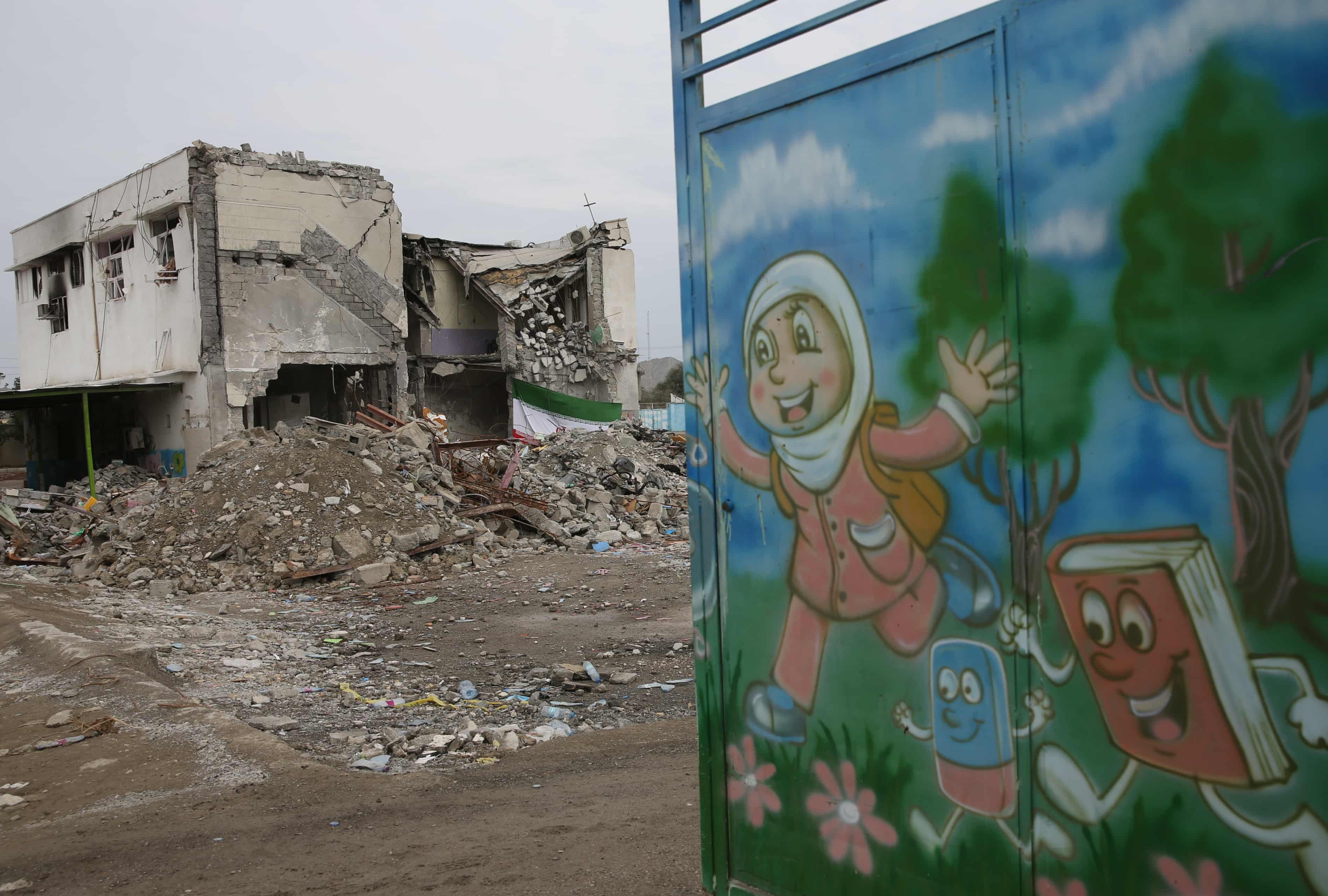


Alwaght- Recently, after reports that a delegation of International Criminal Court (ICC) travelled to Iran for a probe into the US-Israeli war crime of attacking Minab school on February 28, the American administration has strongly reacted to the move.
Reports said that the US State Department and Secretary of State Mark Rubio have launched a campaign to press the ICC for its investigation into this war crime. In a op-ed published by Wall Street Journal and then in official statements, Rubio held that the US administration could "dismantle" the international court using such tools as sanctioning the judges and staff of the the court, revoking visas of the personnel, putting diplomatic pressures on the countries working with the ICC, and encouraging the American allies to scale down their cooperation with this court.
Washington fears that the court's cooperation with Iran can lead to collection of documents and evidence that will be used later for investigation or prosecution of the Israeli and even American officials for war crimes.
Reuters reported that Rubio's threats against the ICC are part of broader policy to force the court to end its inquiry.
US crime in Minab
The US attack on the Shajareh Tayyebeh school in Minab in southern Iran ranks among the deadliest American strikes during the aggression against Iran and it occurred on the morning of February 28, the very first day of the war. Multiple missiles slammed into the elementary school in the Hormozgan province town, destroying parts of the building and killing more than 160 school children.
In the early days, American officials refused to claim responsibility, with Donald Trump himself saying he had no evidence the missiles were American-fired. But days later, the Associated Press confirmed the school had been targeted by the US military.
The Pentagon, however, has yet to release a final official investigation, remaining silent on the details of the case.
Meanwhile, the Minab school attack, because of its staggering child death toll, has become one of the most prominent cases of civilian casualties in the war, and continues to fuel debate across media, human rights organizations, and international legal circles. The recent visit by ICC judges was specifically aimed at examining the legal dimensions of this crime.
Washington’s crime-laden record
However, the US crime is not limited to a primary school in the early days of aggression against Iran, and the US has a long list of crimes against humanity in its wars in the region.
1. Abu Ghuraib prison tortures (2003-2004): The Abu Ghraib prison scandal stands as one of the most infamous human rights abuses of the Iraq War. When images surfaced of Iraqi detainees being humiliated, tortured, and subjected to physical and psychological abuse by US military personnel, they sparked a global firestorm of condemnation. US Army investigations confirmed the violations, and several soldiers received prison sentences, but critics have long argued that senior officials were never held accountable.
2. Iraq Haditha massacre in 2005: On November 2005 and after death of a US Marine in a roadside bomb, the US Marines entered Haditha town, massacring 25 innocent Iraqi civilians, mainly women and children. It made one of the biggest criminal investigations of the US military in Iraq war. Despite charges being filed against several service members, most were later dropped, and only a single limited conviction was ultimately handed down.
3. Baghdad Nisour Square massacre: I September 2007, Blackwater private company's personnel, under US government contract, opened fire on passing cars in Baghdad's Nisour Square, killing 17 civilians. The incident drew outrage among the Iraqis. A number of Backwater persons were convicted in the US courts, but some of them were pardoned under Trump, a move drawing vast criticism by rights groups.
4. Attack on Doctors Without Borders hospital in Kunduz, Afghanistan: On October 3, 2015, a US AC-130 gunship struck a Doctors Without Borders hospital in the Afghan city of Kunduz, killing 42 patients and staff members. The US military later described the attack as the result of a cascade of human errors and intelligence failures, acknowledging that rules of engagement had been violated, but insisted the hospital was not intentionally targeted. Human rights groups, however, demanded an independent investigation into possible war crimes.
5. Massacring civilians in Maiwand, Afghanistan: In 2010, a group of US soldiers dubbed the "Kill Team" in the Maiwand district of Kandahar province were accused of deliberately killing multiple Afghan civilians, then planting weapons on the victims to stage them as insurgents. Some members of the unit also posed for photos with the bodies. The case resulted in several convictions and became one of the most shocking scandals of the Afghanistan war.
6. US drone strikes in Yemen: Since 2002, and particularly after 2009, the American forces carried out hundreds of strikes across Yemen. While US officials framed these operations as counterterrorism, human rights organizations repeatedly documented the killing of civilians, including women and children, in many of these attacks. The 2013 strike on a wedding convoy in Al Bayda province, along with several other incidents, drew sharp condemnation from rights groups over civilian casualties and sparked calls for independent investigations into compliance with international humanitarian law.