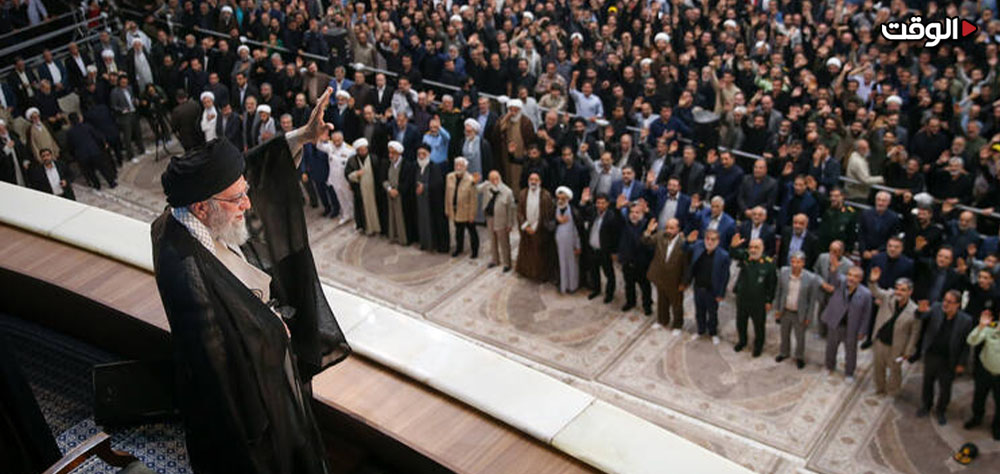
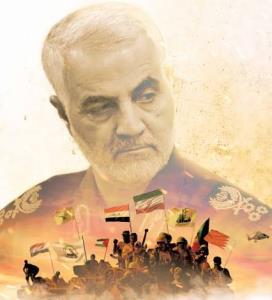
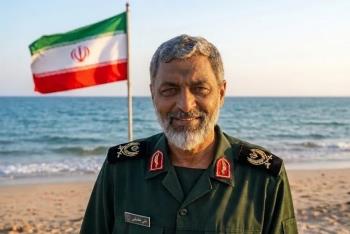




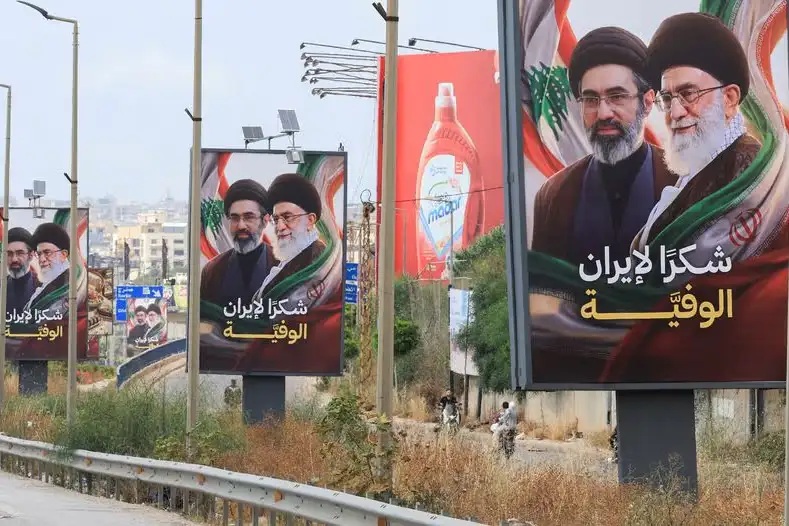


Alwaght- Lebanon's interior minister ordered the removal of billboards bearing images of Iran's martyred leader and his successor from Beirut's streets. The move may look like routine administrative move to manage public space. But in Lebanon's political climate, the decision instantly morphed into a lightning rod for two competing visions of the country's future.
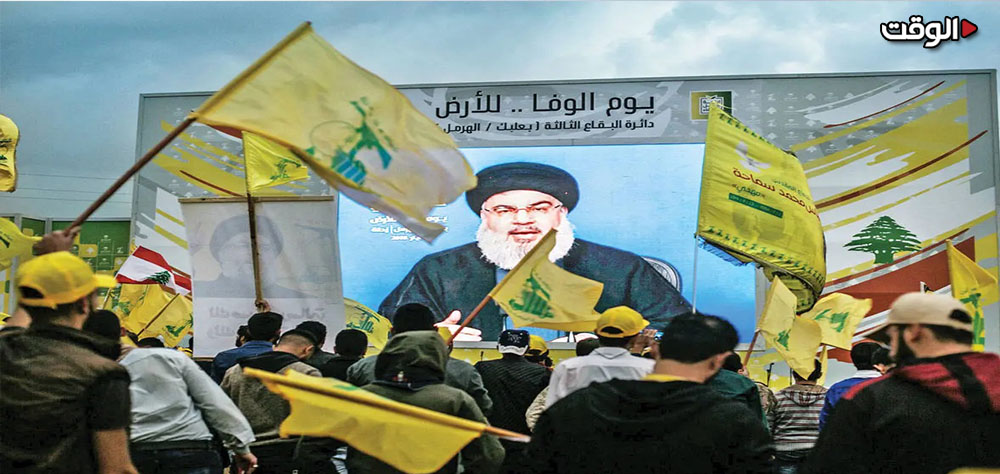
It started when Interior Minister Ahmad Hajjar, serving in President Joseph Aoun's government, directed the takedown of banners that Hezbollah supporters of late Islamic Revolution leader, and his successor, had erected along the Rafic Hariri Airport road. Emblazoned with the words "Thank you Iran for your loyalty," the billboards were a very public gesture of gratitude for Iran's staunch backing of Beirut during the initial US-brokered deal to halt Israeli aggression in southern Lebanon.
Lebanon's interior minister justified the order, which sparked outrage across Beirut, as a routine matter of public space regulation and rule of law. His ministry even called for replacing the banners with tourism promos for the country.
But from the beginning, the political observers saw this a politically-motivated measure. While Hezbollah sees the ceasefire imposed on Israel as a victory won by Hezbollah's weapons, backed, indeed, by Iran. On the other, the Lebanese government is scrambling to project that its own move, taking the initiative to engage in trilateral talks in Washington, is what will actually secure Lebanon's sovereignty and territorial integrity.
And the messaging war did not stop there. Just two days after the billboard takedown, dressed up as a tourism campaign, Beirut's municipality plastered up new banners in their place. They read "Lebanon first" and "Lebanon unites us."
While with these billboards the government is trying to feign achievements from the recently signed deal with the Israeli regime, the agreement was categorically rejected by Hezbollah and Amal Movement due to making concessions to the Israeli occupation while Tel Aviv not obliged to withdraw from the occupied Lebanese territories.
Israeli officials have only reinforced that reading, making clear the ceasefire agreement imposes no binding timeline on Tel Aviv for withdrawing its forces. Prime Minister Benjamin Netanyahu flatly stated that Israel will stay in the southern security zone as long as necessary, while Defense Minister Israel Katz doubled down, insisting troops would not pull back, even under US pressure.
So what is really playing out behind this billboard battle is a far deeper confrontation. And the symbolism cuts especially deep: Beirut's airport road, which cuts through the southern suburbs and neighborhoods where Hezbollah enjoys overwhelming support, has in recent years become a recurring flashpoint for political showdowns and symbolic protests.
For anti-Hezbollah factions, this move is seen as a long-overdue reassertion of state authority and as an effort to dial back the outsized symbolic presence of foreign actors. In their view, the government must be the sole decision maker on public space and political imagery, and this decision fits squarely within that mandate.
But on the other side, for a significant swath of Hezbollah supporters and residents of Shiite-majority areas, the real question is not why the billboards were taken down, it is why the Lebanese government has not shown the same urgency or resolve on issues that directly affect people's lives in the war's aftermath.
For many in these communities, the order sent a glaring message: the government can move fast and decisively when it comes to symbolic gestures, but remains painfully slow, or indifferent, when dealing with basic living needs and rebuilding shattered neighborhoods.
It is noteworthy that large swaths of southern Lebanon, Beirut's southern suburbs like the Dahieh and parts of the Bekaa Valley still lie in ruins, scarred by the Israeli regime's relentless bombardment. Infrastructure is shattered, homes are destroyed, and reconstruction is barely moving. Against that backdrop, a growing segment of the public is asking a pointed question: Should the government's priority really be erasing political symbols, or should it be tending to war-displaced families, compensating losses, and restoring some semblance of normal life to devastated regions?
Politically, this issue risks driving an even deeper wedge between the state and Hezbollah's popular base. In the last nationwide municipal elections, held in May 2025 and widely seen as a referendum on the resistance, Hezbollah and its allies scored a resounding victory. So from that camp's perspective, the math is simple: a government that has proven either unable or unwilling to stop Israeli strikes, house the displaced who are overwhelmingly Shiites, or accelerate reconstruction, yet moves with lightning speed to erase symbols tied to the resistance axis, is setting itself up for a serious credibility loss in the eyes of a large slice of the population.
Fair or not, that perception could hit the government's political legitimacy among these communities.
At its core, then, the billboard dispute is merely a symptom of a much deeper fracture: a yawning divide over what post-war Lebanon's priorities should even be. One camp insists on cementing state sovereignty and rolling back regional actors' influence as the top order of business. The other argues that until shattered neighborhoods are rebuilt, victims are supported, and people's security is genuinely restored, fixating on symbolic gestures will only stoke more resentment and deepen social unrest.
Finally, the continuation of this gap hinges more on the function of the government in rebuilding destroyed regions, compensating the damage assets, and responding to the displaced than on the fate of the street signs. If the government fails in providing these services to the citizens, any symbolic move can be seen as a sign of the government departing from the true priorities of the society and will pave the way for deeper gaps between segments of society and the official institutions.