

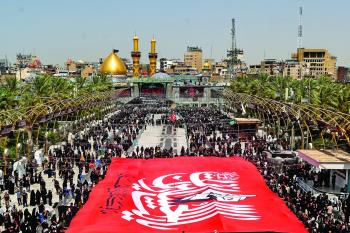













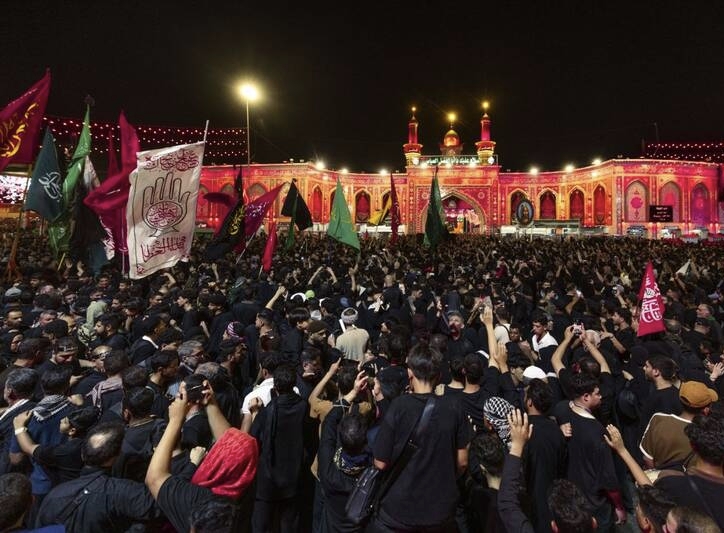


Alwaght- This year’s Arbaeen pilgrimage took place with millions of mourners from Iraq and beyond flooding the routes to Karbala, all while West Asia remains mired in security threats, political tensions, and fresh jitters over recent military escalations.
Yet the sheer sea of devotees along the roads to the holy city, paired with Iraq’s smooth rollout of security and service plans, once again cemented Arbaeen as the world’s largest annual public gathering. The massive turnout made it clear that neither security scares nor political pressure could dampen the resolve of those answering Imam Hussein’s call.
Iraq had navigated a perilous stretch in recent months, buffeted by regional security shocks and mounting military tensions. But from the very first wave of arrivals, Iraqi authorities rolled out a comprehensive suite of security, logistical, and service measures to keep the event on track. The payoff was a calm, orderly commemoration that drew millions, and, according to Iraqi officials, wrapped without any major security hiccups.
For its part, the Imam Hussein Holy Shrine authority issued a statement hailing this year’s success and vowing to keep services running until the very last pilgrim leaves Karbala. Shrine officials confirmed that all service, medical, and support units would stay fully operational to ensure a hassle-free return journey.
Transport ministry, meanwhile, voiced satisfaction with this year’s traffic flow, touting an “unprecedented” homebound operation powered by a massive mobilization of both public and private transport. More than 60,000 vehicles were deployed, 10,000 government-owned and 50,000 from the private sector, to ease the exit. Rail networks joined the push too, with 12 trains running 20 daily trips between Karbala, Baghdad, and Basra, and room to scale up further if needed.
The country’s Traffic Directorate also weighed in, confirming that the special Arbaeen plan, which regulated vehicle access in and out of Karbala, mobilized 16,000 officers and security personnel to keep everything moving.
PMF ensuring the security
Security institutions worked shoulder-to-shoulder with religious and service bodies to pull off this year's Arbaeen operations. On Tuesday, the Popular Mobilization Forces (PMF) laid out the details of their massive deployment, over 70 military battalions and more than 24,000 personnel stationed along pilgrimage routes and border crossings to secure the flow of mourners and keep traffic moving.
Yasser al-Issawi, deputy head of the PMF's command staff, said: "Hashd (PMF) units were deployed to secure land and air border crossings, including Shalamcheh, Sheib, Zarbatiyah, Mandali, Al-Munthiriya, and Safwan, to provide the infrastructure and services needed for the millions of pilgrims entering Iraq from abroad. The plan also covered securing the western borders leading to Karbala, using drones and close coordination with the army, police, and internal security forces, all under the supervision of the Supreme Arbaeen Committee."
Al-Issawi also confirmed the return phase was going off without a hitch, reporting that pilgrims were moving back to their home regions and border points with zero traffic disruptions and complete success.
Meanwhile, Ali al-Hamdani, PMF's commander for the Middle Euphrates operation, offered more granular details on measures in his sector. He said three command centers had been set up in Diwaniyah, Najaf, and Babil provinces to sync up with local police and provincial officials, ensuring a centralized, tightly managed operation from start to finish.
According to al-Hamdani, the total force deployed across the Middle Euphrates sector reached 24,454 personnel. Beyond manpower, 1,863 vehicles, including ambulances, water tankers, and public transport units, were mobilized to serve pilgrims. He also reported the establishment of 530 medical, security, and communications teams, tasked with securing and servicing a vast expanse stretching from Iraq's borders all the way to the holy city of Karbala.
On the technical front, PMF deployed an extensive arsenal of surveillance and countermeasure gear: 3,424 pieces of equipment including thermal cameras, tactical drones, radar systems, and signal jammers to protect sensitive sites and the main pilgrimage corridors.
But security was only half the story and cultural and service activities also loomed large in this year's Arbaeen program. The Middle Euphrates commander reported dispatching 206 religious missionaries, opening 12 guidance centers and 11 Quranic schools, and organizing 3,395 Hussaini commemorative ceremonies across various districts.
Prime Minister Ali Al-Zaydi, who had traveled to Karbala to oversee the pilgrimage operations, personally thanked the security forces responsible for protecting pilgrims there. Al-Sudani stressed that the performance of security personnel, marked by efficiency, discipline, and sincerity represented the highest expression of responsibility and sacrifice in service to the nation and its citizens.
The vast scale of these efforts underscores a clear takeaway: Iraq's government and its myriad institutions drew heavily on past experience to fine-tune the management of the world's largest human gathering. Close coordination among the army, police, Hashd, the holy shrines, and thousands of grassroots volunteer camps (mawakib) proved to be the single most critical factor behind this year's smooth and successful Arbaeen commemoration.
Pilgrim presence figures
Regarding the figures, Iraqi officials rolled out some staggering figures. Nassif al-Khattabi, the governor of Karbala, put the total turnout at over 22 million pilgrims, with roughly 5 million of those coming from abroad. Al-Khattabi, acknowledging the government's role in managing the event, added that 2,400 foreign mawkibs took part this year, alongside 16,000 local mawkibs across the province, all working flat-out to serve the masses.
At the border, Omar al-Waeli, director of Iraq's border crossing authority, confirmed that the Zarbatiyah border crossing remained the single busiest gateway for foreign pilgrims, accounting for nearly 60 percent of all entry and exit traffic into and out of Iraq.
Official air travel figures for Arbaeen 2026 have yet to be released, but past trends paint a clear picture: the overwhelming majority of pilgrims come overland. Last year, roughly 186,000 flew into Najaf Airport, while over 90 percent of all foreign pilgrims entered via land routes.
According to Iraqi media reports, Iranian pilgrims once again formed the largest foreign contingent, and Iranian officials put their number at more than 3.2 million this year. Behind Iran, pilgrims from Pakistan, India, Afghanistan, Lebanon, and Bahrain ranked among the most numerous national groups.
While no official tally of participating countries has been published for 2026, Iraqi press accounts suggest the national mix closely mirrored last year's. In Arbaeen 2025, pilgrims from 140 countries made the journey, and expectations are that this year's figure will hold steady in that same range.
Unity and solidarity during Arbaeen
This year's Arbaeen pilgrimage once again transformed into a powerful stage for showcasing solidarity, unity, and cohesion among the region's resistance forces.
Millions of pilgrims from dozens of countries, waving shared flags and symbols, painted a vivid picture of Muslim, and particularly Shiite, unity worldwide. For participants, the message was unmistakable: steadfastness against the pressures and hegemonic policies of the US and the Israeli occupation.
Along the roads to Karbala, crowds chanted anti-imperialism slogans and hoisted resistance-themed banners, making it crystal clear that security threats and political pressure cannot fracture the doctrinal bonds and unity among Shia communities. To many observers, this overwhelming turnout underscored Arbaeen's transcendence of borders, transforming it into a platform for nations who see themselves as part of a shared cultural and ideological front.
This year's commemoration unfolded against a backdrop of recent US and Israeli crimes against Iran and resistance nations over the past months, lending the gathering a distinctly charged atmosphere. The conspicuous display of anti-hegemonic flags and slogans along the Karbala routes was nothing less than a roaring protest against the policies of Islam's adversaries and a show of support for embattled nations.
The grand funeral processions in Karbala for resistance martyrs from Iraq, who were killed in recent US and Saudi strikes, delivered yet another sharp rebuttal to enemy calculations, suggesting that the bond between these nations and the Axis of Resistance remains unshaken.
This year's Arbaeen showed that the deep connection between these peoples and the Ahl al-Bayt and the eternal principles of Ashura runs far deeper than any efforts to sow discord or division among Muslims. This colossal gathering proved once again that Imam Hussein's uprising still inspires millions across the globe, rallying them, regardless of ethnic or geographic differences, around the common causes of justice, dignity, and resistance against oppression.
Vengeance for the martyred leader
One of the most striking features of this year's Arbaeen was the prominent rallying cry for avenging the martyred leader of Iran Sayyed Ali Khamenei, woven seamlessly into the fabric of Ashura's enduring ethos. Images and videos circulating from the pilgrimage routes showed Iranian, Iraqi, and other pilgrims carrying flags emblazoned with the martyred leader's portrait and chanting slogans that left no doubt that they were demanding retribution for those behind his martyrdom.
Iraqi users on X launched a new Arbaeen trend, "Ya Latharat al-Hussein" (O Avengers of Hussein), in solidarity with Iran and in pursuit of justice for the martyred leader. Countless Iraqi accounts emphasized that this year's Arbaeen in Karbala carried the unmistakable scent of blood-revenge for the slain revolutionary leader.
Russia's Sputnik news agency reported: "We are witnessing an impassioned and massive turnout at the Arbaeen pilgrimage, with throngs of pilgrims united in their call for vengeance against the killers of Iran's leader." The defining Ashura slogan that went global this Arbaeen was his own defiant cry: "One like me does not pledge allegiance to one like Yazid". Hussein would never compromise with the Yazid of any era.
Just as Imam Hussein stood firm against the Yazid of his time and refused to submit to humiliation, today's resistance movement views the US and its allies as the embodiment of contemporary arrogance, and insists on confronting them head-on. The anti-American chants echoing through Arbaeen once again bridged the timeless message of Ashura with today's upheavals, proving that the followers of Hussein's school will never bow to great-power pressure or domination.
Social media was flooded with clips and images capturing pilgrims' visceral disgust with global imperialism. One pilgrim walking the Najaf-to-Karbala route put it bluntly: "This year's Arbaeen isn't just pilgrimage; people have come to say that the path of resistance continues, and the blood of our recent martyrs will not be forgotten. Karbala's message is simple: we must never stay silent in the face of injustice."
Many participants saw this fusion of Ashura's epic with contemporary events as living proof that the culture of resistance and defiance against oppression endures. And the memory of the martyred leader's million-strong funeral processions in Najaf and Karbala, bearing striking parallels to Arbaeen's own colossal crowds, underscored once again that the religious and emotional bonds among followers of the Ahl al-Bayt transcend all borders, and that religious leaders and symbols of resistance hold a unique and enduring place in Shiite communities worldwide.
All in all, this year's Arbaeen pilgrimage stands out as one of the most successful editions in recent memory. Despite the region's volatile security climate, the event went off without a major hitch, and in fact set notable records in pilgrim turnout, service delivery, and security coordination.
This year's experience proved once again that Iraq has steadily built the capacity to manage the world's largest religious gathering. And Arbaeen, for its part, continues to hold its unique place as a living emblem of solidarity, faith, and grassroots participation among world's Shiite communities.










