




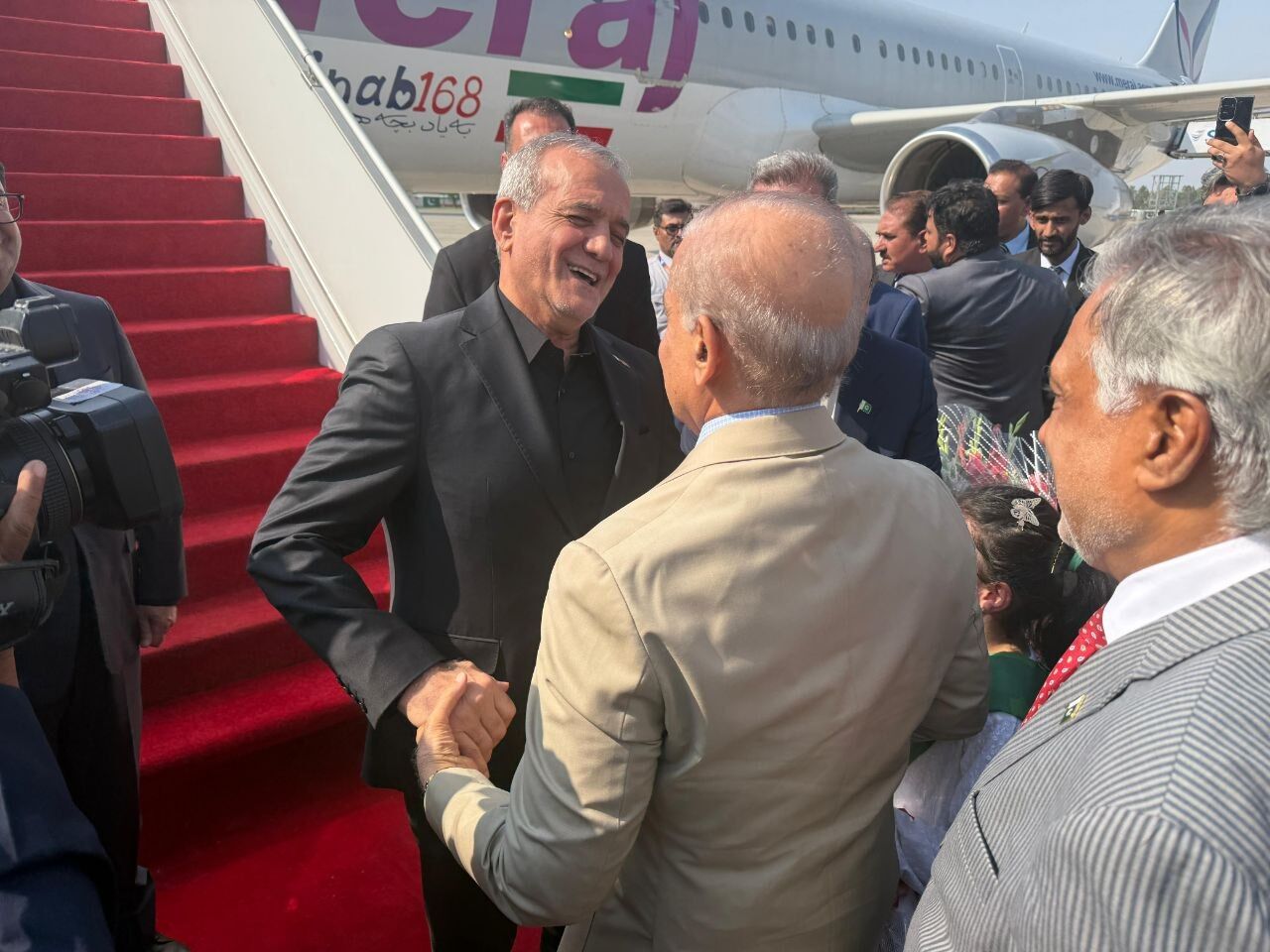


Alwaght- A few hours after the first round of Geneva talks between Tehran and Washington, the region's diplomatic scene saw a flurry of official visits. In the day’s headline event, Islamabad hosted Iranian President Masoud Pezeshkian. Meanwhile, Parliament Speaker Mohammad Bagher Ghalibaf and Iran’s negotiating team flew to Baku, as US Secretary of State Marco Rubio kicked off his regional tour in Kuwait.
Qatar’s Prime Minister and Foreign Minister as key players in the Geneva negotiations, headed to Muscat, signaling that the Iran-US dialogue is already being treated as a pivotal moment for regional dynamics. This is not just talk; it marks the start of a new phase of consultations, coalition-building, and international coordination over West Asia’s future security architecture.
The diplomatic whirlwind since Geneva makes one thing clear: regional and extra-regional powers know full well that the outcome would not be confined to Tehran-Washington relations. It could reshape geopolitical equations from the Persian Gulf and the South Caucasus to the Eastern Mediterranean and global energy markets. Capitals across the region are scrambling to lock in their positions and interests before any deal takes shape, determined not to be passive bystanders in the emerging order.
At this historic inflection point, as West Asia transitions to a new security framework, Iran-Pakistan relations are enjoying one of their finest hours. At this sensitive juncture, that bond could prove decisive in building trust and regional cooperation toward a shared understanding of threats, and sustainable solutions for peace and stability in neighboring relations, free from extra-regional interference.
Now in their eightieth decade, Iran-Pakistan ties have remained remarkably steady, with few real bumps along the way. In recent years, both sides have doubled down on steering toward strategic cooperation, a commitment that hit a high point during the 12-day war in June 2025, when Pakistan’s government and people stood firmly alongside Iran in condemning the Israeli regime’s aggression.
This role proved catalytic in propelling bilateral ties forward at breakneck speed, so much so that during the 40-day war, Islamabad suddenly emerged as the key mediator for ceasefire and negotiations between Iran and the US, a clear testament to the deep trust Tehran places in Islamabad. Beyond that, with the US Navy ramping up an illegal maritime blockade to strangle Iran's economy and break the people's will to resist, Pakistan's eastern borders and its Indian Ocean ports became a critical lifeline for Iran's foreign trade.
But Pakistan's motivations run far deeper than neighborhood diplomacy or boosting its regional and global standing. They stem from a profound alignment with the Islamic Republic on major strategic issues: defending the Palestinian cause, confronting Israeli aggression against regional states, rejecting normalization with the regime, opposing American-Israeli plans to redraw the region's historic geopolitical boundaries, and backing Iran's peaceful uranium enrichment program.
Pakistan, meanwhile, is no stranger to security headaches as it grapples with threats on its eastern and northern borders, locked in perpetual tension with India and contending with instability in Afghanistan. Securing its western frontier with Iran is therefore a strategic imperative, freeing up bandwidth to focus on the bigger threats from India and the Taliban. Add to that the fact that Islamabad, as the Muslim world's sole nuclear power, remains a secondary threat for Israel, and Pakistani officials now take the threat of strikes on their own nuclear facilities more seriously than ever.
This deep convergence of views on regional developments has propelled Tehran-Islamabad ties far beyond mere bilateral gains, opening a window to foster broader regional integration in the future, especially in the post-war landscape.
While deepening ties with Iran, Islamabad also maintains long-standing military and security alliances with (Persian) Gulf Cooperation Council states, and in recent years has bolstered its partnership with Turkey and Azerbaijan. By stepping into the mediation file to end the war and help shape a new security architecture for the region, particularly in the Persian Gulf, Islamabad sees a golden opportunity to regain lost ground against India's expanding footprint in the Persian Gulf. The recently signed new military pact with Saudi Arabia, which reportedly includes a nuclear defense umbrella, fits squarely into this calculus. India has been aggressively expanding its influence across the Persian Gulf, forging strategic ties with Riyadh and Abu Dhabi in recent years. By positioning itself as a mediator and a stabilizing force, Pakistan is effectively reclaiming its foreign policy turf in the region, a reassertion that also serves Iran's interests as it seeks to rebuild regional relationships on independent, cooperative models free from extra-regional meddling.
In a telling move, President Masoud Pezeshkian of Iran chose Islamabad as his first foreign destination after the 40-day war— a symbolic choice. In a post on X, he declared that the two neighbors share profound commonalities in their aspirations and ideals, praising Pakistan's tireless efforts to expand peace in the region as deeply rooted in the country's rich cultural heritage.
The Iranian president described Pakistan not only a neighbor but a "brother and close friend", adding that the two countries "have a single soul in two bodies" and share a common future.