















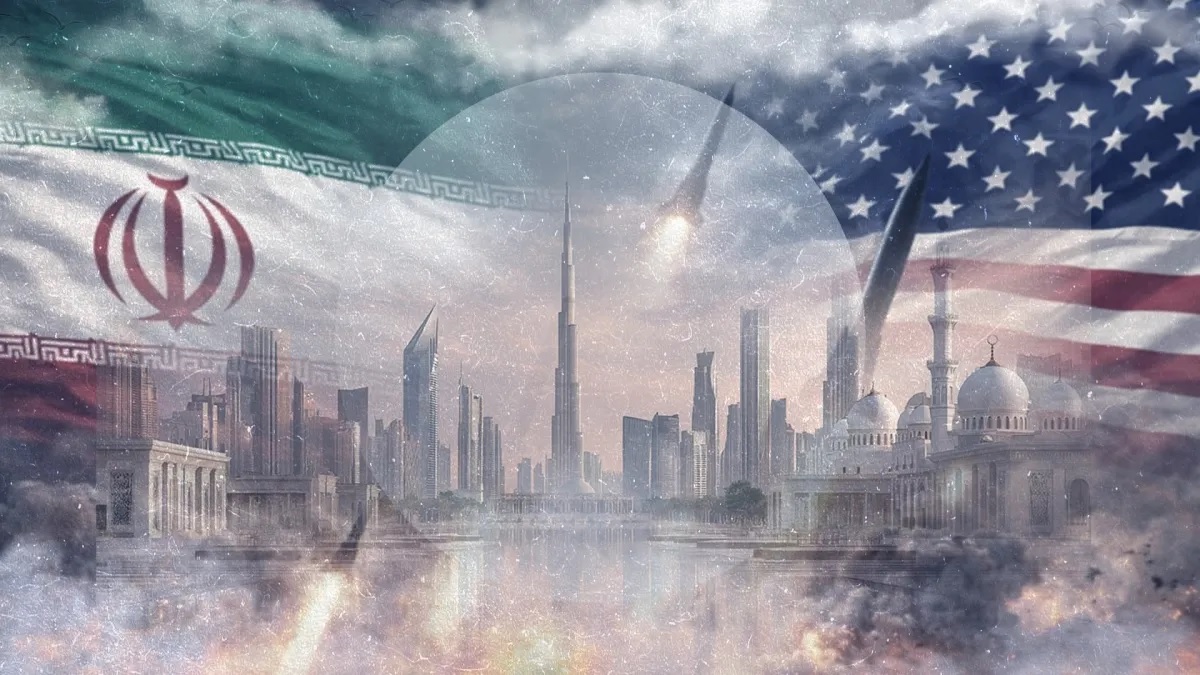


Alwaght- As tensions between the US and Iran escalate, a question strongly presents itself: Do the Americans support war threatened by Trump against Iran? A report by Responsible Statecraft website sheds light on the public view to the possible American military action against Iran. The polls show that an overwhelming majority is opposed to conflict with Tehran.
Comparing support to war against Iraq to a possible war against Iran
When George W. Bush administration decided to invade Saddam Hussein’s Iraq in 2003, a poll conducted by Gallup suggested that 72 percent of the Americans backed the military campaign against Baghdad, but now if Trump wants to wage a war against Iran, he has a support rate far below that level. Reposts say that Trump does not even have half of it.
In fact, the public green light for war against Iraq soon turned into widespread opposition. On the 10th anniversary of bombing Iraq in 2013, 53 percent of the Americans deemed the war a mistake and on the 20th anniversary in 2023, at least 16 percent believed that Washington was mistaken to invade Iraq. In other words, though in 2003 Bush launched a heavy campaign to draw public support for war and succeeded to advance his agenda against Iraq, two decades later, the war being a mistake became a consensus among the Americans.
No support for war even in Republican circles
A recent poll conducted by the University of Maryland and the SSRS research group less than two weeks ago reveals that a majority of Americans do not support war on Iran.
The survey asked participants: "Under the current circumstances, do you support or oppose the US attacking Iran?" The results showed that only 21 percent of respondents were in favor, while 49 percent were opposed. A significant 30 percent answered that they were unsure.
Republicans showed the highest level of support for military action against Iran, with 40 percent in favor. However, 25 percent of Republican voters opposed it, and 35 percent were undecided. This indicates that even within Trump's own party, there is no consensus on going to war with Iran.
Support for a war with Iran is far lower among Democrats, with only 6 percent in favor. Among independent voters, 21 percent supported an attack.
Voices rise against war amid heightened anti-Iranian threats
Another poll jointly conducted by The Economist and YouGov suggests that Americans do not support war against Tehran. The results showed that 48 percent opposed war while 28 percent supported it.
These polls are conducted after recent Iranian unrest and amid threats of military action against Iran by some US war hawks. When respondants were asked if they agreed to the US bombing Iran, 52 percent said they did not.
Do not intervene in Iran
Adding to this sentiment, a Quinnipiac University poll conducted in mid-January, just one week after Trump declared the US was "locked and loaded" for a potential military strike, found that a resounding 70 percent of Americans believe the US should not intervene militarily in Iran.
Facing a public clearly averse to another West Asia conflict, the Trump administration now confronts a stark choice: pursue a war with minimal public support or continue pursuing diplomacy. Trump appeared to signal his preference during a recent Oval Office meeting with Israeli Prime Minister Benjamin Netanyahu, emphasizing his desire to continue dialogue with Tehran. With his political career hinging on public approval, these poll numbers, showing deep opposition to war with Iran, are almost certainly a factor in the White House's calculations.
American political experts and observers opposed to war
It seems that the main driving force behind opposition to anti-Iranian war is the cost, more than any other factor. John Mearshemier, an American political analyst and university professor, comments on the outlook of a military confrontation with Iran, saying that there is no military solution for settling the dispute with Iran and the only solution is diplomacy.
These domestic political calculations are reinforced by stark warnings from military and strategic circles. Retired US Army Colonel Lawrence Wilkerson, for instance, has voiced his belief that Trump has little interest in launching a war. One key reason, Wilkerson notes, is the presence of "sane, balanced people still at the Pentagon" who harbor serious and legitimate concerns about the consequences of opening a conflict with Iran. He added that this apprehension is shared within the Israeli military, where some commanders are openly warning about the potential repercussions of an Iranian strike.
Further complicating any military calculus, a recent report by The Atlantic delved into the significant obstacles and complexities facing the Trump administration should it consider returning to a military option. The magazine reports that while the administration did at one point explore a range of military scenarios, from targeted strikes on specific individuals and facilities to a broader assault on Iran's nuclear program, the assessments were sobering. Two US officials told the outlet that any large-scale operation could not be executed quickly. The evaluation concluded it would be impossible to proceed without accepting serious risks to US forces, securing allied cooperation, and potentially jeopardizing regional stability.
These officials have stressed that just contrary to Trump's claims about deployment of an "armada" to Iran, the Pentagon currently does not have at its disposal adequate number of warplanes and naval assets to launch a several-week war. Furthermore, the White House is yet to make it clear to the military commanders what it finally wants from a military action. This tells us that immediate use of force is not on the White House agenda.










