















Alwaght- A year after Trump's second presidency, the gap on the two sides of the Atlantic has reached a point of no-return more than any time before. Today, the talk is not about difference over one or a number of geopolitical issues, but about full collapse of mechanisms that for several decades have saved the European-American alliance.
Meanwhile, it seems that the fatal blow to this alliance has been dealt by the US trade tariffs. While through heavy trade tariffs and political pressures the US is pushing its traditional allies into obedience to strengthen Washington's power strategy and so contain China, these punitive policies have practically delivered the reverse, motivating the American allies to distance from it and pivot to the Eastern powers and coalesce with emerge economies.
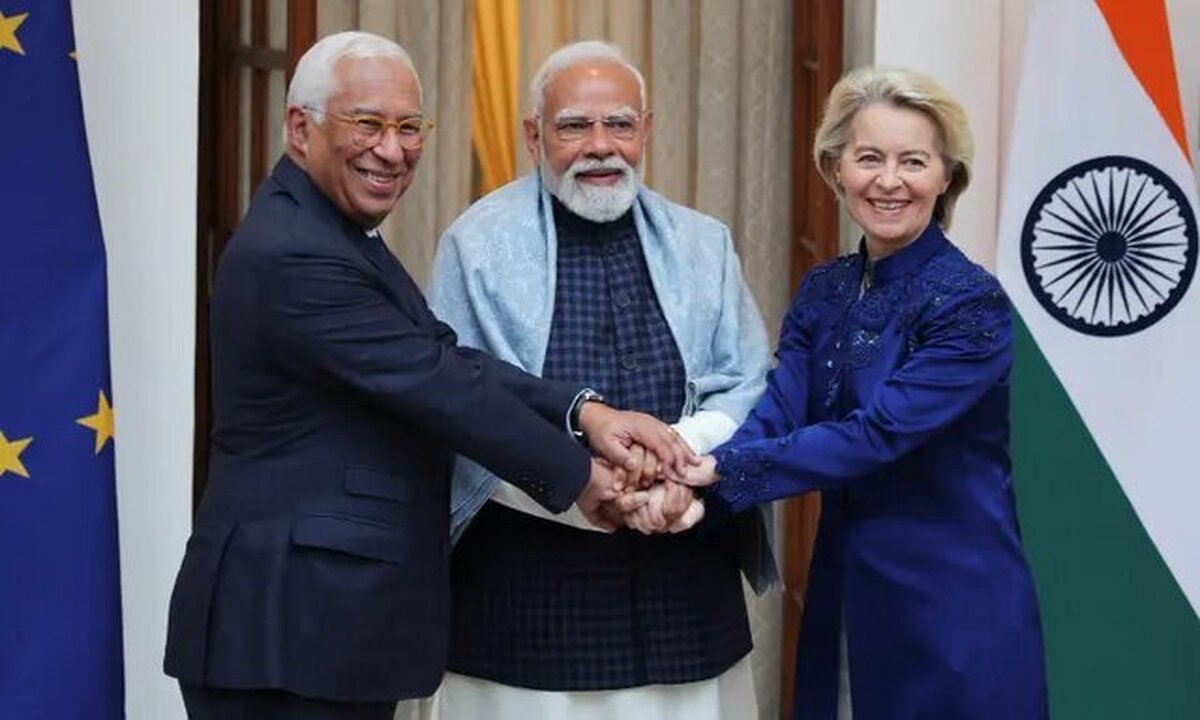
In the latest development, senior European officials on Tuesday unveiled a major economic agreement with India, one that European Commission President Ursula von der Leyen hailed as “historic,” while Indian Prime Minister Narendra Modi called it the “mother of all agreements,” saying it would unlock vast opportunities for India’s 1.4 billion people and millions more across Europe. According to a senior European official familiar with the deal, the agreement is expected to be implemented within a year.
The pact’s central aim is to facilitate and expand trade in goods and services between the European Union and India. Under the agreement, the EU says tariffs of up to 44 percent on machinery, 22 percent on chemicals, and 11 percent on pharmaceuticals will be eliminated. With tariffs removed or reduced on 96.6 percent of the value of EU goods exports, European exports to India are projected to double by 2032.
Media reports say the tariff cuts are expected to save nearly €4 billion a year in customs duties on European products. The EU also notes that more than 6,000 European companies already operate in India. The agreement is designed to boost growth and employment on both sides while reducing what officials describe as undesirable dependencies on other countries.
On the other side, the agreement will pave the way for easier access to the European markets and ensuring that India will be present in the free trade with the EU as the biggest trade partner.
India with over 1.45 billion population is the world's most populated country. Europe's population is 450 million. The two sides account for around a quarter of the world GDP combined. Their trade value up to March 2025 reached $136.5 and under the new deal, their trade will see a new upward trend.
Europe's agreement with Mercusor
The EU–India agreement was signed just days after the European Union concluded a major deal with Latin America's Mercosur bloc comprising Argentina, Brazil, Paraguay, and Uruguay. On Saturday , after 25 years of talks and negotiations, EU and Latin American leaders finally signed a free trade agreement.
The Mercosur deal has been under discussion for more than two decades and would cover a market of around 780 million people, accounting for roughly a quarter of global GDP.
At present, total goods trade between the EU and Mercosur stands at about €111 billion, including €55.2 billion in EU exports to Mercosur and €56 billion in EU imports from the bloc.
The European Union is Mercosur’s second-largest trade partner in goods, while Mercosur ranks among the EU’s key trade partners. More than 80 percent of goods trade between the two sides is linked to Brazil.
According to some economic analysts, the agreement offers Europe an opportunity to expand its market share in Latin America, particularly in sectors such as automotive manufacturing, machinery, and aviation, at China’s expense, while also boosting its political influence through deeper cooperation.
Over the past two decades, Europe’s limited engagement in the Mercosur market created a vacuum that China was quick to fill, significantly expanding its trade with countries in the region. As a result, China’s market share now exceeds that of the EU by nearly 40 percent.
From a geopolitical perspective, the agreement could strengthen Europe’s economic ties with South America and enhance its role as a key global market player, especially amid growing competition and pressure from China and the US.
A blow to the US position
Obdervers suggest that deepening EU trade ties with Asian and South American ties in recent weeks and a similar move by Canada, as the US's close ally in North America, to strengthen business ties with China are not just cases of financial and trade impacts. Rather, they are a strategic and geopolitical reaction to an erratic and unreliable partner that leverages tariffs as a means of geopolitical pressures.
The EU and Canada find Trump's ambitious policies largely imperialist aimed at dominating Western societies and devouring Washington's traditional allies. If this policies continues, analysts say, it will further divide the US and Europe and pave the way for boosting rival blocs and organizations.
At the top of these emerging structures are organizations like BRICS. Anchored by China and Russia, the bloc is positioning itself as a potential alternative to the US-led economic and financial order. Initially conceived as an economic framework among several emerging economies, BRICS has in recent years expanded its membership, deepened financial cooperation, and actively worked to reduce reliance on the US dollar, steadily amplifying its role on the global stage.
American economic pressure, sweeping sanctions, and Washington’s instrumental use of the international financial system have driven many nations to a common conclusion: continued reliance on a Western-centric financial architecture could jeopardize their economic and political security. In this climate, BRICS has become an attractive platform for countries seeking greater independence from Washington.
According to data, with new members joining, the economic bloc now represents half the world’s population and 40 percent of the global economy. Projections suggest BRICS could account for more than 50 percent of world GDP by 2040, a direct challenge to the 80-year hegemony of the US.
Trump's policies, in particular the trade tariffs and war against China, were designed to curb growing Chinese global status, but they practically contributed to emergence of world economy multipolarity, to the US frustration.
Taking advantage of these gaps, Beijing has tried to promote itself as the defender of free trade, South-South cooperation, and development of global infrastructure. The RBI and China’s active role in such emerging institutions as BRICS and Asian Infrastructure Investment Bank (AIIB) are parts of Chinese strategy to fill the vacuum to emerge from American retreat or unpredictable behavior.
Meanwhile, Washington’s economic supremacy, for decades anchored in its founding role in international institutions and the dominance of the dollar, faces profound challenges. Its excessive use of sanctions, disregard for multilateral rules, and undermining of bodies like the World Trade Organization have not only tarnished its credibility but have also accelerated a global push for alternatives. The result is a steady erosion of Washington’s economic influence and the rising clout of rivals, on top of them China.
The very institutions the US built after World War II, like the International Monetary Fund, the World Bank, and the dollar-based financial system (SWIFT) are now grappling with crises of legitimacy and relevance. Across the developing world, these frameworks are increasingly viewed not as neutral engines of global stability, but as instruments of American political and economic coercion. This skepticism hardened during the Trump era, when Washington walked away from its own commitments, exposing the system’s fragility.
The weakening of these pillars, coinciding with the rise of parallel structures like BRICS, signals a historic drift in the global economic center of gravity from West to East. China is methodically positioning itself to unseat the US through massive investments in technology, supply chains, and emerging markets. In contrast, American focus on short-term protectionism and pressuring allies risks squandering its long-term strategic advantages.
Finally, we can suggest that instead of cementing the US global leadership, Trump's policies have undermined the US-dominated economic order, accelerating the country's economic decline. Should the US press ahead with this path, the world will witness rise of an order where the US will no longer be an undisputed actor, and China along with allies like Russia and other BRICS members will play a more determining role in the global economy, a prospect that will leave deep impacts on the balance of power, world trade, and world policy.










