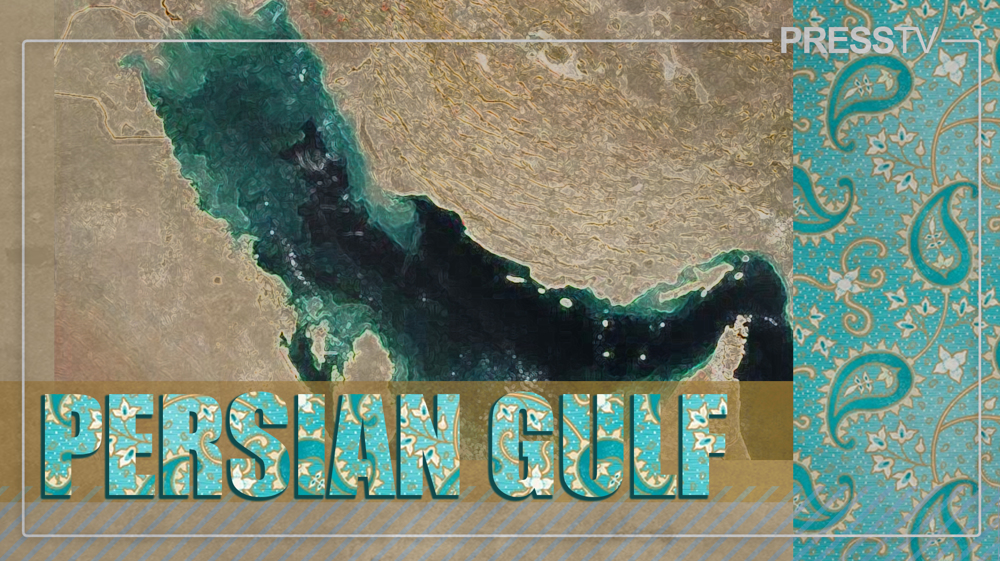








Alwaght- It is not hidden from anybody that there are latent disputes between Qatar and Bahrain, two tiny Arab states on the coasts of the Persian Gulf. The feud between the neighbors dates back to the 1937, when the Qatari forces invaded Zubarah town, on the Qatar Peninsula but part of Bahrain’s territory. Qatar did not limit its operation to seizing the main residence of Bahrain’s ruling Al Khalifa family; rather it tried to also annex a Bahraini archipelago that accounted for one third of total area of Bahrain.
Saudi Arabia over time made its best diplomatic efforts through the summits of the (Persian) Gulf Cooperation Council, (P) GCC, to contain the border struggle between Manama and Doha to steer clear of repeat of what happened in the past, but the deep gaps have marred all Saudi attempts to bring the two states together under a united (P)GCC.
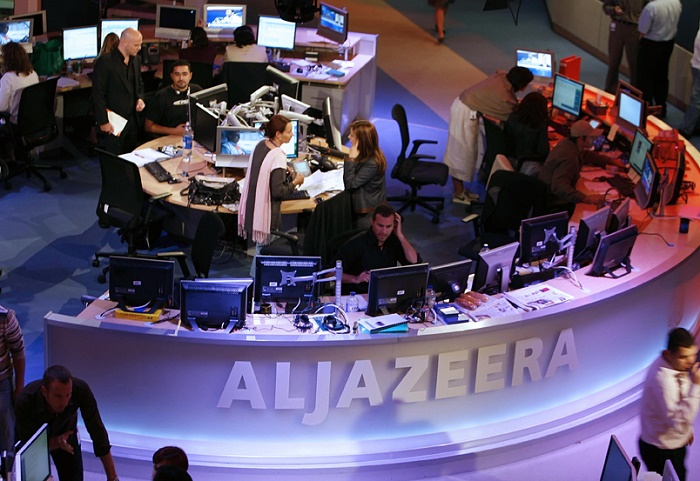
On Tuesday, the Bahraini authorities refused entry of Qatar-based Al Jazeera Media Network (AJMN) crew to Bahrain to cover the 37th summit of the (P)GCC held in Manama.
Despite following all of the requirements of entry to Bahrain to cover the event, the authorities declined to allow the Qatari media to enter the country.
Bahrain’s rejection was not surprising as a short time later the Bahraini Foreign Minister Khalid bin Ahmad Al Khalifa accused Al Jazeera of making troubles and fueling the tensions between Bahrain and Qatar. Some other Bahraini officials blamed the Qatari government for Al Jazeera's “anti-Bahraini” standings. The media is owned and run by the Qatari government.
The Bahraini officials' fears from Al Jazeera are even intensified after the Qatari outlet's increasing number of reports made in its Doha-based studios about the poverty and the conditions of the poor in the small kingdom. Al Jazeera also every now and then presents reports about the Bahraini uprising that sparked in 2011 and is still rolling on.
Earlier, Al Jazeera English service aired a documentary about violations of the human rights in Bahrain titled “Bahrain: Shouting in the Dark”. The documentary displayed Manama as a major violator of the human rights, a picture that aroused fury of the Bahraini government institutions that rejected what was shown.
The documentary was not a simple show; rather it came as a bombshell striking deeply the Bahraini security institutions. The show drew strong response from Bahrain, to a level that led to severing of diplomatic relations with Doha.
While the economic challenges and the international developments are overshadowing the 37th summit of the (P)GCC, AJMN has blasted its crew's blocking from entry by Bahrain’s government, calling the move a violation of the media principles required for the hosting countries.
It is noteworthy that the Bahraini authorities also blocked Al Jazeera's coverage of the 33rd summit of the Persian Gulf Arab countries held in December 2012 in Manama "without presenting persuasive reasons", according to the news network.
The (P)GCC summit was held for two days, discussing joint work of the members of the five-nation bloc in an array of political, security, economic, defensive, and social issues.
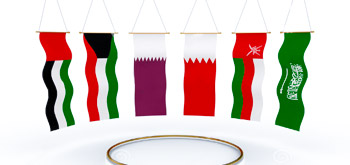
The two-day summit is attended by leaders of the members of the bloc which includes Saudi Arabia, Bahrain, Kuwait, Qatar, and Oman, as well as the British Prime Minister Theresa May.